
The Eid Sacrifice: A Lesson in Love and Forgiveness
When pride divides a family, it takes one young boy’s courage to remind them what Eid truly means — compassion, unity, and sacrifice.

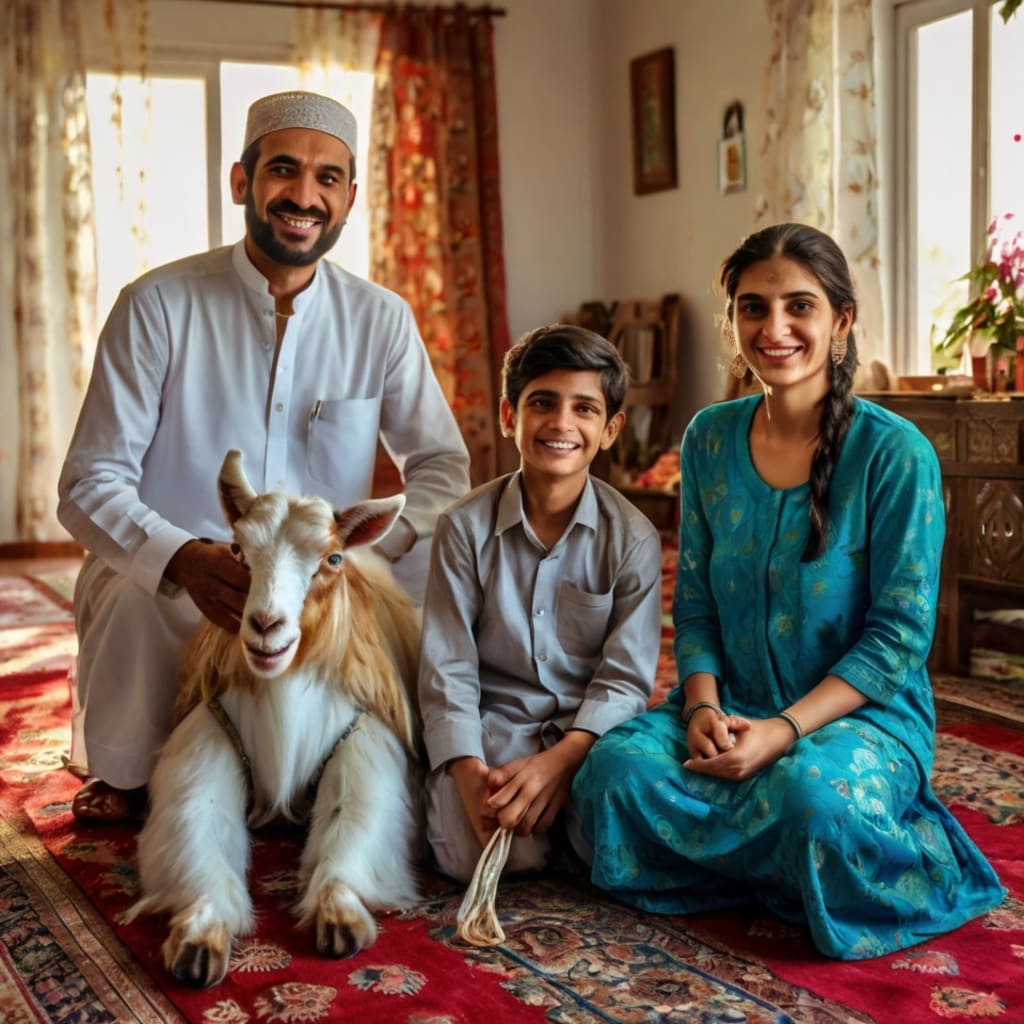
The Eid Sacrifice
by Saeem Jamaln
“I want a goat this Eid, no matter what!” eight-year-old Arshman shouted as he stomped his little feet in front of his mother. “Ever since Dada and Dadi moved away, Abba never does Qurbani anymore. All my friends have animals for sacrifice — they make fun of me every year!”
His mother, Noreen, sighed. “Alright, my son. I’ll try to convince your father this time. But you know how stubborn he is — and so miserly. It was his stinginess that drove his parents away, hoping he’d finally learn some responsibility.”
She looked out the window with a tired expression. “The harvest was good this year, and the vegetable business is running well. Even your uncle said your father made great profits at the market. But I don’t know when our life will ever change.”
Arshman frowned. “Then, Mama, can’t you ask Mamoon to buy us a goat?”
“My dear, your uncle has already helped us so much. I feel ashamed to ask again,” Noreen said softly. “But I’ll try. Good children don’t make a fuss. May Allah give your father some sense — this world’s wealth won’t go with us when we die.”
A few days later, Noreen decided to visit her brothers. She took Arshman and his younger sister, Arha, along. “Sister-in-law, I came to see my brothers,” she said politely when she arrived. “Eid is near, and usually they send something for us by now. The children are insisting we get a goat this year. I tried to calm them down, but they won’t listen.”
Her elder sister-in-law pursed her lips. “Look, Noreen, we’ve already helped you enough. I just married off my sister, and we have our own expenses. You should learn to manage your husband — make him fulfill his duties. You can’t depend on your brothers forever.”
The words hit Noreen like a slap. Her face flushed with humiliation. Just then, the younger sister-in-law — who worked in an office but was equally cold-hearted — joined in. “She’s right. You need to stand on your own feet, Noreen.”
Noreen stayed silent. Her brothers were kind men who never taunted her, but their wives had always been bitter and controlling.
Unbeknownst to them, Ahaan, the elder sister-in-law’s teenage son, overheard everything. His heart ached for his aunt and cousins. He had always admired his gentle, quiet Aunt Noreen. When his mother noticed him listening, she quickly changed the topic and promised, “Alright, I’ll talk to your uncles when they get home.”
But Noreen knew it was just an excuse. Heartbroken and humiliated, she returned home with her children, deciding never to visit again.
The next evening, the same sister-in-law arrived at Noreen’s home with her son Ahaan and handed her a few thousand rupees. “Here, buy clothes for yourself and the kids,” she said stiffly.
Noreen shook her head. “No, thank you.” She refused the money with quiet dignity.
Ahaan could see the sadness in her eyes, and guilt pricked his heart. When he and his mother returned home, she didn’t mention anything to her husband. Instead, she lied, “Noreen’s doing better now. Her husband has changed.” Her husband smiled in relief, believing the lie.
Then came Eid-ul-Adha morning — the day of sacrifice. The streets were alive with joy. Children decorated the goats with bells and ribbons, laughter filled the air, and the scent of sweet dishes wafted from every home.
After the Eid prayer, the butchers arrived and the sacrifices began. Noreen’s brothers, like everyone else, divided the meat into three parts — one for the poor, one for relatives, and one for themselves.
The elder sister-in-law neatly packed the best cuts for her own sister, Hooriya, who had recently married. “We’ll visit her first — it’s her first Eid after marriage!” she said proudly.
But not once did anyone mention Noreen. No one thought to send her a small share. She sat quietly at home with her children, hoping the doorbell might ring — but it never did.
Later that afternoon, the elder sister-in-law and her family arrived at Hooriya’s house with bags of meat, sweets, fruits, and cake. “Abba, you didn’t have to bring all this!” Hooriya exclaimed. “We already had our own Qurbani.”
Her father smiled warmly. “My dear daughter, no matter how happy you are in your husband’s home, a girl always belongs to her parents too. And as for this meat — it’s your share as a daughter of our house. Islam teaches us to strengthen family bonds.”
Before anyone could respond, Ahaan interrupted. “Mama, may I ask something?”
“Of course, son,” she replied.
“You just said Aunt Hooriya has a share in this house because she’s your daughter, right? Then what about Aunt Noreen? Isn’t she also a daughter of this house? Why do the rules change for her? She’s alone, her parents are gone, yet no one sent her even a little meat. A few days ago, you insulted her and made her feel like she didn’t belong. She even returned the money you tried to give her. Is this how we treat family?”
His mother’s face turned pale. The truth in her son’s words pierced her heart. Tears welled up in her eyes.
“You’re right, my child,” she whispered. “I let bitterness cloud my heart. I forgot what family really means.”
That very moment, she turned to her husband. “We must go to Noreen’s house — all of us. Today.”
They bought sweets, cakes, and — most importantly — a beautiful white goat from the market. When they arrived, Noreen opened the door in shock.
Her sister-in-law hugged her tightly, tears streaming down her face. “Forgive me, Noreen. I was wrong. Please forgive my cruelty.”
Noreen, moved beyond words, embraced her. Arshman’s eyes sparkled when he saw the goat. “Mama! Look! We got our Qurbani goat!”
Everyone laughed, their hearts light and full. That Eid, forgiveness replaced pride, and unity replaced distance.
For the first time in years, their family celebrated a true Eid — one of sacrifice, love, and reunion.
About the Creator
Choosing Between Divorce and Legal Separation in California
Ending a marriage or formalizing a separation can be one of the most challenging experiences a person will face in their lifetime. In California, many couples find themselves at a crossroads, unsure whether a permanent divorce or a legal separation is the best choice for their situation. The emotional toll of these decisions is often compounded by financial concerns, particularly the cost of hiring a lawyer, which can make the process feel overwhelming and even unattainable for some. Despite these difficulties, understanding the options available and how to navigate the legal system can help individuals make informed decisions that protect their interests and those of their children.
By The Complete Divorce4 days ago in Families




Comments
There are no comments for this story
Be the first to respond and start the conversation.