
The Curse of Greed
When inheritance arrogance and unseen forces collide justice finds its way.

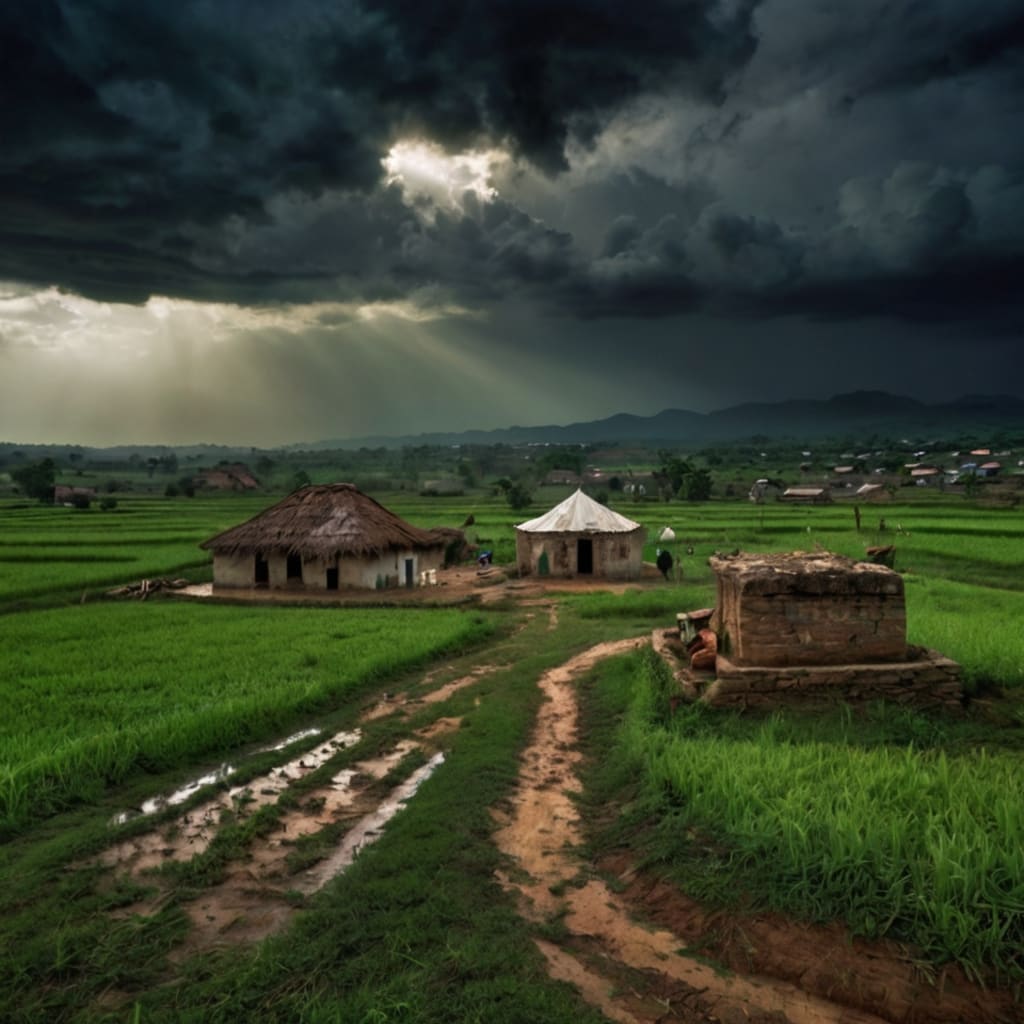
The Curse of Greed
BY:Khan
On the path of life, one must scatter seeds of kindness, for the journey of decline becomes peaceful with flowers. But if thorns are spread, one is bound to face thorny bushes on the way back—and everyone must return someday. Life is filled with events that leave unforgettable marks, no matter how hard we try to erase them. Today, I share such an incident with you, hoping it may serve as a lesson.
My maternal uncle, Yunus, was the eldest among his siblings. He had studied up to matriculation, while the others were uneducated. Because of his education and influence, the villagers called him “Chaudhry.” He was respected and had strong ties with the local administration. My grandfather owned forty acres of fertile land. After his death, Yunus, using his connections with the patwari and tehsildar, transferred the entire property to his name.
When the siblings discovered this, they demanded their rightful shares. But Yunus denied them, insisting, “Father transferred the land to me before his death.” His brothers took respected elders of the village to mediate. They pleaded with him:
“These are your own brothers and sisters. Give them their share of land. Allah will bless you.”
But Yunus stood firm on his denial. Eventually, his siblings approached the court. With his influence, Yunus won even the legal battle. The forty acres became solely his.
Yunus had only one son, Haris, studying in the city. A clerk named Liaqat managed the farm’s accounts. The land yielded handsome income. However, two acres lay barren. On that plot stood an old grave, and the villagers believed it was the resting place of a saint—or perhaps the dwelling of unseen beings. It was said that because of this grave, Yunus’s crops always produced more than others’.
Life is a test of patience and gratitude. Those who fail it fall prey to greed. Yunus, too, became restless for more. One day, he told Liaqat, “We will level that barren land and cultivate it.”
Liaqat agreed, but when the work began, the village elders came running. “Do not disturb that place,” they warned. “It is sacred. If you anger what dwells there, it will harm you.”
Yunus hesitated and stopped the work. But that night, a strange presence visited him.
“Who are you?” Yunus asked, trembling.
The figure replied, “That land is our home. If you attempt to destroy it, your fortune will vanish.” And with that, it disappeared into the air.
Frightened, Yunus abandoned the idea.
Years passed. One day, Yunus suffered a stroke, leaving him bedridden. His son, Haris, returned from the city to manage the lands. Unlike his father, Haris dismissed old tales of spirits. “These are myths,” he said. “We must cultivate our land.”
Despite warnings from both his father and Liaqat, Haris hired tractors. As soon as the machines began to plow, a black storm rose from the west. Darkness engulfed the village. The storm spared only the mosque. Suddenly, a loud explosion erupted near the grave. The tractors toppled like paper toys. Workers screamed as unseen forces hurled them into the air.
“We will destroy you!” terrifying voices echoed. “You killed our children, disturbed our peace. We will wipe out your family.”
Just then, the muezzin began the call to prayer. “Allahu Akbar!” The words pierced through the chaos. Silence fell. The villagers rushed to the mosque, trembling.
The imam raised his hands in prayer. “O creatures of God, forgive these poor laborers. They knew nothing. If there is guilt, it lies with the Chaudhry. Have mercy.”
At that moment, a radiant old figure in white appeared. “O children of Adam,” he said. “We are also creations of the Almighty. We live in seclusion and do not harm without cause. If anyone claims otherwise, let them prove it. But know this: Chaudhry Yunus and his son have wronged not only us, but their own blood. Greed blinded them. They stole their siblings’ inheritance. For this, they deserve no forgiveness. Only if they return the stolen land can mercy reach them.”
The villagers listened in silence, their hearts trembling. Then the figure vanished.
The imam declared, “We must appease them. We must give charity at the grave site.”
That evening, the villagers gathered and distributed food as charity. Under immense fear, Yunus finally summoned his siblings. With a trembling heart, he returned their rightful shares. Life in the village slowly returned to peace, but Yunus’s health worsened.
On his deathbed, elders advised, “Seek forgiveness from your family.” Yunus obeyed. Tearfully, he apologized, and his siblings forgave him. Once again, food was distributed at the grave.
As the people ate, suddenly a bright light shone over them. The imam announced, “The unseen ones have forgiven Chaudhry Yunus.”
The next day, Haris admitted his father to a hospital in the city. After a month of treatment, Yunus recovered and returned home, humbled and changed.
---
Moral
Greed blinds reason. When man chases wealth at the cost of justice, he loses both peace in this world and mercy in the hereafter. But repentance, humility, and justice can restore what arrogance destroys.
About the Creator
The Shadow in the Screen: Why Your Child’s Identity is the New Gold for AI Hackers
I remember the first time I saw it. A photo of my niece, the one I had taken at her fifth birthday party, appearing on a profile that didn’t belong to anyone in our family. The name was different. The location was halfway across the world. But the smile was unmistakably hers.
By Alex Sterling 7 days ago in Families




Comments
There are no comments for this story
Be the first to respond and start the conversation.