
The Chair That Stayed Empty
A quiet story about family, distance, and the things we realize too late

story
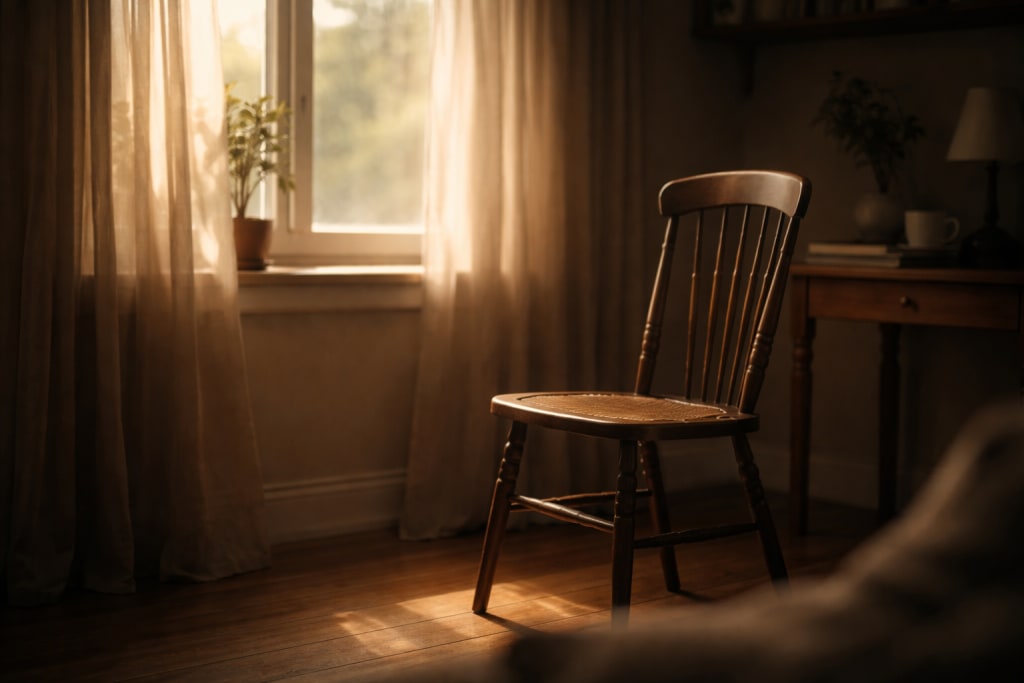
There was always one chair in the house that no one sat in.
It was near the window, at a small slant, and it caught the afternoon light. The cushion had sunk in the middle since it had been used for so long. Ammi would straighten it every night, even though no one sat there anymore.
Rashid owned the chair.
Rashid was the kind of person who didn't make a big deal out of being there. He didn't say anything when he walked into a room or when he was fatigued. He just quietly held the family together in ways that no one else saw.
Sameer, his younger brother, was the opposite.
Sameer had dreams that were too big for the little abode. Plans that are big. More words. He talked about cities, jobs, and a life that began in a different place. Rashid listened to everything, nodded, smiled, and never said anything.
“You’ll make it,” Rashid always insisted.
“I know,” Sameer said. And he believed it.
When their father passed away, life split into before and after.
After that day, Rashid became something he never asked to be - the provider. He worked longer hours, took extra shifts, and skipped meals without saying anything. Ammi noticed, of course, but Rashid waved it aside.
“I’m fine,” he’d say. “Let Sameer focus on his future.”
Sameer witnessed all this from a distance. He assisted when he could, but deep down, he felt restless. The house felt too modest for his ambitions.
And Rashid recognized that.
So when Sameer got accepted into a college far away, Rashid was the first to celebrate.
“You’re leaving,” he murmured, eyes sparkling. “Good. “Don’t look back.”
Sameer laughed. “I’ll visit. All the time.”
Rashid smiled.
But life rarely follows promises uttered lightly.
At first, Sameer called every week. Then every month. Then only on extraordinary occasions.
Whenever Rashid called, Sameer was occupied.
“Work is crazy right now.”
“I’ll call you later.”
“Next week, pakka.”
Rashid never complained. He never reminded. He merely listened.
Ammi inquired sometimes, “Rashid, tum thak jaate ho?”
He’d shake his head. “Nahi. Bas routine hai.”
But the chair at the window witnessed everything.
It observed Rashid come home late, sit down slowly, and rub his hands like they were in pain. It heard his sighs when he thought no one was listening.
One winter, Rashid stopped calling.
Sameer noticed it briefly — but persuaded himself Rashid was probably busy too. Life moved swiftly. Promotions, deadlines, new people.
Then one evening, Sameer received a note from a neighbor.
“Come home.”
That was it. No explanation.
The house felt foreign when Sameer returned. Quieter. Heavier.
Ammi appeared smaller somehow.
“Where’s Rashid?” Sameer asked, already fearful of the answer.
She pointed toward the window.
The chair was vacant.
“He was tired,” she murmured gently. “For a long time.”
Sameer didn’t comprehend at first. He needed details, reasoning, something substantial. But grief doesn’t explain itself.
At the hospital, Rashid lay still, looking nothing like the man Sameer knew. His hands—the same hands that carried groceries, paid bills, and fixed broken items—were cold.
Sameer held them anyway.
“I thought we had more time,” he muttered.
But time doesn’t wait for people who sacrifice silently.
After the funeral, people spoke pleasantly of Rashid.
“He was responsible.”
“He never complained.”
“Such a good son.”
Sameer stood there, hearing words that felt unfinished.
No one talked about what Rashid gave up.
No one talked about the dreams he never chased.
Weeks later, Sameer sat alone in the house.
The chair near the window was still there.
He sat in it for the first time.
It didn’t feel comfortable.
It felt weighty.
For the first time, Sameer understood that love isn’t always loud. Sometimes, it’s silent, patient, and horribly lonely.
And sometimes, you don’t recognize who carried you—until there’s no one left to do it.
Disclaimer
This narrative is a work of fiction made for emotional and contemplative purposes. Any resemblance to real individuals or events is coincidental. The themes represent basic human experiences of family, sacrifice, and loss.
About the Creator
abualyaanart
I write thoughtful, experience-driven stories about technology, digital life, and how modern tools quietly shape the way we think, work, and live.
I believe good technology should support life
Abualyaanart
Keep reading
More stories from abualyaanart and writers in Families and other communities.
The Brother Who Stayed Behind
Two brothers lived in the same modest house, but they had completely different problems in life. Ayan, the oldest one, was boisterous, sure of himself, and always making jokes, as if nothing could harm him. The younger boy, Zayn, was quiet and careful. He was the kind of boy who only grinned after thinking about it.
By abualyaanarta day ago in Families
Wise~Guys
— Look Behind what's in Front of You ~ Make Good Choices — Hey, So how you Doin'..! Made~Men — Mobster Movies romanticise a distinctive, elegant appearance, impeccable attire style, along with the 'Families' expressive lingo. Making their 'Bones' gave them Panache — with vintage fedoras, tailored pin-striped suits, mirror-polished wing-tip shoes adorned with tassels; with their 'Gun Moll' gorgeous dates on their arms.
By Jay Kantor30 days ago in Families
Modern Parenting That Builds Resilient Children with Professor Carlton Jama Adams
Parenting today comes with layers of complexity that previous generations never faced. Children are growing up surrounded by digital noise, academic pressure, social comparison, and increased awareness of mental and emotional health. While the environment has changed, the deeper purpose of parenting remains the same: helping children grow into secure, capable, compassionate adults. In this evolving landscape, Professor Carlton Jama Adams offers a thoughtful framework that helps families focus on what truly matters while adapting to modern realities.
By Carlton Adams3 days ago in Families


Comments
There are no comments for this story
Be the first to respond and start the conversation.