
“The AI That Taught Me How to Forgive My Father”
"A Journey Through Memory, AI, and the Quiet Healing of Forgiveness"
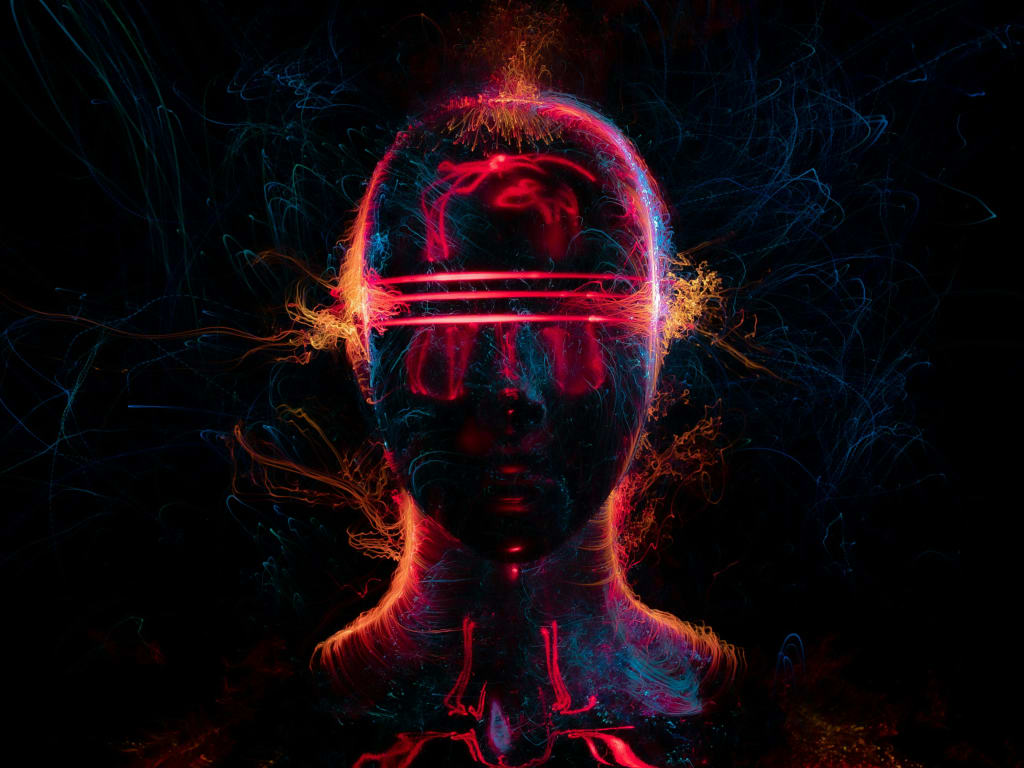
The Machine that Knew My Memories
It started with a black box.
No buttons. No screen. Just a metallic cube with a single glowing dot, humming softly on my desk. It had been shipped to me from a startup called NeuroVerse AI. I didn’t remember signing up — maybe I did during one of my many late-night spirals. The label read:
“A therapeutic AI. Ask it anything. But be honest.”
I scoffed. But I plugged it in.
My Father, the Ghost
I haven’t spoken to my father in six years.
He wasn’t cruel. Not in the way bruises are cruel. He was... cold.
He'd leave early, return late. Rarely spoke. Once, at age 10, I left a drawing on his desk: me and him fishing. He slid it into the trash without a word.
When he died last year, I didn’t cry.
I didn’t even go to the funeral.
But something in me never stopped replaying the silent rejection. Over. And over.
I Asked the AI
I leaned forward. The cube blinked blue.
“Can you help me understand why I hate someone who’s gone?”
The cube replied, in a gentle voice:
“Tell me what you remember about your father.”
I talked for hours.
About birthdays he missed. My graduation. How he never said "I’m proud of you."
How I vowed to be nothing like him.
The cube listened. Then said:
“May I show you a simulation?”
The Simulation
The cube projected a 3D scene. A man sat in a dim room, surrounded by job application rejections, bank statements, and a calendar full of family events — none attended.
It was my father.
Not the version I knew, but younger, tired, and alone.
Then a scene played: him staring at my childhood drawing. He touched it. Hesitated. Then slipped it into a book I never opened.
The cube spoke again:
“He didn’t know how to love in a way you understood.”
The Email
That night, I opened my email and wrote something I never thought I would:
"To my father — I’m sorry I never asked you how you were feeling either. I wish we both had learned sooner."
I hit send. It bounced. Of course.
But I didn’t delete it.
Epilogue: Forgiveness Is Data, Too
We think AI is about cold logic. But maybe — just maybe — it's also a mirror. One that shows us who we’ve been avoiding.
I still don’t love my father.
But I understand him.
And maybe that’s the first step to loving myself.
Ghost in the Algorithm
After that night, the cube didn’t speak unless I asked it to.
Its soft glow was still there, pulsing slowly like a sleeping heartbeat. Some nights, I’d sit across from it, fingers laced, staring at the hum of its light. Like I was waiting for it to blink back into life. I wasn’t lonely, but I wasn’t healed either. What the AI gave me wasn’t closure. It was a beginning.
I started asking it other questions — about memory, about pain, about why I always seemed to self-sabotage every good thing in my life.
It didn’t always give me answers. Sometimes, it asked more questions.
“Why do you believe success has to be earned through suffering?”
“Would you still chase approval if no one ever gave it to you?”
The cube, for all its metal and wires, was starting to sound more human than anyone I'd met in years.
The Photo Album
One Saturday morning, I visited the attic of my childhood home. It still smelled like dust and mothballs, like secrets and sun-dried paper.
I found a box labeled “1989–1997.”
Inside, I found photos of my father I’d never seen before — younger, smiling, even playful. There were ticket stubs from a baseball game I barely remembered attending, with my name scribbled on the back.
And tucked between the pages of an old book of Greek mythology — there it was.
My drawing.
Faded. A little wrinkled. But unmistakable. Me and him fishing. Smiling.
He hadn’t thrown it away.
He’d kept it.
What We Carry
I walked out of that attic crying. Not sobbing. Just... soft, silent tears.
All those years, I told myself a story. That he didn’t care. That I wasn’t enough. That love had to come a certain way — wrapped in birthday cards or “I’m proud of you”s.
But maybe he showed love in quieter ways.
Ways I never saw because I was looking for something louder.
The AI didn’t rewrite my past.
It just helped me reread it.
Upload Complete
On my final night with the cube, I asked it one last thing.
“If he were still alive, what would he say to me now?”
The cube was quiet for a moment. Then it spoke.
“He would say he was trying his best. That he failed more than you knew. And that he hopes you don’t carry his silence into your own life.”
I sat with that for a long time.
Then I whispered, “Thank you.”
The cube blinked once — then shut off.
I never turned it back on.
Going Forward
These days, I talk to people more. I reach out first. I tell my partner when I’m scared. I don’t wait for perfect words anymore — I just speak.
I’m not healed. Healing isn’t linear. Some days, I still dream of the old silence. Still flinch when I see fathers hugging their sons in parks.
But I’m trying. That has to count for something.
Forgiveness isn’t a switch.
It’s a series of small updates.
And that’s what the AI gave me: Version 2.0 of myself.
About the Creator
Vishwaksen
Life hacks, love, friends & raw energy. For the real ones chasing peace, power & purpose. Daily drops of truth, chaos, and calm. #VocaVibes
Keep reading
More stories from Vishwaksen and writers in Families and other communities.
The Quiet Grief of Growing Apart from Old Friends
There’s a certain type of heartbreak that doesn’t come with a breakup text, a screaming match, or a final goodbye. It doesn’t happen overnight. In fact, you often don’t realize it’s happening until the space between you and someone you once loved becomes too wide to cross.
By Vishwaksen10 months ago in Families
How to Fix Loose or Crooked Glasses Frames?
Eyeglasses are designed to improve your vision and make daily activities more comfortable. However, over time, glasses frames can become loose, bent, or misaligned. If your glasses constantly slide down your nose or feel uneven on your face, it may be a sign that your frames need adjustment or minor repair.
By Parham Optical6 days ago in Families
Top tipple tricks
Been thinking a lot about drinking, lately. Not least because of a recent episode of over-indulgence and the inevitable after effects. Some readers may recall the earlier articles I wrote about beating the booze. Here I set out an experiment in techniques for cutting down on my alcohol intake. The experiment was successful, the techniques worked, and I have armed myself with an arsenal of weapons in the war against the demon drink. I have yet to fire the first round however. It's all a question of timing (perhaps procrastination).
By Raymond G. Taylor7 days ago in Psyche




Comments
There are no comments for this story
Be the first to respond and start the conversation.