
The Agony of Isolation:
A Coimbatore Mother and Daughter's Decade Amidst Garbage

Introduction
In the bustling city of Coimbatore, a heart-breaking story unfolds behind the closed doors of a modest apartment. For the past decade, a mother and her daughter have been living in self-imposed isolation, surrounded by heaps of garbage. This shocking tale highlights the dire consequences of mental health issues and the profound impact of living in squalor. This article delves into the lives of this reclusive duo, exploring the circumstances that led to their isolation and the urgent need for community intervention.
A Decade of Isolation
For the past ten years, the lives of 55-year-old Meenakshi and her 30-year-old daughter, Anitha, have been confined to the four walls of their apartment. What started as a coping mechanism for Meenakshi's agoraphobia, a fear of open or crowded places, gradually turned into a severe hoarding disorder. Anitha, bound by her duty to care for her mother, has also become a prisoner in their own home.
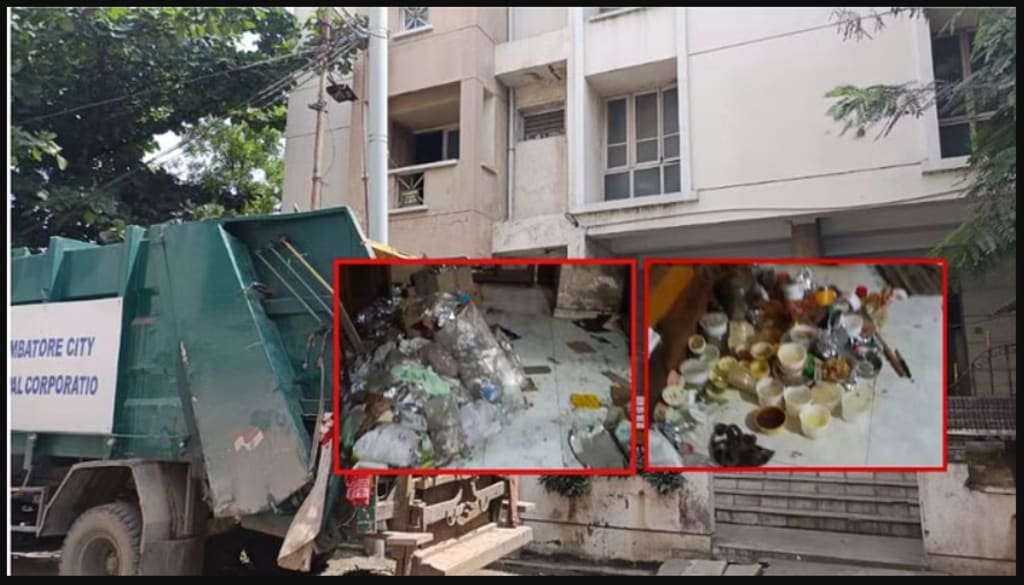
The apartment, once a cozy haven, has turned into a nightmarish labyrinth of garbage and clutter. Stacks of old newspapers, plastic bottles, and household waste fill every corner, leaving barely any space to move. The pungent odor of decaying waste permeates the air, making the environment almost uninhabitable. Despite the dire conditions, Meenakshi and Anitha have continued to live amidst the chaos, cut off from the outside world.
Mental Health and Hoarding
Hoarding disorder is a complex mental health condition characterized by the persistent difficulty in discarding or parting with possessions, regardless of their actual value. This often leads to the accumulation of items, resulting in cluttered living spaces and significant distress or impairment. For Meenakshi, her hoarding behaviour likely began as a way to cope with her anxiety and fear of leaving the house. Over time, the disorder spiraled out of control, trapping both mother and daughter in a cycle of accumulation and isolation.
Anitha's role as a caregiver has further complicated the situation. Her sense of duty and love for her mother has kept her from seeking outside help. The isolation has taken a toll on her mental and physical well-being, exacerbating the already grim circumstances.
The Impact of Living Amid Garbage
Living amidst garbage has severe repercussions on both physical and mental health. The unhygienic conditions have exposed Meenakshi and Anitha to a range of health risks, including respiratory problems, infections, and skin conditions. The constant presence of pests, such as rats and insects, adds to the health hazards. The psychological toll is equally devastating. The overwhelming clutter and lack of cleanliness contribute to increased stress, anxiety, and depression.
Community Response and Intervention
The situation of Meenakshi and Anitha came to light when concerned neighbour's reported the matter to local authorities. Shocked by the extent of the neglect, social workers and mental health professionals have now stepped in to provide the necessary intervention. The first step involves addressing the immediate health and safety concerns. A thorough clean-up of the apartment is essential to create a livable environment. This process, however, must be handled delicately to avoid causing further distress to Meenakshi and Anitha.
Long-term support is crucial in helping them regain control of their lives. Mental health counselling and treatment for hoarding disorder can provide the necessary tools for Meenakshi to manage her condition. Anitha, too, needs psychological support to cope with the trauma of the past decade and to build a life beyond caregiving.
The Importance of Awareness and Support
The story of Meenakshi and Anitha underscores the importance of awareness and early intervention in cases of mental health disorders. It is crucial for communities to recognize the signs of hoarding and to offer support to those affected. Mental health education can play a vital role in reducing stigma and encouraging individuals to seek help before their condition becomes unmanageable.
Conclusion
The decade-long isolation of Meenakshi and Anitha amidst garbage is a poignant reminder of the profound impact of mental health disorders and the need for compassionate intervention. Their story serves as a call to action for communities to be vigilant and supportive, ensuring that no one suffers in silence. By fostering a culture of empathy and understanding, we can help individuals like Meenakshi and Anitha reclaim their lives and restore their dignity.
About the Creator
Angel Sri
Passionate creator weaving words into captivating stories. Transforming ideas into engaging content that sparks curiosity and connection.
Instagram- angel__sri
Wise~Guys
— Look Behind what's in Front of You ~ Make Good Choices — Hey, So how you Doin'..! Made~Men — Mobster Movies romanticise a distinctive, elegant appearance, impeccable attire style, along with the 'Families' expressive lingo. Making their 'Bones' gave them Panache — with vintage fedoras, tailored pin-striped suits, mirror-polished wing-tip shoes adorned with tassels; with their 'Gun Moll' gorgeous dates on their arms.
By Jay Kantor15 days ago in Families
Fordy and the Bandit Kitties
Once upon a time, there was a friendly little vehicle named Fordy. We meet Fordy on a very sleepy road, beneath a sky full of twinkly stars that seemed to whisper goodnight to anyone who passed beneath them. The moon hung low and round, lighting the road just enough to make everything feel safe and calm.
By The Schizophrenic Momabout 23 hours ago in Families
Getting Serious About Comedy (Part I)
If I were asked to remark on my life and the childhood that paved some road leading me to this point, I would have to say something about all the funny people who surrounded me for the last 26,872 days (and counting). Somewhere along that road, I became a big fan of laughter and the comedy that spawns it – and, I mean not only my own laughter, but the laughter of others, some of which I have actually been responsible for inducing.
By John Oliver Smith7 days ago in Humor



Comments (2)
wow very really nice great content thanks
Are they getting on in putting their lives on a better path. This disorder is hard on the person, family and the community.