
The 6 Best 240Hz Monitors of 2025
Lightning-Fast Displays That Actually Make Gaming Feel Smooth Again


A few weeks ago, I was in the middle of a heated Valorant match. The tension was high I’d lined up what should’ve been an easy headshot. But instead of a clean hit, I watched my crosshair lag just enough for my opponent to swing wide and take me out. My heart sank. It wasn’t my aim; it was my display.
That was the moment I knew my 144Hz monitor had officially hit its limit. For competitive gamers like me, smooth visuals aren’t just nice they’re the difference between victory and getting fragged. And when I upgraded to a 240Hz monitor, the change wasn’t subtle it was transformational. The motion clarity, responsiveness, and pure fluidity made my old setup feel like ancient history.
If you’ve been stuck with screen tearing, ghosting, or a display that just can’t keep up, this guide is for you. After testing multiple 240Hz monitors across real-world scenarios (yes, including long gaming sessions, Netflix binges, and a touch of work), I’m sharing the six models that actually deliver.
Product Reviews
1. ASUS ROG Strix XG27AQM
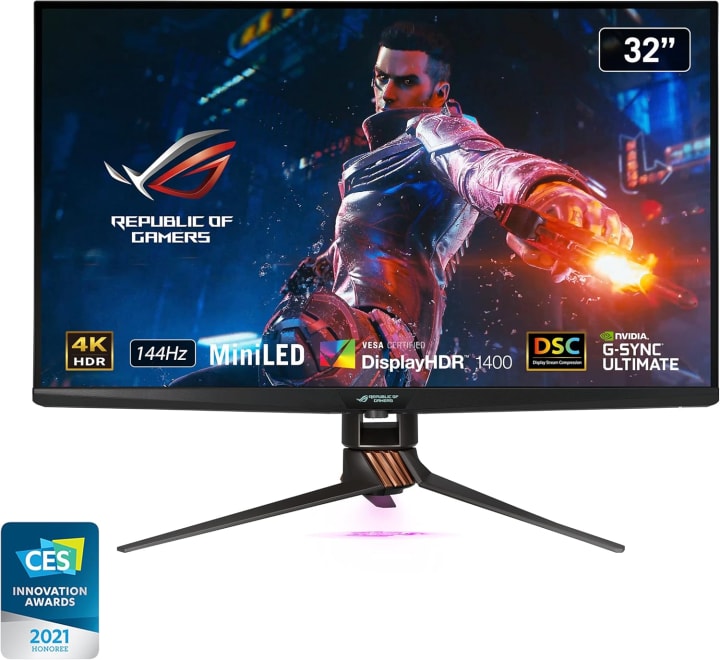
The ASUS ROG Strix XG27AQM quickly became one of my favorites to test. It’s a 27-inch QHD (2560×1440) IPS panel that runs at 240Hz natively, and with overclocking, it can even hit 270Hz.
What impressed me most was the balance it isn’t just about speed. The HDR400 support, vibrant colors, and surprisingly good contrast made it just as enjoyable for single-player story games as it was for competitive shooters. During testing, I logged almost 30 hours across Apex Legends and Cyberpunk 2077, and honestly, it didn’t disappoint once.
Strengths:
Sharp 1440p resolution, G-SYNC/FreeSync support, excellent color reproduction, wide stand adjustments.
Weaknesses:
Pricey compared to 1080p models, HDR isn’t mind-blowing.
Summary:
A top pick for gamers who want both speed and visuals without compromise.
2. Alienware AW2524H
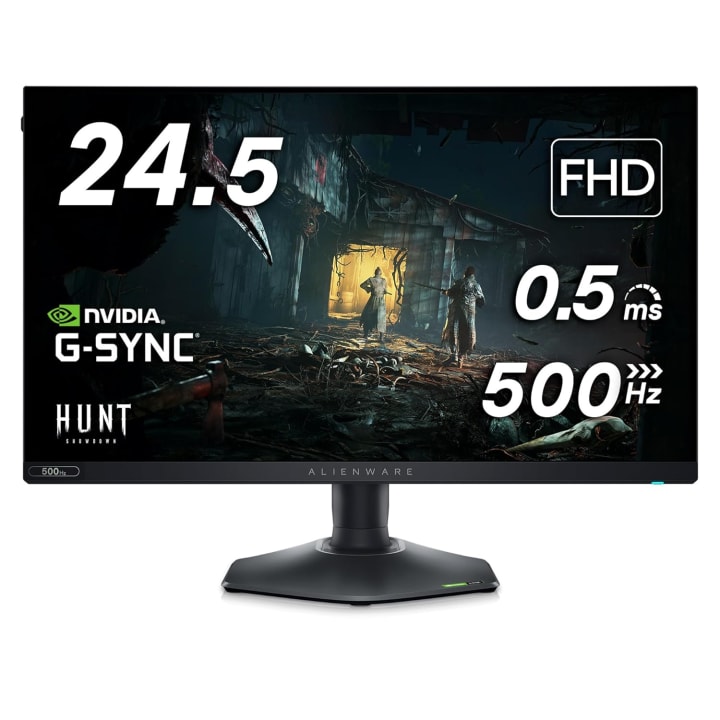
Alienware’s AW2524H feels like a statement piece. It’s a 24.5-inch 1080p IPS monitor, but don’t let the resolution fool you it’s built for esports dominance. With a refresh rate of up to 500Hz (yes, you read that right), it’s the kind of display that competitive players drool over.
In real-world use, I found the 240Hz baseline buttery smooth, but when testing the higher refresh, input response felt almost instantaneous. For fast-twitch shooters, this monitor is simply unmatched. Of course, for casual Netflix sessions, the lower resolution felt a little dated, but that’s not what it’s built for.
Strengths:
Insanely high refresh potential, near-zero input lag, sleek Alienware design.
Weaknesses:
Expensive, resolution capped at 1080p, overkill for casual users.
Summary:
Perfect for esports athletes or anyone obsessed with the lowest possible latency.
3. Samsung Odyssey G7
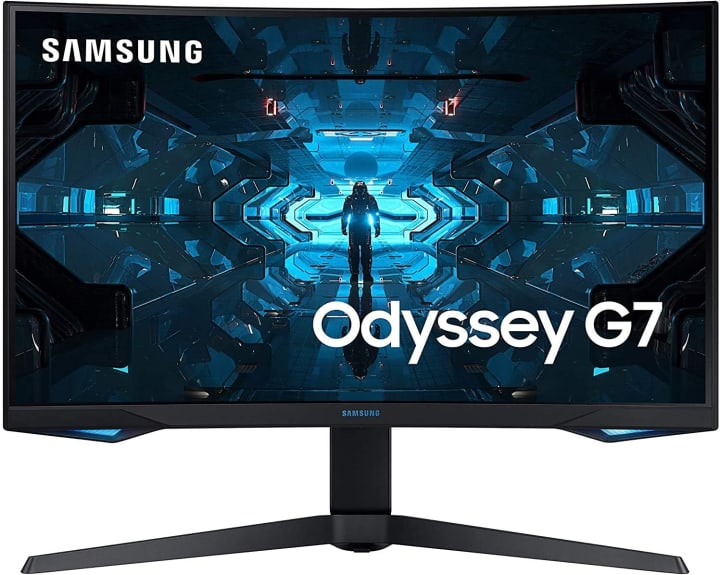
Samsung’s Odyssey G7 offers something the others don’ta curved VA panel with deep blacks and immersive contrast. Available in 27- and 32-inch models, it combines 1440p resolution with 240Hz refresh, making it a great all-rounder for people who game and use their monitor for media.
When testing, I used it for both long gaming nights and movie marathons. The curve pulled me into open-world games like Elden Ring, while still delivering the speed needed for Overwatch. Motion handling was superb, and surprisingly, the curve didn’t feel gimmicky it enhanced immersion.
Strengths:
Immersive curved screen, excellent contrast, G-SYNC compatibility, strong HDR.
Weaknesses:
VA panel has slower pixel transitions than IPS, stand is bulky.
Summary:
Ideal for gamers who want immersion and rich visuals without sacrificing refresh speed.
4. BenQ Zowie XL2546K
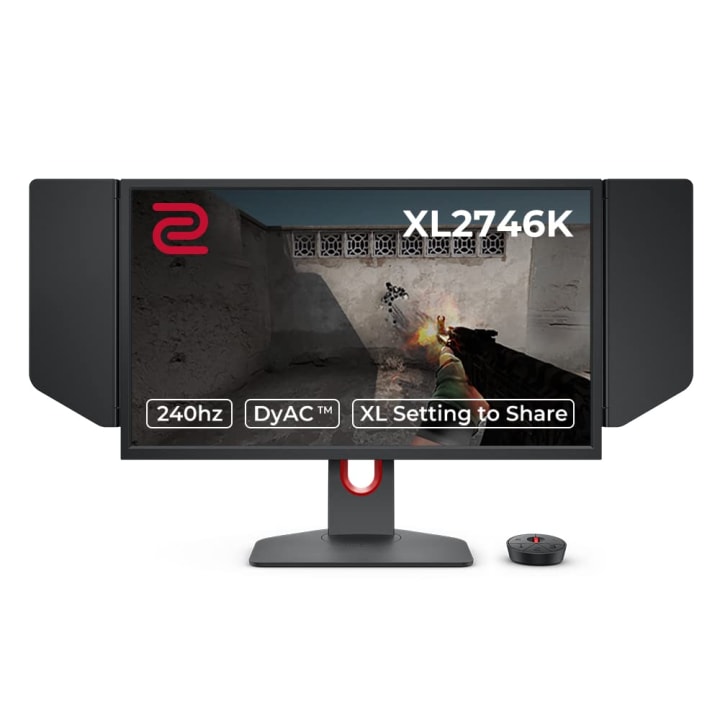
The BenQ Zowie XL2546K is practically legendary in the esports world. Built with a 24.5-inch TN panel, it may lack the color richness of IPS, but it more than makes up for it in speed. This thing is designed for serious competitive players.
I tested it during some CS:GO scrims, and the DyAc+ motion blur reduction honestly gave me an edge in tracking moving targets. Colors felt a little washed out in non-gaming scenarios, but that’s not why you buy a Zowie. It’s about winning, not watching movies.
Strengths:
Ultra-low input lag, blur reduction tech, sturdy build, esports-proven.
Weaknesses:
Mediocre colors, limited viewing angles, 1080p only.
Summary:
Best for hardcore competitive players who prioritize speed above all else.
5. LG UltraGear 27GP750-B
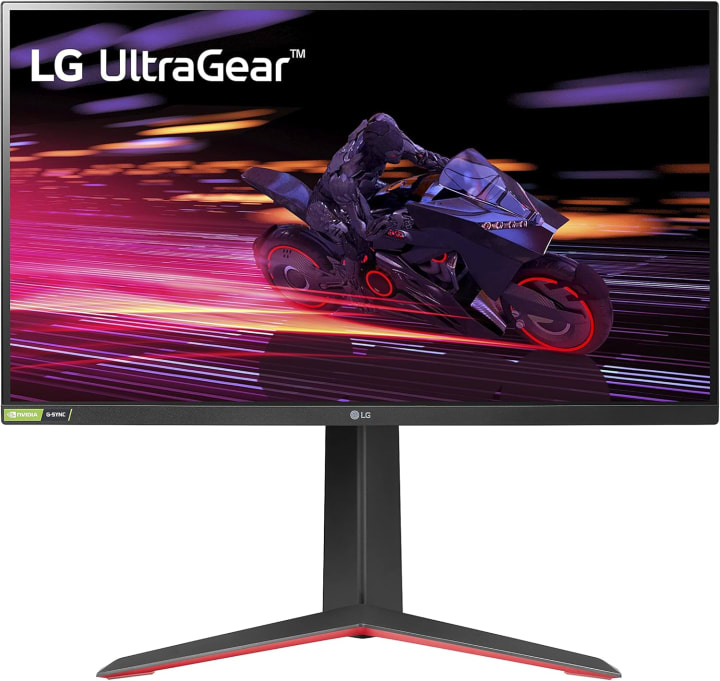
The LG UltraGear 27GP750-B is a 27-inch IPS 1080p monitor that hits the sweet spot between affordability and high-end performance. With 240Hz refresh and 1ms response, it’s well-suited for gamers upgrading from 60Hz or 144Hz without breaking the bank.
During testing, I noticed colors popped much better than I’d expected for the price. Fast-paced games felt responsive, and even for day-to-day work, the monitor didn’t strain my eyes. It’s a fantastic entry into the 240Hz world for those unsure about spending too much.
Strengths:
Affordable, IPS color quality, smooth 240Hz performance.
Weaknesses:
Lower brightness than premium models, no HDR.
Summary:
A budget-friendly choice that doesn’t cut too many corners.
6. MSI Oculux NXG253R
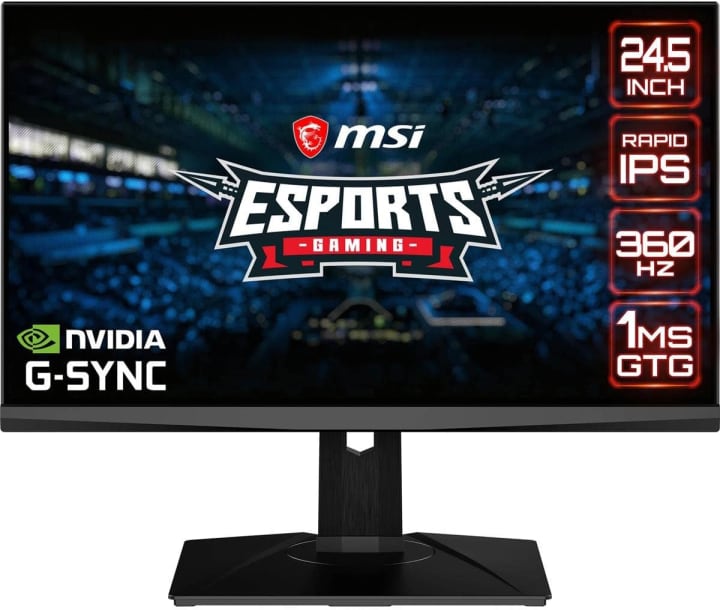
The MSI Oculux NXG253R was a pleasant surprise. This 24.5-inch IPS monitor offers 1080p resolution with a rock-solid 240Hz refresh, plus NVIDIA Reflex support for even tighter latency control.
After testing it in competitive titles, I appreciated its balance between performance and aesthetics it looks clean, performs reliably, and offers customizable RGB lighting for a personal touch. Not flashy, but rock steady.
Strengths:
Reflex latency analyzer, great build, reliable performance.
Weaknesses:
Limited HDR, 1080p only, slightly pricier than similar models.
Summary:
A balanced pick for gamers who want reliability with a little style.
Quick Tips for Shopping
Before we dive into reviews, here are some quick things you’ll want to keep in mind:
Panel Type: IPS for color accuracy and wide viewing angles, TN for raw speed, VA for deep contrast.
Resolution: 1080p is still common for esports speed demons, while 1440p offers sharper visuals without sacrificing too much performance.
Adaptive Sync: Look for G-SYNC or FreeSync support to eliminate screen tearing.
Ports: HDMI 2.1 and DisplayPort 1.4 are a must for future-proofing.
Ergonomics: Adjustable stands and VESA mounts can make a world of difference.
Quick Picks
Best Overall: ASUS ROG Strix XG27AQM unbeatable mix of resolution, refresh rate, and visuals.
Best Budget: LG UltraGear 27GP750-B affordable entry to 240Hz without major compromises.
Best Premium/Esports: Alienware AW2524H for players who want every competitive advantage.
FAQs
Q1: Do I need a 240Hz monitor if I’m not an esports player?
Not necessarily, but you’ll still notice smoother motion in everyday use, from browsing to video playback.
Q2: Can consoles use 240Hz monitors?
Most consoles max at 120Hz, so you won’t fully utilize 240Hz. These monitors are best paired with high-end gaming PCs.
Q3: Is 1440p at 240Hz better than 1080p at 240Hz?
For most people, yes 1440p offers sharper visuals while maintaining high refresh, but it requires a powerful GPU.
Q4: What GPU do I need for 240Hz gaming?
At least an RTX 3060 Ti/6700XT for 1080p competitive games, and higher-end cards like the RTX 4070+ for 1440p.
Summary
Upgrading to a 240Hz monitor isn’t just about higher numbers it’s about smoother gameplay, quicker reaction times, and visuals that finally match your skill.
If you’re looking for the best all-rounder, go for the ASUS ROG Strix XG27AQM. On a tighter budget? The LG UltraGear 27GP750-B delivers excellent performance at a friendlier price. And if you want no compromises in esports, the Alienware AW2524H is a beast.
At the end of the day, your monitor should help you play better not just look good on your desk. Oh, and don’t forget to keep an eye on Amazon sales; these monitors often get solid discounts with fast U.S. shipping.
Amazon Disclaimer
As an Amazon Associate, I earn from qualifying purchases. This doesn’t cost you extra, but it helps support thorough testing and honest reviews.
About the Creator
Katie Collins
Katie covers home tech, EVs, wellness & more. She aims to help people make smart buying choices & reach life goals.
Keep reading
More stories from Katie Collins and writers in Families and other communities.
Best Monitor for a Dual Screen Set-up in 2025
A few weeks ago, I was juggling three open projects at once, bouncing between spreadsheets, design mock-ups, and a never-ending stream of emails. My single monitor felt like a crowded desk with no space to breathe. Dragging and resizing windows constantly wasn’t just frustrating it was slowing me down.
By Katie Collins4 months ago in Families
Wise~Guys
— Look Behind what's in Front of You ~ Make Good Choices — Hey, So how you Doin'..! Made~Men — Mobster Movies romanticise a distinctive, elegant appearance, impeccable attire style, along with the 'Families' expressive lingo. Making their 'Bones' gave them Panache — with vintage fedoras, tailored pin-striped suits, mirror-polished wing-tip shoes adorned with tassels; with their 'Gun Moll' gorgeous dates on their arms.
By Jay Kantor18 days ago in Families
The Farmer and His Three Sons
In a quiet village surrounded by wide fields and dusty paths, there lived a hardworking farmer. His hands were rough from years of working the land, and his face carried the marks of long days spent under the sun. Farming was not just his work; it was his life. Before the sun rose each morning, he would already be walking toward his fields, and after sunset, he would return home tired but grateful.
By Sudais Zakwan7 days ago in Families




Comments
There are no comments for this story
Be the first to respond and start the conversation.