
Teletherapy vs. In-Person Therapy
Which One is Better?

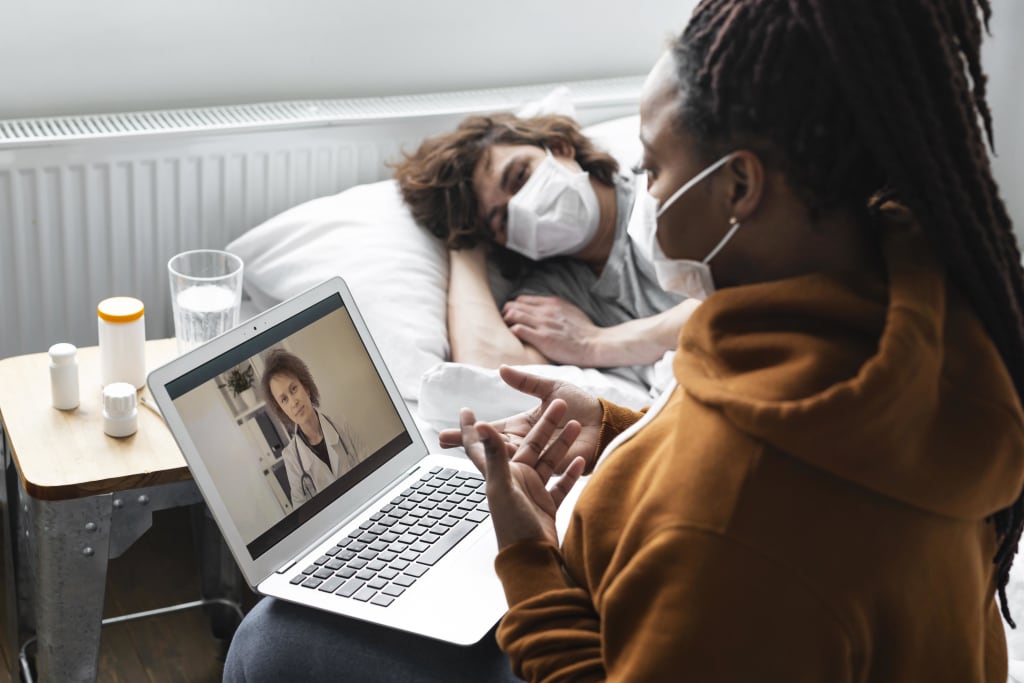
In recent years, mental health care has changed dramatically. Traditionally, therapy meant sitting face-to-face with a psychologist in an office, but today, therapy delivered through phone calls, video sessions, or online platforms is becoming the new norm. That is called teletherapy.
It is important to understand that both teletherapy and in-person therapy have unique benefits and challenges, and choosing between them often depends on cost, convenience, privacy, personal preference, and access to care.
This article will give you a deep insight into the similarities and differences between teletherapy and in-person therapy, so you can make an informed decision that suits your needs.
What Is Teletherapy?
Teletherapy, also called online therapy or virtual counseling, refers to mental health care delivered through technology, such as:
- Video calls (Zoom, Doxy.me, etc.)
- Phone calls
- Text messaging or chat platforms
- Specialized mental health apps (like BetterHelp, Talkspace)
According to the American Psychological Association (APA), teletherapy became widely adopted during the COVID-19 pandemic, and many people have continued using it because of its flexibility.
What Is In-Person Therapy?
In-person therapy is meeting a therapist face-to-face in their office or clinic. It is the traditional method and has been here for years. This format allows for direct human interaction, physical presence, and a controlled environment.
Research shows that the therapeutic relationship, the bond between therapist and client, plays a major role in success, and some people feel this bond is strongest in person.
Comparing Teletherapy and In-Person Therapy
Let’s break down the key areas of difference.
A. Cost
- Teletherapy
Online platforms often have subscription models ranging from $60–$90 per week for unlimited text + video sessions.
Independent therapists may charge $75–$200 per session (similar to in-person rates).
Savings: no travel costs, reduced childcare needs, and sometimes lower fees due to fewer overhead expenses for the therapist.
- In-Person Therapy
Costs typically range from $100–$250 per session, depending on location and specialization.
Some clinics offer sliding scales for low-income clients.
Insurance coverage is more standardized for in-person visits, though telehealth coverage has expanded in recent years.
Teletherapy may be cheaper overall, especially if you use a subscription platform. In-person therapy might be pricier but sometimes offers more consistent insurance coverage.
B. Convenience
- Teletherapy
Accessible from home, work, or even while traveling.
No commute, which saves time and energy.
Easier for people in rural or underserved areas to find care.
Flexible scheduling, including evenings or weekends.
- In-Person Therapy
Requires travel and possibly time off work.
Less flexible scheduling (office hours only).
Can provide a “dedicated space” away from home, which some clients find helpful for focus.
Teletherapy wins for convenience and accessibility, but in-person sessions can provide a more structured environment.
C. Privacy
- Teletherapy
Sessions take place at home, which may feel private, but only if you have a quiet, confidential space.
Concerns: interruptions from family, roommates, or poor internet security.
Most licensed therapists use HIPAA-compliant platforms to protect confidentiality.
- In-Person Therapy
Provides a private office setting.
Less worry about digital data breaches.
More control over confidentiality compared to logging on from home.
Both are secure when done properly. In-person may feel safer for those worried about tech privacy, while teletherapy requires ensuring a private space.
D. Effectiveness
- Teletherapy
Research shows teletherapy is just as effective as in-person therapy for many conditions, including depression, anxiety, and PTSD.
Works well for people comfortable with technology.
- In-Person Therapy
Still considered the “gold standard” for certain cases, especially severe mental illness, crisis intervention, or when non-verbal cues are crucial.
Both are effective, but the best choice depends on your condition and comfort level.
E. Relationship and Human Connection
- Teletherapy
Some people feel the connection is weaker through a screen.
Body language, eye contact, and subtle cues may be harder to read.
- In-Person Therapy
Natural connection with more non-verbal communication.
Some clients feel safer and more supported in a physical presence.
F. Special Situations
For busy parents: Teletherapy avoids childcare hassles.
For people with mobility issues or chronic illness: Teletherapy removes travel barriers.
For those in crisis or with suicidal thoughts: In-person therapy is often safer.
Final Thoughts
Teletherapy and in-person therapy are both valid, effective ways to get mental health support. Your choice should depend on your personal needs, resources, and comfort level.
If you value convenience, lower cost, and flexibility, teletherapy may be the right choice.
If you need deep connection, structured space, or support for severe conditions, in-person therapy may be better.
To read more about this topic, click and read more.
About the Creator
Keep reading
More stories from Tinsae Zelalem and writers in Families and other communities.
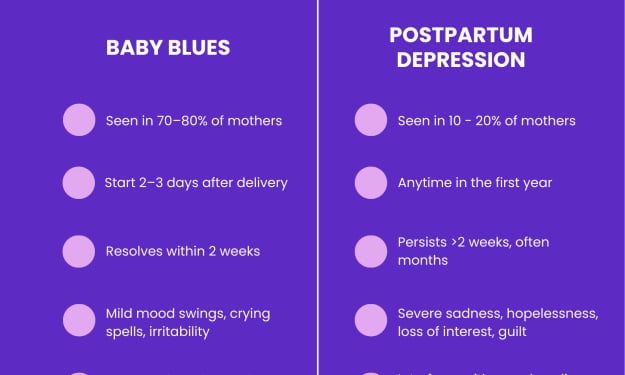
Postpartum Depression vs. Baby Blues
Bringing a new life into the world is often a joyful experience. Friends and family usually expect the new parent to be flooded with happiness, but this might be far from the truth. Many new mothers experience mood changes after birth. Some of these changes are mild and temporary, which are baby blues, while others are more serious and long-lasting, which can lead to postpartum depression.
By Tinsae Zelalem4 months ago in Families
Wise~Guys
— Look Behind what's in Front of You ~ Make Good Choices — Hey, So how you Doin'..! Made~Men — Mobster Movies romanticise a distinctive, elegant appearance, impeccable attire style, along with the 'Families' expressive lingo. Making their 'Bones' gave them Panache — with vintage fedoras, tailored pin-striped suits, mirror-polished wing-tip shoes adorned with tassels; with their 'Gun Moll' gorgeous dates on their arms.
By Jay Kantor18 days ago in Families



Comments
There are no comments for this story
Be the first to respond and start the conversation.