
Teens, Habits, and How Parents Are Coping
A Story of Change
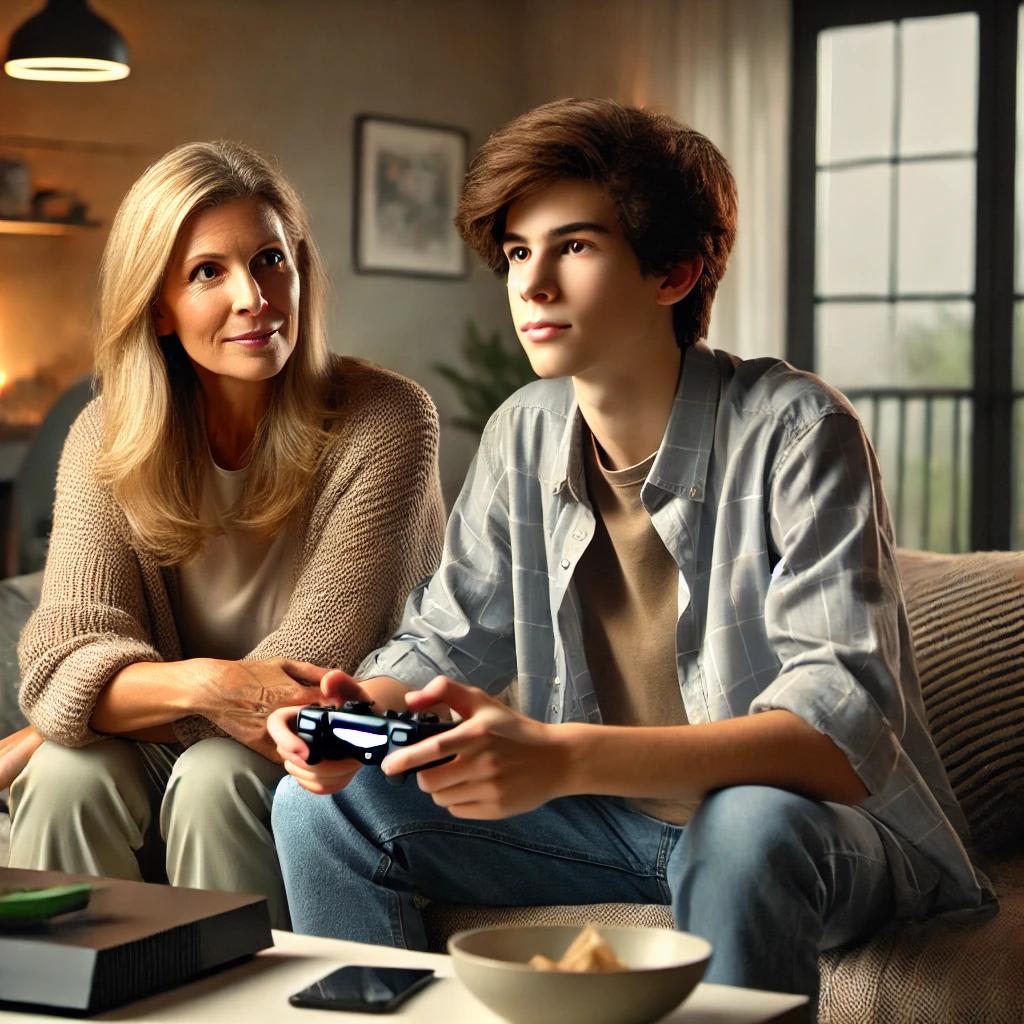
The television whispered to itself as Sarah lounged on the couch with her laptop, perched on her thighs, watching Noah’s son who was fifteen and sat in a corner. The face of the teenage boy was soaked in the light of his smartphone as he watched rabidly a new TikTok video. Sarah let out a breath, saying it was not because she was angry, but because she understood. This was a new normal—the difference between her own childhood and the one her son Noah was experiencing was not the activities they engaged in, but the integration of technology into every aspect of her son’s life.
Like many other parents, Sarah found herself in a perpetual battle, at the basis of which was the desire to separate Noah from the screen and the velvet understanding that this is the reality where this child is growing up. During the global pandemic, the internet had gradually turned into Noah’s backyard, a place for communication, and even a school. But what pained Sarah was that this urge to rely on devices had naturally become a part of the problem that Noah experiences on a daily basis.
Teenagers today experience something different than what their parents experienced growing up in their teenage years. Notable changes can be observed due to the presence of smartphones, social media, and the availability of entertainment whenever it is required. Younger people spend a vast amount of time doing things that most likely would leave parents with questions, for instance, that the children are spending scrolling through Tik Tok, posting across Instagram inspiring memes, playing a lot of online games, and talking about television shows through streaming services such as Netflix and Youtube. Nevertheless, to teenagers, it is not merely for entertainment, but it is their window to the world.
As for Sarah, it was a gradual change. When Noah was younger, screen time was limited to watching his cartoons for one hour or once every weekend family movie night. However, as he got older, there were also more and more screens in the house: from a gaming console to a phone, and a laptop.for school assignments. What originally aimed as a source of enjoyment soon progressed into routine, a way of ‘doing’ that involves rest, social interaction, and to some extent, expression.
It has also been reported that on average, teenagers spend a whopping 7 hours a day in front of a screen, not considering school and work related activities. This behavior is modifying their everyday patterns as well as their mental conditions. Social networking provides an avenue for teenagers to interact with friends but it has its downsides such as worrying about oneself, comparison, anxiety and the care to always have an online ‘face’.
For a lot of parents such as Sarah, a more recent new adoption of a digital lifestyle gives them a kind of emptiness. She recalls how her entire weekends were spent outdoors, whether it was playing at the parks, learning how to ride a bicycle with friends, or lost in a gripping novel. On the other hand, Noah tends to devote most of his time with his friends via a mobile phone, or participating in online games with friends while speaking to them over headsets.
That did not mean, however, that Sarah was clueless about how technology could be of great help. Noah was amazed at how well Noah was able to use technology, without trouble getting the home wifi and helping her with the new apps. But with the increased use of digital devices, she began to observe alterations in his normal behavior. Family’s dinners turned into quick meals with no conversations, and Noah would hurry out to his den after the dinner. Sarah often longed for the time when there used to be conversations about school, his friends and his sports team. His responses were now short and un-informative, followed by him hurrying back to the computer.
Parents like Sarah are often stuck in a situation. No matter how creative the approaches are in punishing the kids – like taking away gadgets from the kids or cutting down on overall screen time – these do not seem to be effective means. To the contrary, they cause more problems than they help. It does not guarantee safety or pleasure though, especially to a teenager in times of solitude or pressure. Later on, while she was sure that Noah should have an appropriate ratio of the online and offline activities, she did not want to drive him away or create daily tensions over the screen activities.
The issue often at stake relates to the quest in empowering teenagers with the ability to use technological resources while instilling good practices as well. Sarah had come across dozens of articles and parenting blogs that suggested to watch screen time, go outside more, and communicate more. Only that as Noah aged, it has been tough to impose those instructions. It was not only a choice - it even became a daily routine in every single aspect of his life.
He uploaded his projects on the Internet, networked his peers through message services, and had games with friends and activities in the cyber world. Speaking of Noah, going offline transposed even further beyond the fixed confines of a cell phone – it also required him to leave his whole universe.
It didn't take long before Sarah figured out a few things: Noah was often saying that he was “bored” so long as a phone or a game was not taking up his time. Off-screen, it appeared like he got fidgety and impatient. Sarah saw that this was quite a concern going forward. Even though there was no fight in Noah’s generation to get bored; it was becoming a challenge for some to do so, due to a culture of constant gadget use by teenagers such as Noah. Noah used to play family board games, do puzzles, and even have plain conversations, which at some point he enjoyed, but not anymore.
But Sarah was resolved not to quit. There was no way such a ban could support the cause. That is why she grabbed the opportunity and explored ways in which she could combine Noah’s passions with better lifestyles.
It was on such a night that Sarah thought that it was a good time to do things differently. Rather than asking Noah to put his phone away, she requested him to please show her what he was glued to. Noah, caught by surprise, showed her a series of TikToks that generated laughter. Eventually, Sarah exerted effort to ask Noah about things that normally did not involve him thanks to the internet, such as memes and the latest game strategies he had been studying.
This small alteration led to a great deal of benefits. Sarah discovered that being on Noah’s terms enabled her to have greater and more personal conversations with him. Noah ceased blocking his phone or hurrying to his room after eating. Other subjects started coming up as well, like school work and other children. Sarah noted that the child was not only interested in fun games in the virtual realm; he also craved some kind of attention and recognition.
Thus, when the bonds with Noah were established, Sarah started implementing soft limits, not empowering ruling, but acceptable compromises. They decided on some times when they could eat together without using phones, or other periods of the day when they could do something as a family, like cook or take a walk. Making these simple decisions with Noah made him feel empowered and not as rebellious.
Sarah does not stand out among the cases of many parents trying to acclimatize to the new parenting order. Other parents have relied on technology themselves by adopting applications that check the phone use or control the number of launches on some limited apps. It can be effective in addressing the abuse of the practice, however, those measures are often taken with such resistance by the youth that they end up being more defiance rather than adherence in order to avoid those measures pouring in in different forms.
There are also parents who are now paying attention to designing offline engagements that are actually pleasurable to their teenagers. Be it active recreation, artistic activities, or even some work experience – the important thing is to seek means to occupied teenagers’ attention without using screen time as a breeding investment avenue. For example, some parents invite the children to do family game evenings with the parents’ and children’s choices included.
Co-viewing has become common in some families, especially those with younger teens. Parents watch the same series or follow the same influencers or even play the same games as their children. This interactive play-liked experience bridges the gap between the two worlds of the child and theiser perfectly as it aids them in relating to the narratives which they are trying to censor thus controlling and channeling them more positively.
Though Sarah was open to the prospect of connecting with Noah through the fascinating digital experience which he embraced, she was wary of the effects of too much screen time. There have been worries amongst mental health workers regarding thte negative influence that social media or the usage of gadgets has on the health of theteens. While overt, the aspects of being easily compared to others, the fear of missing out (FOMO), and even cyberbullying are some of the visible issues of concern for a teenager within the internet.
Noah, being a normal teenager, once in a while would say things Like ‘I feel bad, that day I was not able to go to the event but my friends uploaded some pictures on the occasion.’ or ‘I posted something, I literally never get as much likes as my friends get.’ Like most teenagers, Sarah did not let him go without discussing those feelings. ‘Well, Matthew, sometimes social media can be a little shy. You know, a lot of it is a photoshopped version of life.’ Such thoughts went beyond the level of slight unsettling discomfort. They managed to plan so that these feelings were kept at bay by emphasizing the importance of a real sense of belonging and worth that has nothing to do with seeking approval from others.
For a lot of mothers and fathers, surveilling the web is not a new endeavor. It seems as if the sooner or later, particularly among the young ones, digital habits are going to remain, but what is significant is to assist adolescents as they learn to cope with this technology without seeking approval from others all the time or requiring excitement all the time.
About the Creator
Keep reading
More stories from Mayada Fadel and writers in Families and other communities.
COVID-19 Is Back
Just when the world thought it was moving past the pandemic, COVID-19 seems to have made an unwelcome return. After months of declining cases and the hopeful reopening of societies, a resurgence of infections has raised alarm bells. New variants of the virus are being reported, hospitals in certain regions are seeing a spike in admissions, and governments are once again contemplating restrictions. As the virus regains a foothold, it’s important to understand what’s happening, how it affects us, and most crucially, what we can do to stay safe.
By Mayada Fadelabout a year ago in Wander
Becca
"Everything is so... flat." Denille said stupidly as she looked around her new neighborhood. She looked around at the muted desert where even the smallest sign of life seemed to have given up. The plant life was shrubs that were half cooked by the heat and where there should have been a lawn, a mess of white rocks laid glistening in the sun. Even the sky looked stretched thin, like the sun had ironed it smooth. She’d moved from Riverside, where at least there were hills, but here in Barstow, everything felt baked and brittle.
By Sara Wilson8 days ago in Fiction




Comments
There are no comments for this story
Be the first to respond and start the conversation.