
Tawaifs and Kothas of Chawri Bazar
Walking tours in Delhi, Historic trails in Delhi, the heritage walk, Sightseeing in Delhi, Exploring Delhi History, Monument Walks, Historic Walking Tour, History of Delhi
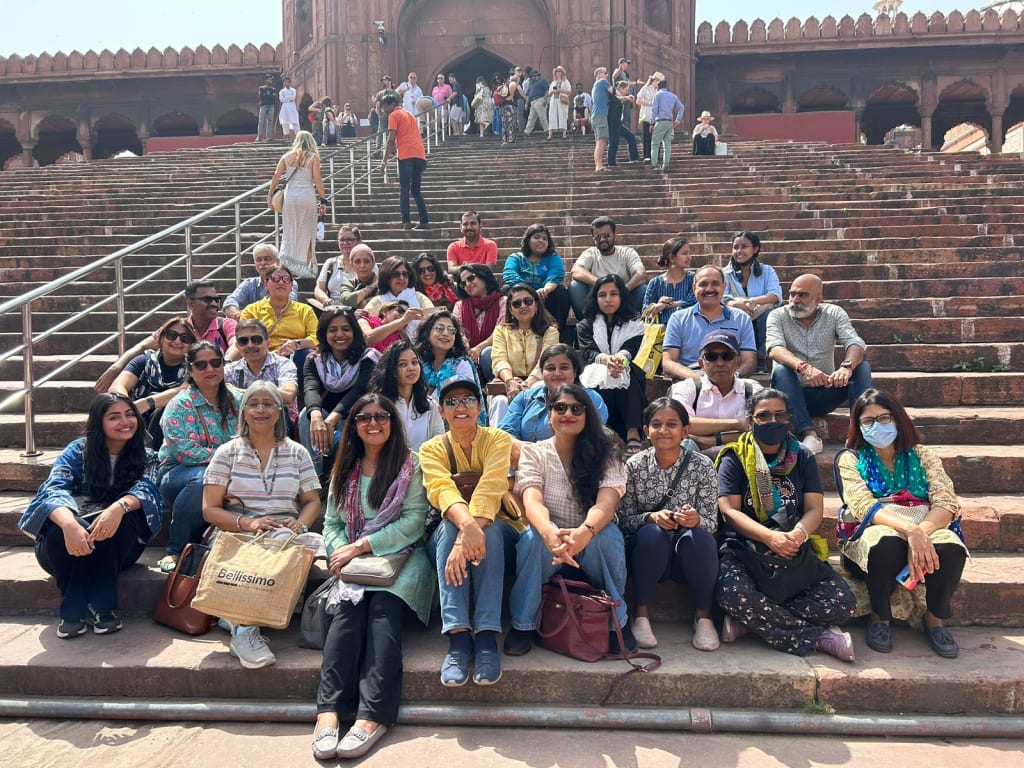
Historic walking tours in a city like Delhi are a great initiative to immerse yourself in the stories from the past. The history of Delhi is very fascinating and it is not only just showcased in the monuments and forts, but also in the bustling streets of old Delhi.
It was in 2019, when Enroute Indian History started conducting their flagship heritage walk called ‘Exploring Tawaifs and Kothas of Chawri bazar’. Enroute Indian History is a women-led organization that focuses on the dissemination of historical knowledge and creating awareness about heritage by conducting heritage walking tours in Delhi.
Introduction
The participants walk through the bustling streets of Chawri bazaar (originally known as Bazar-e-husn) and witness the kothas that once used to serve as the houses of the Tawaifs. Tawaifs were highly skilled performers who were accomplished in singing, dancing and other arts. They were patrons of classical music and dance, and some of them became influential figures in the cultural scene of their time. Get to know about the various powerful Tawaifs, who were the richest and the elitist citizens of their time. Experience the rise and the fall of the Tawaifs, through the stories narrated by the finest and the most passionate individuals of Enroute Indian History. The heritage walk at Chawri bazaar, is a one of a kind experience and a great way to learn about the history of Delhi.
The monument walks or the heritage walks are 1.5 hour guided group walks conducted by Enroute Indian History, every weekend. These group walks are a great way to meet new like minded people. People from all over the country, when visiting Delhi never miss the opportunity to attend our special Tawaifs and Kothas walk as they are not being conducted elsewhere. If you cannot attend the weekend group walks, contact us for special customized heritage walks, tailor made just for you and conducted as per your convenience.
Our walk has been featured by esteemed media houses such as Indian Express and The Print. Check our website to know about the heritage walks www.enrouteindianhistory.com You can also follow us on instagram at enroute_indian_history_ for more history related content.
About Tawaifs and Kothas of Chawri Bazar
Masjid Mubarak Begum in Old Delhi’s Chawri Bazar is named after the wife of David Ochterlony, Delhi’s first British resident. Mubarak Begum was a dancing girl, and it is her background that lends this early 19th century mosque its colloquial name, Randi ki Masjid, or prostitute’s mosque. The mosque’s caretakers try hard to shrug off the name, going to the extent of having painted the “correct name” of the mosque on its façade in Roman letters.
A stone’s throw away from the mosque lies the Chawri Bazar metro station, one of the capital’s deepest metro stations. Ascending to the surface – past scrubbed grey tiles and gleaming escalators into a world of Mughal ephemera – is not unlike time travel.
True courtesans
A walk up Chawri Bazar, beyond Ajmeri Gate, deposits us at GB Road, New Delhi’s current red-light district. For the residents of Old Delhi, the events of 1857 put an end to the Mughal Shahjahanabad they knew. The poet Mirza Ghalib bore witness to the sudden shifts in power, with the residents of the old city finding themselves homeless and penniless. The courtesans were relocated – the subtle differences between the nature of what they offered becoming increasingly irrelevant – to GB Road, beyond the city limits of Old Delhi.
The police interrupt our group twice as we walk down GB Road. A constable tells us it is unsafe for women to walk around the area, while a more persuasive sub-inspector stops to have a long conversation about the merits of conducting guided tours in red-light areas.
In the layout of many GB Road kothas, Soofi notices spaces earmarked for dancing and singing. Until some decades ago, GB Road was still home to tawaifs like the famous Maya Devi, who studied Kathak with Acchan Maharaj and Hindustani music with masters of the Kirana gharana. In 1983, the British docudrama The Courtesans of Bombay focused on Pavan Pul, a Mumbai compound inhabited by women who worked as courtesans and in the entertainment industry. The women danced and sang accompanied by their musicians, in unremarkable tube-lit, terrazzo-floored living rooms, where they also raised their children by day. Pavan Pul is no longer traceable on a map.
Summary
In conclusion, Explore the lives of the tawaifs or 'dancing girls' on a heritage walk through the streets of Shahjahanabad with Enroute Indian History. Visit the majestic Jama Masjid and discover the colorful canvas of artists, merchants, soldiers, traders, and the learned women of the past. In addition, Attendees will receive a complimentary copy of "Courting Hindustan: The Consuming Passions of Iconic Women Performers of India" by Madhur Gupta, which offers a portrait of some of the most intriguing women figures who practised traditional Indian entertainment art forms. Join us for an immersive experience celebrating India's rich cultural heritage and the women who shaped it.
About the Creator
Anoushka Jain
Enroute Indian History in Delhi is one of the leading businesses in the Tour Operators For Sight Seeing. Also known for Tour Operators For Sight Seeing, Tour Operators and much more. Find Address, Contact Number, Reviews & Ratings, Photos.
Keep reading
More stories from Anoushka Jain and writers in Families and other communities.
Raat Ke Afsane : Night Walk In Qutub Minar
Night walks in Delhi are a fantastic way for visitors to connect to the history of Delhi, appreciate its cultural richness and create lasting memories of their journey through time and history. The historic walking tours conducted in these monuments allow visitors to explore these iconic sites in a different light, quite literally.
By Anoushka Jain2 years ago in Families
Wise~Guys
— Look Behind what's in Front of You ~ Make Good Choices — Hey, So how you Doin'..! Made~Men — Mobster Movies romanticise a distinctive, elegant appearance, impeccable attire style, along with the 'Families' expressive lingo. Making their 'Bones' gave them Panache — with vintage fedoras, tailored pin-striped suits, mirror-polished wing-tip shoes adorned with tassels; with their 'Gun Moll' gorgeous dates on their arms.
By Jay Kantor27 days ago in Families




Comments
There are no comments for this story
Be the first to respond and start the conversation.