
Stripes Before Sleep
One of my favorite stories as a little girl, "A Bad Case of Stripes"


Even though Camila Cream loved lima beans, she refused to eat them.
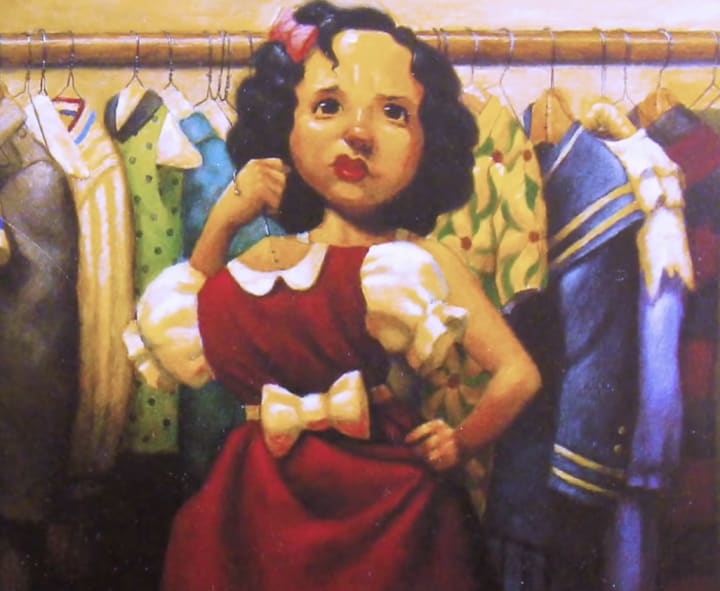
Her friends and classmates despised lima beans, which made Camila feel like she shouldn't like them either. So, she gave them up! Ultimately, this story is a classic case of peer pressure doing its job during elementary school.
By worrying about what others thought of her, Camila began to develop an incredibly strange condition. Her skin changed colors, and she became covered in rainbow stripes! Upon arrival at school, the stripes came alive and shifted into magnificient patterns and odd shapes. Camila's skin went from purple to bright blue, as kids shouted what they wanted her to turn into!
These mysterious stripes were becoming so distracting for Camila, that she had to be sent home from school to be seen by multiple doctors.
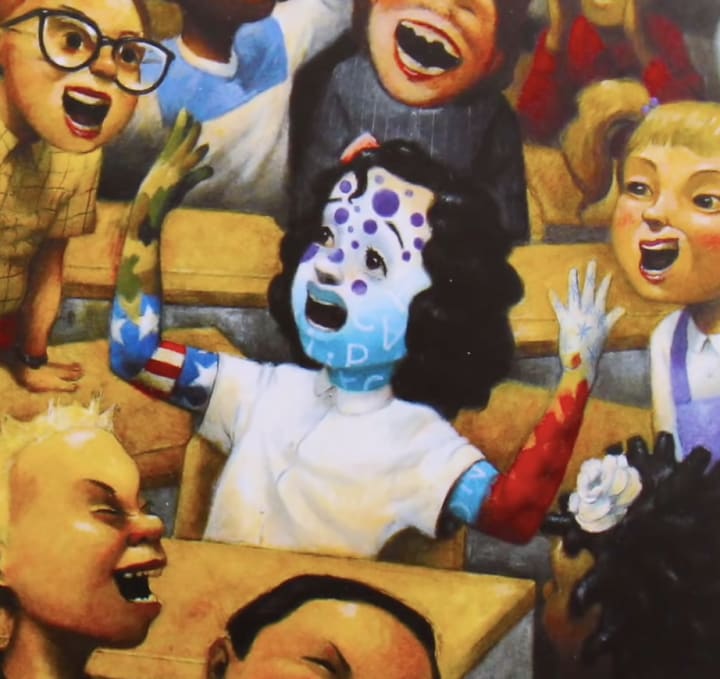
Despite all their efforts, the doctors couldn't figure out what was wrong with Camila. She felt okay, but looked peculiar!
With each passing day, her infamous condition began to spiral out of control. Local news became heavily interested in the story, giving Camila even more overwhelming opinions about her appearance from society.
She attracted the attention of scientists, psychologists, doctors, and healers from all over the country trying to solve the problem. Even with the best minds working together on curing her illness, no one could help her.
That is, until a little old lady came knocking on the Cream family's door.
The old lady knew that it was a case of the stripes, and brought a handful of lima beans to feed her. A personal favorite of hers!
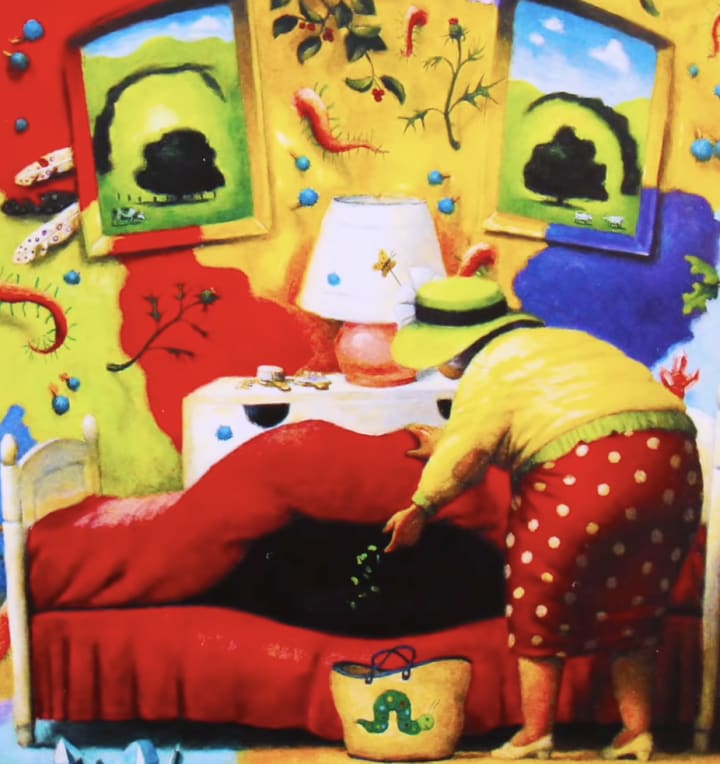
Even though Camila wanted them, she was still afraid of what others were going to say. But with some convincing, the lady was able to get Camila to eat the lima beans. Soon enough, the monstrous appearance of the little girl withered away. The room swirled around, and all the symptoms of the stripes began to dissipate.
Once she admitted that she enjoyed lima beans, Camila returned to her normal self!
~𝙲𝚊𝚖𝚒𝚕𝚊'𝚜 𝙻𝚎𝚜𝚜𝚘𝚗~
When I was in the 2nd grade, I remember crying because I couldn't figure out how to spell "yellow." Everyone else around me finished their assignment, so their efficiency made me believe that I was the dumbest in class. A train of unpleasant thoughts circled around me, and I couldn't calm down enough to think about what was happening. These emotions eventually consumed me, and I even ended up crying from the embarrassment! I didn't turn into a shade of the yellow crayon I was thinking of, but the whole situation still completely overwhelmed me!
A Bad Case of Stripes teaches a lesson that is seemingly obvious, yet tucked away behind our learned social expectations. Even as a child, you can begin to develop a fear of diverging from the norm when exposed to your school peers, play groups, etc. Popular trends and fitting in can present a huge amount of pressure, and it doesn't just go away after childhood. Whether you are 6, 14, or 25, the nervousness of trying to fit in can still be a big deal!
Once I discovered this book as a kid, I realized that I wasn't alone in how I felt. Being scared of the public eye is totally normal, and it can feel like you are changing yourself to match what others want. Camila's story invokes a child to think about the imaginative side of those nervous thoughts, and it personifies anxiety into a bunch of wacky colors. The illness itself didn't make any sense, and doctors couldn't offer any magic medicine to resolve the problem. This visualization of self-consciousness and fear of being left out of the "in-crowd" is what makes this story unforgettable!
Overall, this children's book allows people to understand the physical aspects of "worry" and "shame." We may not change colors like a chameleon in this world, but we still can feel the very real sensations of disappointment or nervousness during social interactions. Children can use this story to think of ways in which their own interests shine through, and how it changes their life!
In the end, Camila's story teaches us that you are always in control of yourself no matter what other people say.
About the Creator
How to Plan Your First Trip to the Maldives Without Overpacking or Overplanning
A first trip to the Maldives often creates pressure to prepare for every detail. The islands look minimal, yet travellers frequently overpack and overplan in an attempt to avoid mistakes. In reality, island life follows a predictable rhythm shaped by climate, transport schedules, and limited space. Planning well means understanding what is actually required and allowing the setting to guide the rest.
By Aurora Giannaabout 2 hours ago in Families
How Local Market Trends Shape Home Values and Your Family's Place in the Community
When house hunting, it is tempting to look mainly inside the four walls. However, what happens outside the front door is at least as relevant to your long-term happiness and financial security.
By Stephanie Jelks6 days ago in Families




Comments