
She didn't say sorry
When Saying Nothing Means Everything


In a world that rewards silence in women and shame in the name of peace, one girl refuses to bow. “She Didn’t Say Sorry” is a quiet rebellion a coming-of-age tale about voice, dignity, and the cost of not fitting in.
The first time Laleh was asked to apologize, she was five years old. She had pulled the red ribbon from her cousin’s hair and thrown it in a puddle because the cousin had called her “boyish.” Her mother marched her to the garden where the child wailed beside the mud.
“Say you’re sorry,” her mother said, her hand resting on Laleh’s shoulder like a threat.
Laleh had stared at the girl, then at the ribbon, and said nothing.
That silence would become her rebellion.
By seventeen, Laleh had perfected the art of keeping her mouth shut, not out of politeness, but preservation. In her family, silence was the only language women could claim fully as their own. It was the only one that wasn’t policed, revised, or retold.
Her older brother, Dariush, was the kind of boy whose voice could part conversations like the Red Sea. He spoke loudly, even when he was wrong. Especially when he was wrong. Her father, a man of straight eyebrows and final words, called this “confidence.” Her mother called it “manhood.”
But when Laleh raised her voice, even slightly, it became “attitude.” “Disrespect.” “Westernized behavior.”
They liked her best when she spoke softly and said “sorry” at the end of sentences she hadn’t even finished yet.
“Sorry, I just thought”
“Sorry, I didn’t mean”
“Sorry, Baba.”
“Sorry, Maman.”
“Sorry.”
It was Dariush who first said it plainly, one dinner evening when she refused to hand him her untouched chicken thigh.
“You’d be easier to love if you learned how to apologize.”
Laleh looked up from her plate, her jaw tight, and her hands still.
“I didn’t ask to be easy.”
The room went quiet. Her mother blinked like someone had slapped her. Her father sipped his tea as if it were whiskey. Dariush smirked, triumphant, not realizing the win was hers.
Because she didn’t say sorry.
It was never about chicken. Or homework. Or how she dressed. It was about who got to define what dignity looked like, and what disobedience smelled like.
Her school wasn’t much better. Teachers praised obedient girls who laughed at jokes that made them uncomfortable. The ones who always passed the eraser when it wasn’t their turn. The ones who turned down scholarships to stay close to family.
Laleh had once asked the literature teacher why there were so few women in the poetry book.
The teacher, a man who always wore too much cologne and not enough humility, had waved her off.
“History doesn’t care for delicate things.”
Laleh stared him in the eye and said, “Maybe history’s just full of bad taste.”
He gave her detention. She didn’t flinch. She didn’t say sorry.
One afternoon in autumn, she found her mother crying over folded laundry. Not sobbing. Just leaking, like a pipe that had been dripping for years.
Laleh sat beside her. Said nothing.
Her mother finally looked up. “When I was your age, I said sorry every day. It made life easier.”
“For you?”
“For everyone.”
Laleh waited.
“Are you saying I should be like you?” she asked quietly.
Her mother looked at her like she'd just said something cruel.
But Laleh hadn’t said anything cruel. She had only asked a question.
And still, she didn’t say sorry.
The neighborhood called them “a good family.” That meant they dressed modestly, spoke politely in public, and kept their secrets indoors. It meant that when the front door opened, everyone smiled. When it closed, everyone adjusted their posture like soldiers on cue.
Laleh had long suspected that being a “good family” was mostly performance. What mattered wasn’t how you treated each other, but how you looked from the curb.
One day, that façade cracked.
She’d just come home from school, her backpack still slung over one shoulder, when she heard shouting from the living room. Her father. Her brother. Her mother’s voice thin and breaking between theirs.
Then the crash, something glass, maybe a bowl — followed by silence.
She stepped in, breath held.
Her mother stood by the wall, one hand trembling at her side, the other holding her face. Her father’s hand was still half-raised, as if unsure whether to hit again or deny the first blow. Dariush just stood there, arms crossed, eyes elsewhere.
Laleh didn’t scream. She didn’t cry. She didn’t ask questions.
She walked straight to her mother and took her hand.
“Let’s go,” she said.
Her father’s voice rose, full of authority and disbelief.
“She should apologize. She was out of line.”
Laleh turned her head slowly.
“So you hit her?”
“She raised her voice.”
“And now she has to say sorry?”
Her father hesitated, not out of guilt, but strategy. He was measuring which parts of this could be forgotten by next week.
“She’s your mother,” he snapped.
“Exactly,” Laleh said. “Then she deserves better.”
The air in the room shifted like something sacred had been broken.
Her mother looked at her, stunned, eyes welling again, not with sorrow this time, but recognition. Like she was seeing her daughter fully for the first time, and seeing something she had forgotten she once had.
Laleh led her out of the room. They didn’t say goodbye. They didn’t explain. They didn’t apologize.
The small apartment they rented above a tailor’s shop had nothing but a mattress, a kettle, and silence, the good kind.
Laleh skipped school the first few days. Her mother didn’t go to work. They made tea, read quietly, and let the stillness heal things the years had scraped raw.
On the fourth morning, her mother finally asked, “Aren’t you afraid?”
Laleh looked out the window at the people rushing past on the street.
“Yes,” she said. “But I’m not sorry.”
Her mother smiled, just barely. It was the first honest smile Laleh had ever seen from her.
By the end of the month, rumors had bloomed like rot. One neighbor said Laleh had run away with a boy. Another said her mother had had a breakdown. Her father, wounded in pride more than anything, insisted it was “a phase.” That they’d be back soon.
They weren’t.
They found work. Laleh tutored middle school kids in English. Her mother cleaned houses. It wasn’t glamorous. It was hard, and sweaty, and sometimes degrading. But it was theirs.
Laleh liked the way her own money felt in her pocket. Not because it was much, but because it was honest. No shame wrapped in it. No quiet debt owed to anyone who thought love was something to be earned with obedience.
One evening, after tutoring a girl who was too shy to speak but too bright to be ignored, Laleh sat on the stairs outside their building and thought about her old life.
She didn’t miss the house. She didn’t miss the routine, the rituals, or even the meals.
But she missed the idea of family, not the version she had, but the version she still believed was possible.
She rested her head on her knees and wondered, for just a moment, if maybe she should have said sorry. If maybe that would’ve softened everything.
Then a voice behind her.
“You were never wrong,” her mother said, sitting beside her.
Laleh didn’t ask how she knew what she’d been thinking. She just nodded.
Together, they sat in silence, the language they’d made their own.
The first time Laleh saw Dariush again, it was at the grocery store.
Three months had passed since the day she and her mother left. Long enough for people to grow new versions of the truth. Long enough for silence to feel like armor instead of shame.
He stood in front of the produce section, holding a plastic bag of tomatoes, looking like someone who’d grown used to being in charge. His hair was slicked back. His shirt tucked too neatly. The same smugness in his shoulders, but something different in his eyes. Tiredness, maybe. Or emptiness.
She could’ve turned and walked out. She didn’t.
He noticed her. Froze. The tomatoes fell out of the bag, scattering on the floor.
“Laleh,” he said.
She picked one up, handed it back, and said nothing.
He blinked like her silence was louder than any insult. He gestured vaguely, trying to form a sentence that would close the distance between them.
“Baba… he’s not himself anymore.”
Laleh raised an eyebrow.
“He’s... different.”
“Because we left?” she asked, voice level.
He shrugged. “Maybe.”
“He’s still waiting for an apology?”
“He says it’s not about that.”
“Of course not,” she said. “It never was.”
Dariush stepped closer. “You know you’ve ruined him, right?”
Laleh gave a small, bitter smile.
“He was never whole to begin with.”
He stared at her like he was realizing something too late, that she was no longer the sister he used to speak over, control, or joke about. That maybe, she never had been.
Then he tried the last card he had.
“Maman misses him.”
She tilted her head. “No. She remembers him. There’s a difference.”
He didn’t argue. He just nodded, dropped the tomatoes into a new bag, and walked away.
She watched him go, not with anger, not with victory, but with that strange, still ache of knowing you’ve grown past someone you once shared everything with.
She didn’t say goodbye.
She didn’t say sorry.
At school, the principal called her in.
“We’d love to see you back,” he said, with the smile of a man who didn’t know how to address scandal without cloaking it in pleasantries.
Laleh sat across from him in a worn-out chair, the kind that always tilted slightly.
“I heard you’ve been tutoring,” he said. “Impressive for someone your age.”
She nodded.
“We can overlook your absence. Under the circumstances.”
Her silence pulled his smile tighter. He leaned forward.
“Maybe, a small note of apology to the staff, just to smooth things over. We’d like to help. But you need to meet us halfway.”
Laleh stared at him for a moment, then at the frame behind his head. A certificate. Authority wrapped in glass.
“No.”
He blinked. “Excuse me?”
“No apology.”
“Laleh”
“I didn’t steal. I didn’t lie. I didn’t hurt anyone. I survived.”
The principal shifted in his seat.
“Don’t you want to graduate? Go to university?”
“I’ll find my own way,” she said, and stood up.
As she left, she heard him sigh, the sound of someone realizing control had just slipped through their fingers and they hadn’t even noticed.
That night, her mother cooked rice with saffron and potatoes, a luxury they rarely allowed. She didn’t ask why. But when she served Laleh her plate, there was a little more tahdig than usual, the golden crust, the prize.
They ate quietly.
Then, gently, her mother said, “You know, when I first married your father, I thought pride made a man strong.”
Laleh looked up.
“But sometimes it just makes him cruel.”
Laleh said nothing, but she saw the flicker of pain cross her mother’s face, not regret, not longing, but the quiet grief of someone who finally understood her own story.
They didn’t toast. They didn’t cry.
They just ate their saffron rice and let the silence say everything.
Spring came with a kind of hesitant grace, like the city wasn’t quite sure it deserved beauty yet.
On her eighteenth birthday, Laleh received no calls, no texts from her father’s side of the family. Her grandmother, once so proud of Laleh’s neat handwriting and straight posture, now pretended she didn’t exist. Her uncle had told neighbors they were “undergoing a difficult test from God.” Her aunt had told them nothing at all.
She didn’t care.
What mattered more was that her mother had taken the day off work. That she woke Laleh with warm bread and white cheese, kissed her forehead, and said, “You were always older than your age.”
In the afternoon, they walked through the park with plastic cups of cherry juice in hand, the air full of pollen and laughter that didn’t belong to them but didn’t exclude them either.
“Do you ever miss it?” Laleh asked.
Her mother knew what she meant.
“No,” she said. Then paused. “But sometimes I miss who I hoped he could be.”
Laleh nodded. “I used to think if I just did everything right, he’d see me.”
Her mother looked at her, the way someone looks at a photograph of themselves from long ago.
“I know,” she said. “I thought that too.”
They sat on a bench by the lake, where children tossed breadcrumbs at birds and the wind toyed with stray hair.
After a while, her mother turned to her.
“Do you ever regret not… apologizing? You know, to make peace.”
Laleh sipped her juice, the cherry tart on her tongue.
“No,” she said. “Because peace shouldn’t cost that much.”
Her mother smiled, and this time it reached her eyes. She reached into her bag and pulled out a small, cloth-bound journal. New. Unwritten. She placed it in Laleh’s lap.
“You write better than you speak,” she said. “Use it.”
Laleh ran her hand over the cover, felt the weight of empty pages, the promise of saying things her way, with no one to interrupt or correct or shame.
“Thanks,” she whispered.
Her mother leaned in close. “And you never have to say sorry for being who you are.”
Laleh looked out at the lake, at the birds scattering across the surface like punctuation marks on an unwritten sentence.
She thought about all the times she’d been told to lower her voice, to shrink her presence, to say sorry, not because she was wrong, but because someone else was uncomfortable.
Not anymore.
One week later, she mailed in her application to a university two cities away. Not in secret. Not in rebellion. Just... because it was time.
No apology letter attached.
Just her name.
Her writing.
Her story.
And that was enough.
I once knew a girl who stopped saying sorry, and I watched the world react as if she’d become dangerous overnight. She wasn’t cruel. She just finally chose to speak plainly, to stop shrinking herself to make others feel tall. This story is for her, and every version of her who still feels like she needs permission to be real.
About the Creator
Beyond The Surface
Master’s in Psychology & Philosophy from Freie Uni Berlin. I love sharing knowledge, helping people grow, think deeper and live better.
A passionate storyteller and professional trader, I write to inspire, reflect and connect.
Reader insights
Outstanding
Excellent work. Looking forward to reading more!
Top insight
Excellent storytelling
Original narrative & well developed characters
Keep reading
More stories from Beyond The Surface and writers in Families and other communities.
How to Overcome Procrastination
You sit down at your desk, ready to tackle an important task. But before you start, you check your phone, just for a second. That second turns into minutes, then an hour. Now, you feel guilty, overwhelmed, and defeated. You promise yourself that tomorrow will be different. Sound familiar?
By Beyond The Surface12 months ago in Motivation
My Favorite Slime Recipe
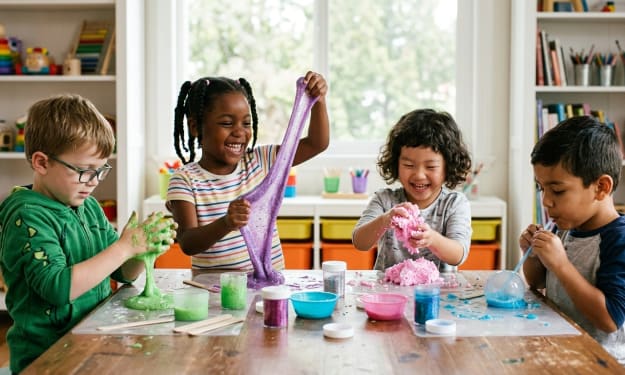
A few years ago, making your own slime was all the rage. People swapped recipes and even swapped slimes. Now, you can buy all the pre-made slime you want, in a variety of colors, textures, and themes. But there is something special about creating your own slime. This activity is great for keeping children busy on a rainy day, or helping them learn to follow step by step directions.
By Angel Mann4 days ago in Families
Punch the Macaque: The Baby Monkey Who Found Comfort in a Plush Friend
Today we look back at one of the most unexpected viral stories of 2025—a tale that began quietly in a zoo in Japan and grew into a global symbol of resilience and tenderness. It is the story of Punch, a Japanese macaque born in July 2025 at Ichikawa City Zoo in Chiba Prefecture. His life began with hardship, but what followed has touched millions across the world.
By Haroon Pashaabout 17 hours ago in Families



Comments (2)
Beautiful Story, I truly enjoyed it!
Nice work