
Science Fun With Your Child
Easy Science Experiments to Do At Home

Children love science because there is so much opportunity to use everyday objects and perform experiments to ease learning. It is a fact that we learn when we do, and rather than reading about it, it is best to have a child experience the learning by doing it themselves. Then, of course, the best part is the “ah-ha” moment you get from them which is undeniably the best feeling for a teacher or a parent.
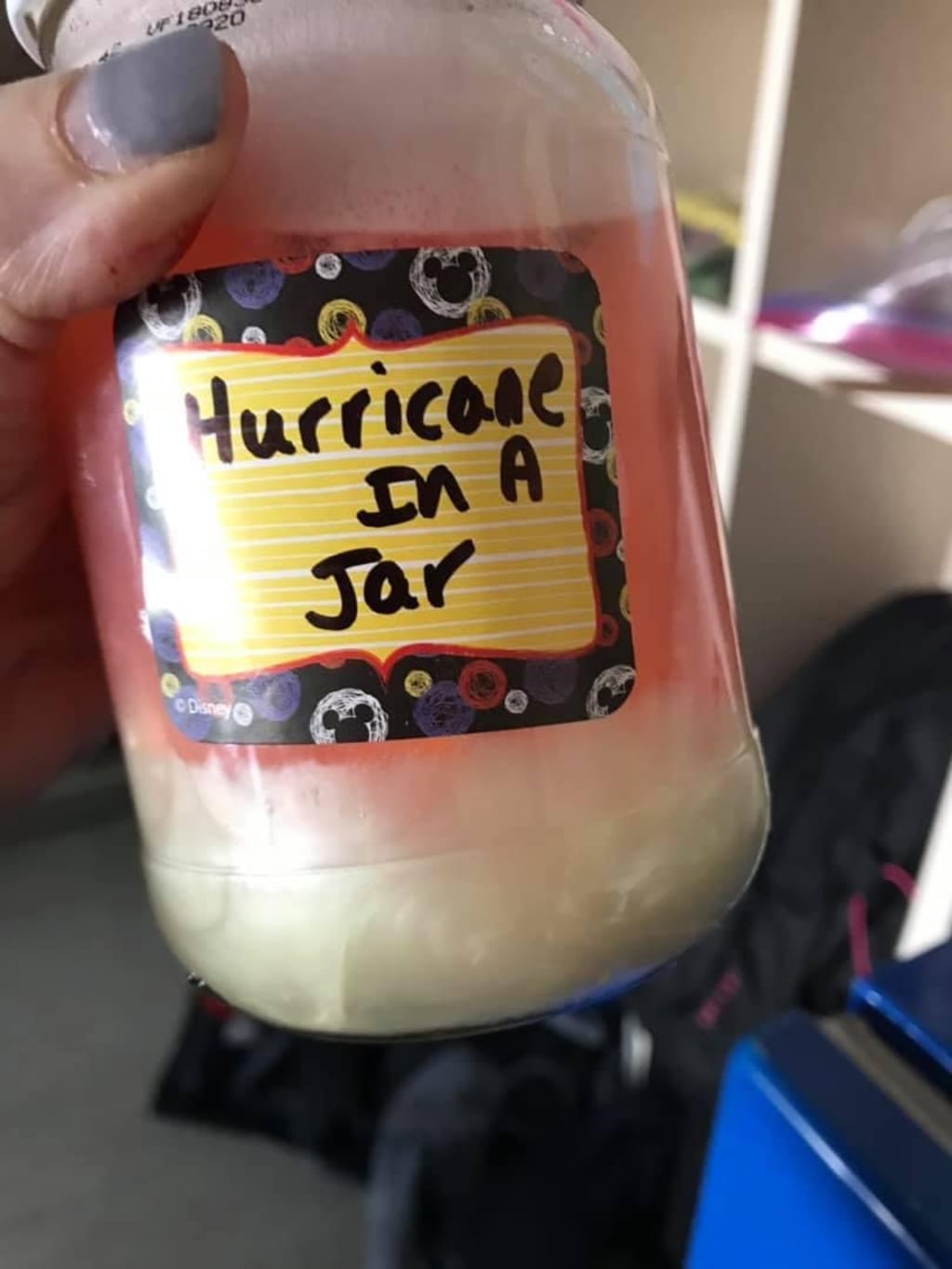
One experiment that is easy to do with children, and can be done at home or in school, is the “Hurricane in A Jar”. This is best done along with a unit on weather, or when your community may be experiencing or getting ready for a hurricane. In my classroom, we did this as part of a unit on Hurricanes for our annual science convention we called STREAMS (https://ellyelementary.wordpress.com/STREAMS-convention)
After children do research and learn what a hurricane is, while studying some past devastating hurricanes such as Andrew, Sandy and Katrina, they are ready to make their own and see how the atmosphere works and how a hurricane is formed.
Hurricane in a Jar Ingredients:
. dishwashing soap with Glycol Stearate (Softsoap is recommended)
. water
. food coloring
(we add paper and garbage so that when we shake the glass jar, we see garbage and debris flying around.)
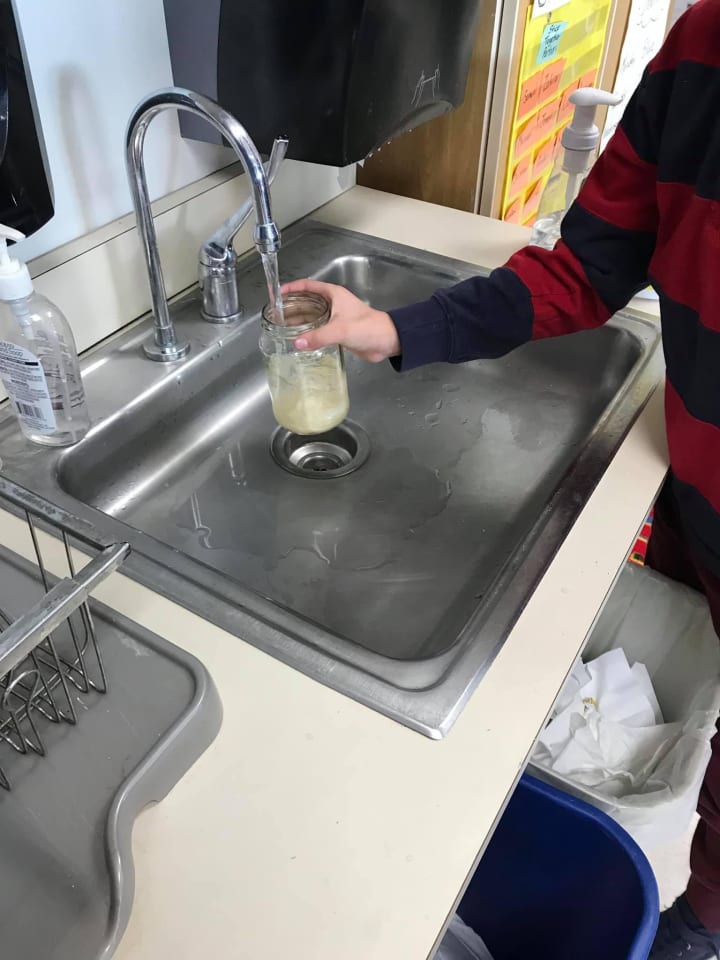
Step-By-Step Directions for Hurricane in a Jar:
. Fill jar approximately 1/3 full of soap. Add water to fill up the rest of the space. When water gets to the top, keep it running until all the bubbles overflow and are gone.

. Add 1-2 drops of food coloring. Screw the cap on TIGHTLY and SHAKE!
. Shake upside down and side to side. The liquid inside will look like a hurricane once you get it spinning.
My students have loved this project in school and have often done again at home with their parents. This is a great experiment to assign because it does not burden parents with buying any supplies as all of ingredients (except maybe the food coloring) is found in their homes.

Sink or Float Experimenting
Students learning about objects that float and those that sink will be kept busy with this activity for a long time. Using a basin of water, test different objects around the classroom or at home to see if they will sink or float.
After each one, have child write down why they think that item sank or floated. Once you have enough examples, the child can come with different “made up” objects, made out of household objects like toilet paper rolls, paper clips, etc., and guess whether they will sink or float before putting into the water.
You should keep a chart of objects that you test and have child determine why if floated or not. After awhile, the child should conclude what makes an object sink or float.
Dissolving Liquids
What makes something dissolve in a liquid? Why is it that when we mix iced tea powder in water it becomes a drink? What characteristics of the powder make it dissolvable?
First, make a glass of ice tea or lemonade using powder having child stir until it dissolves. Then, make a list of other food type products you want to test to see if they dissolve. Some examples are oil, honey, sugar, mustard, just to name a few. Have the child predict whether or not they will dissolve and then test each one. After testing many different products, discuss what properties the items that dissolved have versus the items that did not dissolve. This experiment can lead to many discussions on what dissolves and can be a starting point for many future discussions, especially when cooking or preparing meals for your child.
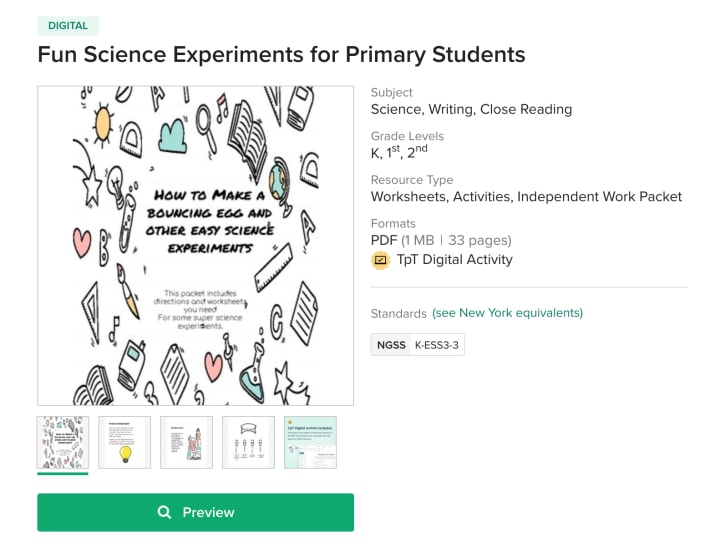
These are just a few ways to bond with your child, while seeing the sparks of learning and understanding, as they enjoy doing science experiments with you. They will be so excited and should even take pictures to share with their classmates. These are some fun ways to enjoy time at home with your child during the pandemic and show your interest in lifelong learning with them. Take a look at my product on TeachersPayTeachers.com with more science experiments you can do at home or in school with your class. (https://www.teacherspayteachers.com/Product/Fun-Science-Experiments-for-Primary-Students-5991573)
If you enjoyed this article, please share it on your social media and send it to someone you think will like it too!!
About the Creator
Elaine M. Gallagher
Elementary educator and freelance writer. My writing is about education, health and fitness and every day life issues.
Check my writing on my blog: Elly Elementary https://payhip.com/ELLYELEMENTARY/blog/elly-elementary
Keep reading
More stories from Elaine M. Gallagher and writers in Families and other communities.
Parents During Lockdown
During the pandemic, learning has changed and children are experiencing a hybrid mix of in-school and remote learning. How does this affect the parents who are trying so hard to keep their homes and families thriving in these uncertain times?
By Elaine M. Gallagher5 years ago in Families
March is here.
Here we are in another new month. Looking at the calendar already has dates that must be kept, in this month it has it up and down. It starts with many birthdays to be celebrated and then it turns to darkness with people that passed away in my family as it gets smaller and smaller every year.
By Terri Rosall6 days ago in Families
Love That Acts, Not Love That Speaks
When Love Became a Language Instead of a Practice In modern parenting culture, love is increasingly defined by what is said rather than what is done. Emotional affirmation, verbal reassurance, and constant validation are treated as the primary evidence of care, while less expressive forms of love are often overlooked or misunderstood. A parent who says “I love you” frequently and validates feelings consistently is assumed to be providing something essential, while a parent who demonstrates care through sacrifice, consistency, and enforcement may be perceived as distant or emotionally limited.
By Peter Thwing - Host of the FST Podcastabout 22 hours ago in Families




Comments
There are no comments for this story
Be the first to respond and start the conversation.