
Rise and Repercussions of Black Friday: A Deep Dive into Consumerism and Culture
Exploring the History, Psychology, and Global Impact of the Year's Biggest Shopping Day
The Evolution and Impact of Black Friday: A Comprehensive Analysis
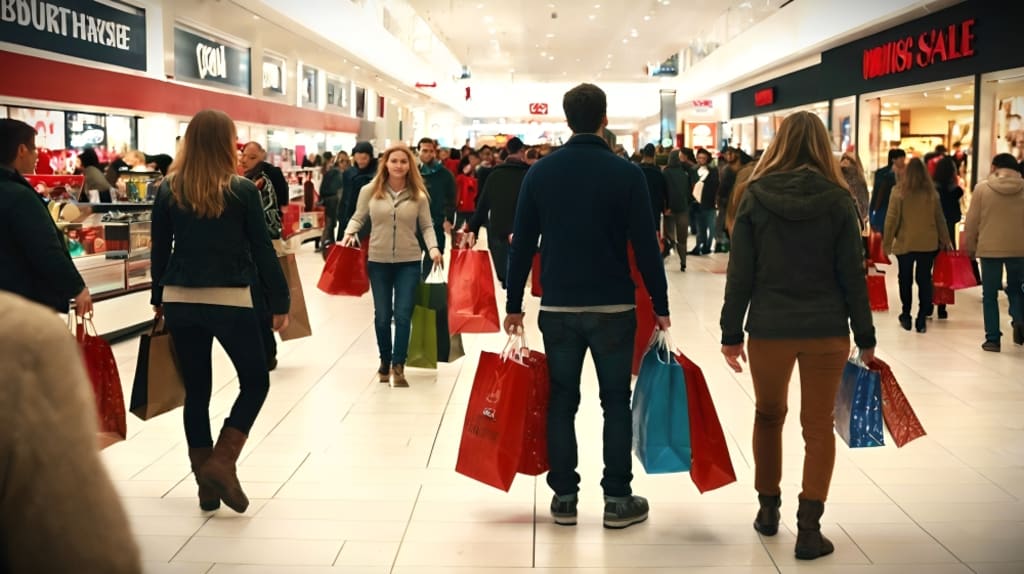
Black Friday is now arguably one of the most highly awaited shopping days of the year-the day after Thanksgiving. The phenomenon is a melting of consumer culture, retail strategy, and human psychology into one. Decades down the line, Black Friday has come to represent, among other things, a deep discount, long lines, and frenzied crowds. This day is, however, rather than a shopping holiday; it represents the economic, social, and technological changes going on in society. The following paper is a detailed 2000-word exploration of the history, development, and effect of Black Friday.
Background Information of Black Friday
In any case, the origins of "Black Friday" are pre-shop conceptions. The latter is used more to refer to economic breakdown or, at least traditionally to the late 19th century, a specific type, namely the stock-market panic of September 24, 1869; and on that day in Wall Street two financiers attempted to corner the market on gold.
It only attained an association with shopping in the 1960s. Philadelphia policemen coined the word to describe the crazy Thanksgiving Day after, when suburb shoppers and tourists poured into town, congesting streets and making public nuisance. Initially unwilling to assume a name that connoted mortality and desperation, retailers did come around. By the late 1980s, "Black Friday" had become a day of the year when retailers finally go "into the black," or into profitability.
The History of Black Friday
The Early Days
The day after Thanksgiving Friday was a kickoff to holiday shopping in the middle of the 20th century. Stores advertised specials and the day didn't quite have its infamous status now. The Macy's Thanksgiving Day Parade began in 1924, and at that point marked the start of holiday shopping season but didn't yet induce a buying frenzy.
The 1980s and 1990s: A Shopping Frenzy
In the 1980s, retailers used Black Friday as a shopping event. Doorbusters and long hours became more common and also attracted more customers. In the 1990s, Black Friday became the national shopping culture. Competitive pricing and marketing strategies made big-box stores such as Walmart and Target increase the frenzy.
2000s: E-commerce and Global Impact
The early 2000s saw a new revolution of shopping with the boom of e-commerce, led by Amazon and similar platforms. It altered the very practice of Black Friday shopping. People now could shop without witnessing the horrors of brick-and-mortar shops. Cyber Monday, invented in 2005, extended the shopping spree through the following week, forming a longer, more integrated shopping season.
Black Friday spread across the entire world in the 2010 years. Every nation from Canada to Brazil adopted this idea and modified it as per its local markets. The culture of bargain prevailed, regardless of the different modifications.
Black Friday: The Psychology of Scarcity and Urgency
Black Friday uses the principle of scarcity. Time-limited offers and exclusivity trigger a sense of urgency in consumers to shop. Fear of missing out is a great motivator that creates impulsive buying.
Social Proof and Herd Behavior
Huge crowds or others' experience of shopping validates value perception. In trendy events, people are attracted as they believe that if so many people are doing things, then it must be wonderful opportunities.
Reward and Satisfaction
There is psychological satisfaction in getting a bargain. For the consumer, satisfaction occurs where he perceives saving something although he would not need to buy.
Economic Impact
Retail Sales Revenue
Black Friday generates a vast share of the revenues every year for retailers. In the United States, Black Friday weekend-the day after Thanksgiving, Black Friday, and Cyber Monday-constitutes a significant holiday sales component. Holiday sales can constitute 20-30% of annual retail revenues, as cited by National Retail Federation (NRF).
Job Creation
This encompasses holiday shopping where people demand an economy during which temporary work is created at the levels of retail, warehouse, and logistics. This creates employment for people for a particular time.
Consumer Spending Pattern
Black Friday, also leads to consumeristic expenditure behavior. Family budgets for many are thus prepared keeping in mind discounts, and the month of November is usually the one that sees major purchases. For a few, there are reckless spendings which create excessive usage of cards among others.
Critics of Black Friday further argue that it encourages the culture of consumerism and coerces people into buying goods for which they have no practical use. The cost of producing that in huge quantities, then packaging and shipping is indeed very high. In such an environmentally conscious world today, such practices are going to be challenged as unsustainable.
There is usually pressure to answer the demand, leading to long hours and stressful working conditions for workers in the shops and warehouses. Labor rights activists say that the setting is often unfair, again, primarily in organizations that scream speed delivery.
Physical Crowd
There is the literal crowd, which might experience stampedes or fights for the few remaining products in an olden-style Black Friday. Injuries from fights over or stampedes over available products give the impression of potential risks for selling on the account of safety.
Technological Role
E-commerce Dominance
Technology has ensured that in-store Black Friday is a hybrid. Orders are placed online. The consumers prefer to shop at home, and while shopping at home, they have an added advantage.
Mobile Commerce
The modern form of buying on Black Friday has been made possible through the use of smartphones. Application websites and mobile wallets have ensured that comparison buying and buying become synonymous.
Artificial Intelligence and Personalization
The use of AI by retailers in determining consumer behavior and providing them with targeted offers makes the experience not only a more pleasurable shopping experience but also something that will increase impulse purchases.
Globalization of Black Friday
Black Friday has transcended borders and is now a global shopping event. Retailers in countries that do not have Thanksgiving have also embraced it as a way of boosting sales. In some regions, Black Friday has even surpassed the traditional local shopping events, indicating the influence of American consumer culture.
But the application is different. For example, in Europe, Black Friday sales take place over the week or even the month. For whatever reason, this does not seem to be a mania event. In Asia, there is still Singles' Day, November 11, and that still remains the best competitive shopping event in China.
Future of Black Friday
The COVID-19 pandemic of 2020 might, therefore, hasten an online shift and redefine the face of Black Friday. Indeed, because the consumer starts getting comfortable with digital convenience, in-store events would decline. Also, such sustainable shopping trends may really upset the present model for Black Friday.
Also, live shopping events and virtual reality are being tested as formats to fulfill the tech-friendly consumer. It may very well determine the form Black Friday is going to take the next time.
Conclusion
Black Friday is not an event; it is an expression of values within a society, a state of the economy, and even technological advancement. This will allow for saving and economic growth, but it also raises questions about its sustainability and the behavior of consumers. And Black Friday, entering the next years, will surely feel its impact spread further than from the bare shelves of the retail sale. Whatever bad this particular day might incur on grounds of an excess, one thing is quite sure: this Black Friday is a hallmark of current consumerism.
This content has been generated by an artificial intelligence language model. While we strive for accuracy and quality, please note that the information provided may not be entirely error-free or up-to-date. We recommend independently verifying the content and consulting with professionals for specific advice or information. We do not assume any responsibility or liability for the use or interpretation of this content.
About the Creator
Keep reading
More stories from Krutik Thummar and writers in Families and other communities.
Miami Dolphins vs. Green Bay Packers: A Thanksgiving Showdown
The Miami Dolphins and Green Bay Packers are set to face off in what promises to be a thrilling Thanksgiving game. This matchup not only holds significant playoff implications but also features compelling narratives about both teams’ seasons, strengths, and aspirations.
By Krutik Thummarabout a year ago in Gamers
Wise~Guys
— Look Behind what's in Front of You ~ Make Good Choices — Hey, So how you Doin'..! Made~Men — Mobster Movies romanticise a distinctive, elegant appearance, impeccable attire style, along with the 'Families' expressive lingo. Making their 'Bones' gave them Panache — with vintage fedoras, tailored pin-striped suits, mirror-polished wing-tip shoes adorned with tassels; with their 'Gun Moll' gorgeous dates on their arms.
By Jay Kantor19 days ago in Families
Becoming a sleeve snake
The Treacherous Minister A long time ago, in the land of Greece, there was a wise and just king who ruled his kingdom with fairness. The king trusted all of his ministers and often consulted them on matters of governance. Among all his ministers, there was one whom the king favored above the others—a man named Faisal. The king valued Faisal’s advice and often sought his counsel for important decisions.
By Sudais Zakwan5 days ago in Families




Comments (3)
i like this story.......
Cyber Monday was fantastic this year. I got all my holiday shopping done online and scored deals on everything from toys to electronics. I’ll never go back to standing in long lines again!
I was so impressed with the range of eco-friendly deals this year! I got a sustainable home appliance that not only worked perfectly but is better for the environment. It’s great to see Black Friday evolving towards more responsible shopping.