
Raising Emotionally Smart Kids
Why Feelings Matter More Than Flashcards


Raising Emotionally Smart Kids
Why Feelings Matter More Than Flashcards
As parents, we all want our children to succeed. We want them to grow up smart, confident, and ready for the world. So we teach them numbers, letters, colors, and shapes. We buy flashcards, books, and apps to help them learn fast.
But here’s something important many people forget:
Emotional intelligence matters just as much—maybe even more—than academic skills.
A child who can read early is impressive.
But a child who can recognize their feelings, calm themselves, and show kindness?
That’s powerful.
This blog is all about raising **emotionally smart kids**—children who understand themselves and others, who can handle big emotions, and who grow up kind, strong, and balanced.
Let’s dive into why **feelings matter more than flashcards**, and how you can raise emotionally intelligent kids in a simple, loving way.
1. What Is Emotional Intelligence (EQ)?
Emotional intelligence is the ability to:
Recognize your own feelings
Understand other people’s feelings
Express emotions in healthy ways
Manage strong emotions like anger or sadness
Solve problems calmly and peacefully
This is also called EQ (emotional quotient), and it’s just as important as IQ (intelligence quotient).
Think about it—what matters more in real life?
Solving a math problem…
Or knowing how to handle a disagreement without yelling?
Kids with high emotional intelligence grow up to be:
Better communicators
Stronger leaders
More successful in relationships
More resilient during hard times
2. Why Feelings Come First
Before a child can learn ABCs or math, they need to feel:
Safe
Loved
Seen
Heard
When children feel emotionally secure, their brains are open to learning. But when they’re scared, angry, or stressed, learning becomes much harder.
Imagine this:
Your child is upset because a toy broke.
You hand them a flashcard and ask, “What’s this letter?”
Will they focus? No.
They need emotional support first.
That’s why feelings matter first. When we help kids understand and express emotions, we build a strong foundation for everything else.
3. Signs of an Emotionally Smart Child
Here are some signs your child is developing strong emotional intelligence:
They can name their feelings (“I’m sad,” “I feel mad”)
They say sorry when they hurt someone
They take deep breaths to calm down
They show empathy (“Are you okay?” to a friend)
They talk about their day and how they felt
These are powerful skills. They don’t come from a screen or a worksheet. They come from **loving connection and daily practice**.
4. How to Raise an Emotionally Smart Child
Here are simple steps you can take every day to help your child build emotional intelligence:
a. Name the Feelings
When your child feels something, help them name it.
Say:
“You look sad. Did something make you feel upset?”
“You’re frustrated because the toy isn’t working.”
“It’s okay to feel angry. Let’s talk about it.”
Naming emotions helps children understand what’s going on inside them. It also teaches them that feelings are normal—not something to hidb. Listen Without Fixing
Sometimes kids just need to be heard.
You don’t have to fix every problem right away.
Try this:
Get down to their level
Make eye contact
Say, “I’m listening. Tell me more.”
This builds trust. Your child learns, “My feelings matter. Someone hears me.”
c. Stay Calm During Meltdowns
It’s easy to yell when kids throw tantrums—but that teaches fear, not emotional strength.
Instead, try to be the calm in their storm.
Say:
“I see you’re having big feelings. I’m here.”
“Let’s take some deep breaths together.”
“It’s okay to cry. You’re safe.”
Children learn emotional control by watching us. Your calmness teaches them how to calm themselves.
d. Use Books and Stories
Storytime is a perfect moment to talk about emotions.
Read books where characters feel sad, scared, happy, or brave. Ask:
“How do you think they feel?”
“What would you do in that situation?”
“Have you ever felt the same?”
Books build both vocabulary and emotional awareness—without needing flashcards.
e. Teach Problem-Solving
When your child is upset, walk them through problem-solving.
Example:
Your child’s toy broke. Instead of “Stop crying,” say:
“That’s frustrating. What can we do?”
“Can we try to fix it? Use another toy?”
“How can we feel better now?”
This teaches them to handle problems with confidence instead of panic.f. Praise Emotional Growth**
Don’t just praise good grades—praise emotional strength too.
Say:
“You were so patient today!”
“I’m proud you said sorry to your friend.”
“You calmed down all by yourself—that’s amazing!”
This shows your child that their emotional skills are just as important as their schoolwork.
5. What About “Bad” Emotions?
Some parents worry when their kids feel or show big emotions like anger, jealousy, or sadness.
But here’s the truth: There are no bad emotions. Just big ones.
It’s okay for your child to feel mad.
It’s okay for them to cry.
What matters is **how they learn to deal with those emotions.**
Your job is to help them:
Understand the feeling
Express it safely
Move through it, not avoid it
Every meltdown is a moment for growth.
6. Emotionally Smart Kids Become Emotionally Strong Adults
When we teach children about emotions, we’re preparing them for the real world.
Emotionally smart kids grow into:
Adults who can handle stress
Partners who can talk instead of argue
Friends who show empathy
Workers who solve problems and work well with others
Isn’t that what we all want?
Flashcards may help with spelling.
But emotional intelligence helps with life
7. What If I Wasn’t Taught This as a Child?
Maybe you didn’t grow up talking about emotions.
Maybe your parents said things like:
“Stop crying!”
“Be tough.”
“Don’t talk back!”
That’s okay.
You can break the cycle. You can start fresh with your child—and even heal yourself in the process.
Start with simple words like:
“I feel…”
“It’s okay to be sad.”
“We all have feelings.”
You don’t have to be perfect. Just be present and willing to grow.
8. Daily Habits to Grow Emotional Intelligence
Here are a few easy daily habits to build emotional smarts at home:
Feelings check-in: Ask, “How are you feeling today?” at dinner or bedtime
Emotion cards: Use simple cards with faces showing happy, sad, angry, etc. Let your child pick one
Calm-down corner: Create a cozy space with a pillow, a book, or a soft toy to help your child reset when upset
Modeling: Talk about your own emotions. “I’m feeling tired today, so I need a little rest.”
Gratitude moments: At bedtime, say one thing you’re thankful for—it builds awareness and positivity
Final Thoughts: Smart Minds Need Strong Hearts
We spend so much time teaching kids to be smart in school.
But the real magic happens when we teach them to be smart with their hearts.
When we raise emotionally intelligent children, we give them:
The strength to handle life’s ups and downs
The confidence to express who they are
The tools to build strong, loving relationships
You don’t need a classroom or a curriculum to do this.
You just need:
Time
Patience
Conversation
And lots of love
So the next time you worry about your child not learning fast enough…
Remember—feelings come first.
Because a kind, emotionally strong child?
That’s the smartest kind of success there is.
About the Creator
Samar Omar
Because my stories don’t just speak—they *echo*. If you crave raw emotion, unexpected twists, and truths that linger long after the last line, you’re in the right place. Real feels. Bold words. Come feel something different.
Keep reading
More stories from Samar Omar and writers in Families and other communities.
My Favorite Slime Recipe
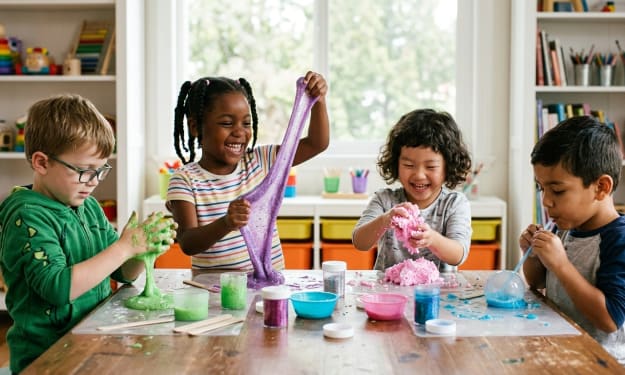
A few years ago, making your own slime was all the rage. People swapped recipes and even swapped slimes. Now, you can buy all the pre-made slime you want, in a variety of colors, textures, and themes. But there is something special about creating your own slime. This activity is great for keeping children busy on a rainy day, or helping them learn to follow step by step directions.
By Angel Mann3 days ago in Families
St. Patrick's Day
When I was a child, I really thought our family was Irish. We always celebrated St. Patrick's Day with a chocolate cake with green frosting, and it was pretty common to wear green and to have corned beef, cabbage, and boiled potatoes for dinner that day.
By Denise E Lindquist3 days ago in Families



Comments
There are no comments for this story
Be the first to respond and start the conversation.