
Pursuing science to raise children, the problem is more and more - don't be kidnapped by anxiety
Pursuing science to raise children, the problem is more and more - don't be kidnapped by anxiety
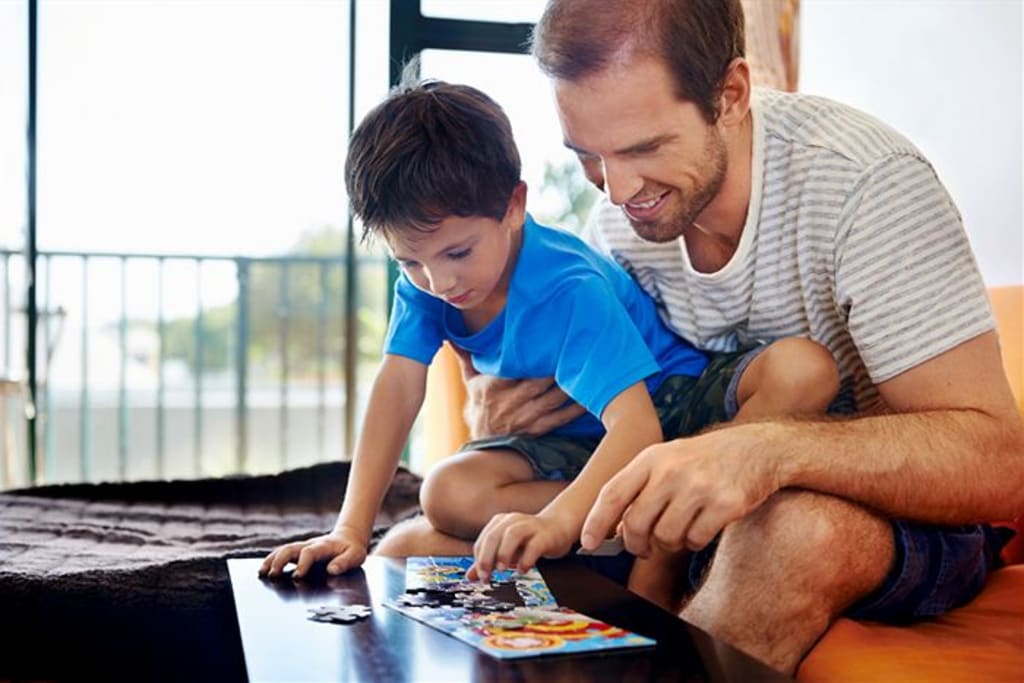
In the mother's circle, "scientific parenting" is quite popular. Everyone will actively reject old ideas, examine children's behaviour from a scientific standpoint, and nurture children in a proper and consistent manner.
Most people appreciated this strategy as soon as it was offered, especially young inexperienced parents who were worried about what to do when they didn't know what to do. The path was paved by scientific parenting.
However, many parents have discovered that scientific parenting has not made their parenting simpler, but has instead made it more difficult.
A mother stated that she believed in "scientific parenting" from the start of her pregnancy, and that she learned at her own pace, with every step and link following the manner outlined in the book.
However, she was not only unable to raise the ideal child, but she also became more nervous as a result of her actions.
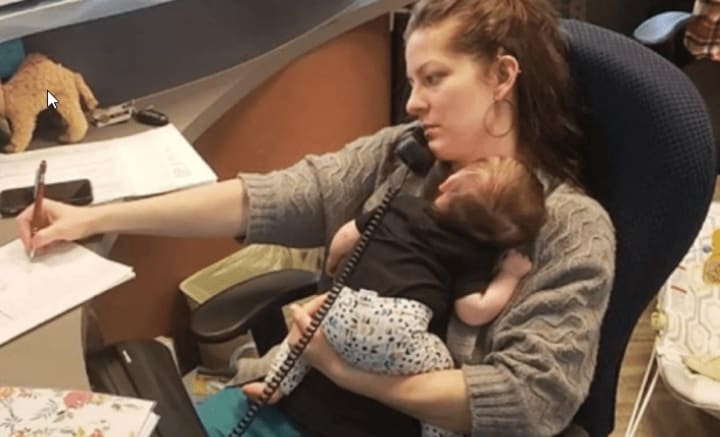
The infant sometimes wants milk in the middle of the night, and the mother has never slept for more than two hours since having a child, causing her to pass out. She definitely followed the book's instructions, but why is it so difficult?
He had already fallen into the denial of self-criticism before enjoying the lightheartedness of "scientific parenting."
He can't help but compare himself to other mothers in the neighbourhood and doubt his own talents. The mother will become mentally imbalanced as soon as the results diverge from what is indicated in literature or by professionals.
It wasn't until I looked back on the two years when I initially took care of the infant that Bao Mom recognised that the most important thing at the time was her own mentality, not the child's appearance or mental development.
She overlooked the child's natural growth process, focusing instead on whether the infant followed the instructions in the book.
A bit differently, the mother's irritation and self-denial as a parent will come to the fore, along with other issues that are bothering her, resulting in increased worry and self-blame.
The majority of parents make the same error. Rather than insisting on scientific parenting, they push for it excessively. Because, while scientific parenting isn't inherently bad, science's foundation is that children's nature should be respected.
Many parents, on the other hand, overlook their children's personalities and raise them according to the "proper" manner. If this is conceivable, the entire planet will be made up of the same wonderful people. Our children have their own benefits and drawbacks because they exist in the world's context.
How can parents raise their children in a stress-free environment?
It's crucial to change your mindset.
When I realised that other people's babies could write by the age of three, I decided to enrol my own baby in an early education class. It's tough to imagine not being anxious when you have this mindset. Parents are not the only ones who are worried; children are as well.
This isn't how parents have to be. Children have their own distinct personalities. The impact of their parents and elders has a lot to do with the kind of individuals kids grow up to be. In this involutionary rhythm, however, many youngsters are bored, rebellious, and even mediocre.
Giving him a nice and innocent memories, assisting him in establishing accurate concepts, and teaching him fundamental life skills will suffice.
Don't be so easy on yourself:
There is no book that can be used by all families to educate their children. It just suggests strategies for parents to use based on more regular occurrences. In 100 children, the procedure may be effective, but it may not be effective in 100 children. The result is the same. Most parents cross the river by feeling the stones for their children's education.
However, there are indications that parents of children who have excelled in school, despite not having mastered special education methods, devote extra attention to the development of their children's habits. Reading, housework, reflection, exercise... It appears that adopting one or more healthy habits is more favourable to a child's growth.
There has never been a one-size-fits-all approach to child rearing. Parents must devote time and effort to accompanying their children in addition to learning skills and approaches.
In terms of children, model parents who are warm and emotionally invested are more important than elders who can simply preach.
About the Creator
Reader insights
Nice work
Very well written. Keep up the good work!
Top insight
Heartfelt and relatable
The story invoked strong personal emotions
Keep reading
More stories from writers in Families and other communities.
Wise~Guys
— Look Behind what's in Front of You ~ Make Good Choices — Hey, So how you Doin'..! Made~Men — Mobster Movies romanticise a distinctive, elegant appearance, impeccable attire style, along with the 'Families' expressive lingo. Making their 'Bones' gave them Panache — with vintage fedoras, tailored pin-striped suits, mirror-polished wing-tip shoes adorned with tassels; with their 'Gun Moll' gorgeous dates on their arms.
By Jay Kantor29 days ago in Families
🅼🅸🅳🅽🅸🅶🅷🆃 🆂🅽🅰🅲🅺🆂
"It's 10 in Tuscon! We all know what that means... It's Time for Midnight Snacks with your man, Gerald Gee! Ready to spend the night together? Me too! I'm full of snacks and can't wait to regurgitate them all back into your hungry ears. Crack a brew! Pop some corn! Anything to get ready for one hell of a show where the talk maybe cheap but the words cut deep...
By Lamar Wiggins8 days ago in Fiction



Comments
There are no comments for this story
Be the first to respond and start the conversation.