

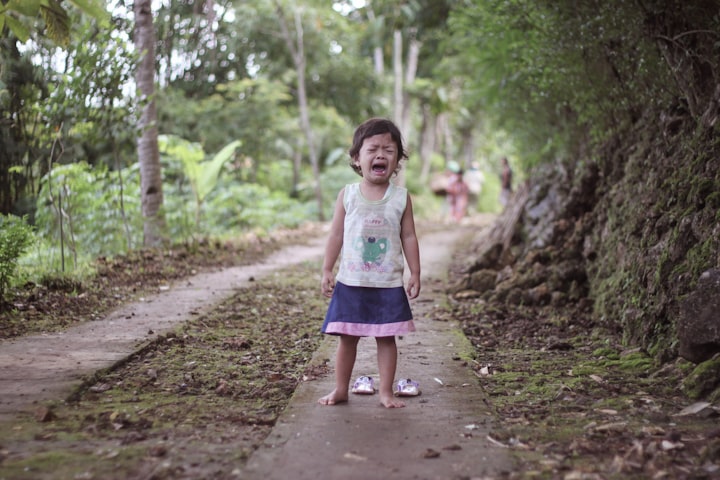
Young children are on a journey to autonomy. But due to a brain that is still developing parents often to make decisions to keep children safe and life moving forward. As a result children can feel powerless. What we see when children feel powerless is children who act out aggressively or become anxious.
To help kids work through these struggles we can use play. Not just any play, but power play. This means play where children feel braver, stronger or faster than us. High energy and high laughter has the effect of releasing tension, not just for kids but also adults. And play also makes us feel connected to whomever we are playing with.
My son’s favorite power play is wrestling. We use the big bed or our trampoline and just try to pin each other. I let him defeat me ultimately, sometimes we have a limit of pinning someone for 10 seconds three times, or we just wrestle until I’m tired. Sometimes I go all out with the drama and act like a WWE star when he lands on my arm or leg and flail about. We do have limits, he can’t actually hurt me, and no jumping on my head or stomach. Accidents happen so I give him grace, but he understands that an accidental hurt can end wrestling time for today.
My next suggestion is one from Lawerence Cohen in his book The Opposite of Worry and works well for anxious children. You can use toys to roleplay or just take on the role yourself. The main idea is your character is afraid of something silly like kittens or unlikely such as pirates. Hide from them, really play up being afraid. Kids will usually take on showing how they are more brave than you and/or bringing the thing you are scared of to you to get more of a reaction. The key is to use something that is not scary or unlikely to show up, anything that could result in a fearful response can make things worse.
Another game my son and I made up is the Duck and Jump game. We do this on the trampoline with a pillow, but you can play it anywhere. One person swings the pillow and yells jump or duck. Duck is a high swing and jump is a low one, and the other person (or people) have to duck or jump depending on what is called out. If you don’t dodge the pillow, then it’s your turn to swing. Lots of laughter with this game. We also use pool noodles, cut in thirds as “weapons” that are safe for hitting.
A very simple power game for young kids is the “you can’t get past me game.” Very simply, challenge the child that they can’t get past you because you are so fast and strong. And then after some jostling they get past, and you act very surprised and demand they try again. Variations on this can be chasing games where you declare yourself the fastest and then either they catch you easily or you can’t catch them. Either way, let them win.
One last game is from a friend of mine, she calls the Owie Game. If a child is hitting or engaging in aggression the answer is to embrace the behaviour rather than try to stop it.
Similar to the you can’t get past me game, when your child hits, you act very dramatically about how much they hurt you. Encourage them to slap you again (on your open palm this time). The lighter the slap the bigger the reaction.
When we embrace behaviour, kids often lose interest. The game also teaches them to ask for consent before engaging in rough play (eventually they will, not right away). And like the you can’t get past me game, it gives them the feeling of power over you.
Does anyone have their own rough play or power play games they use to engage their child? Share your ideas in the comments.
Want to be a better parent? Get my gentle parent's guide.
About the Creator
Wings of a Lioness: The Geology of Inherited Pride
People often ask me where I get the strength to pack my entire life into two suitcases and head into the unknown. Where do I get that step that never falters, neither in the cold Canadian North nor under the elegant skies of France? The answer doesn't lie in geographic maps, but in an old photo album, my mother's oversized ring, and that blue flight attendant's cap that is worth more to me than any crown. My courage is not my own doing – it is the dowry left to me by my mother, a woman who conquered heights with airplanes, and the earth beneath her feet with her unwavering character.
By Magma Stara day ago in Families



Comments
There are no comments for this story
Be the first to respond and start the conversation.