
Playgrounds are not meant to be safe. Here's why.
Those plastic, perfectly rounded paradise are the real graveyards for your kids.
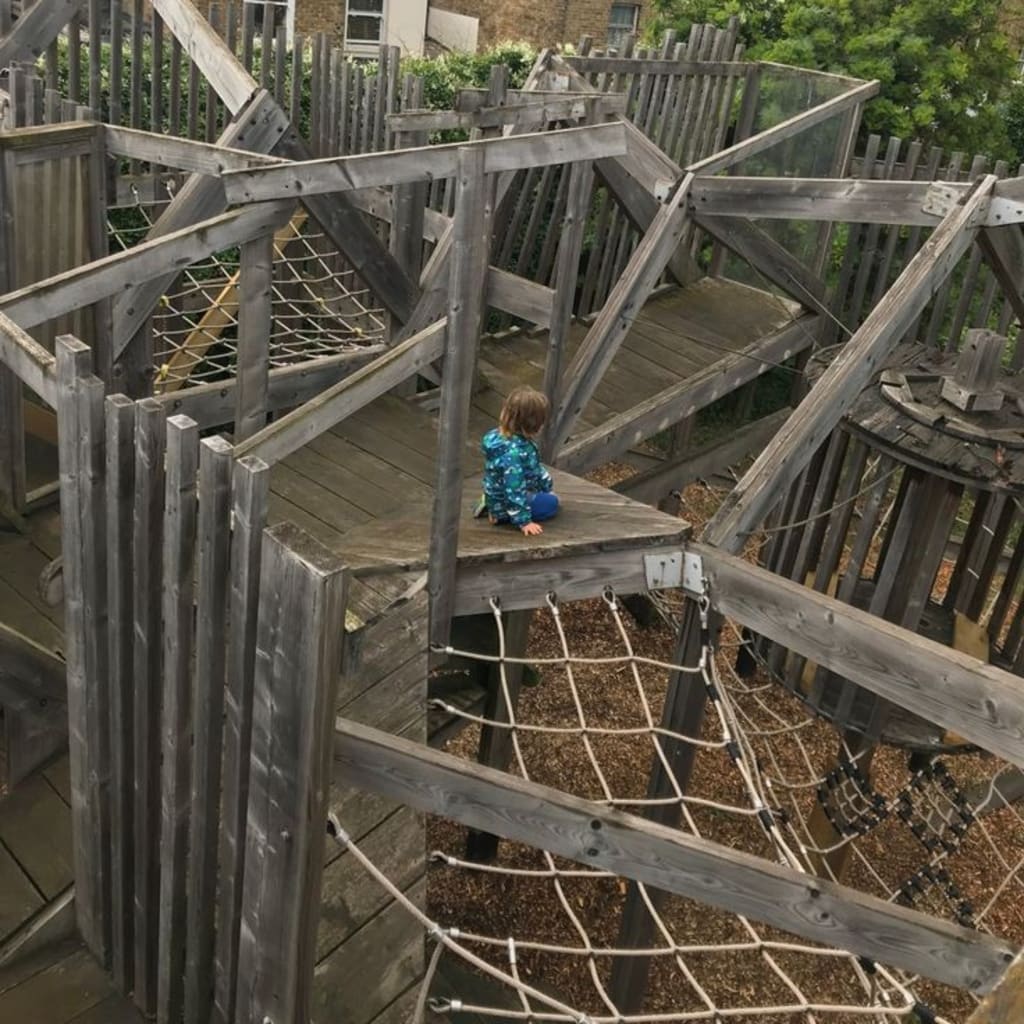
When you think of a playground, you probably picture something like this: a slide, a bridge, and a high point with a domed roof. But, what about this? This isn't a junkyard, my friend! This is an adventure playground, where kids can get their hands dirty and take risks. No plastic play structures here! Just old tires, wood planks, hammers, and nails. It's a playground revolution! The idea is that kids should be able to take more risks and challenge themselves. I know, I know, it's a nightmare for helicopter parents, but hear me out. Research shows that this kind of play is actually healthier and safer for kids. They get to play with tools that might seem dangerous, take risks, and overcome them. And the result? A huge confidence boost! It's amazing to watch kids develop self-confidence and learn to navigate challenges. Adventure playgrounds are the new black in American playgrounds, and for good reason
Now let's talk about Marjory Allen, a British landscape architect and children's welfare advocate who was making waves around the middle of the 20th century. In 1945, she traveled to Copenhagen, where she met a fascinating architect named Carl Theodor Sorensen. But here's the interesting part: two years earlier, during the German occupation of Denmark, Sorensen noticed that kids in his neighborhood were avoiding playgrounds like the plague! Instead, they were playing in construction sites, bombed-out buildings, and basically anywhere else they could find. So, Sorensen had an idea. In a suburban housing development, he took an empty lot and turned it into a playground like no other. He filled it with building materials, discarded objects, and tools - yes, you read that right, tools! Can you imagine? It was a space where kids could build, create, and explore to their hearts' content. And that's how the adventure playground movement was born.
Can you believe it? Kids were given the freedom to dig, build, and invent on their own terms! The play structures were essentially designed by the kids themselves, and it was a huge hit with both kids and parents. Sorensen dubbed it a "junk playground," but Marjory Allen had a better idea when she brought the concept back to England - she renamed them "adventure playgrounds"! And just like that, the adventure playground movement went global! From London to Minneapolis, Boston, Toronto, Tokyo, Houston, Berkeley, and Berlin, these playgrounds popped up everywhere. But here's the thing: to make these playgrounds work, designers had to embrace a crucial element - controlled risk. It's all about finding that sweet spot between letting kids explore and learn from their mistakes, while still keeping them safe. And that's where the magic happens.
Okay, so when we talk about risk in the context of adventure playgrounds, we're not talking about hazards like rotten branches that can surprise you. No, we're talking about manageable risks that kids can take on, like deciding how high to climb a tree. It's all about giving kids the freedom to make choices and learn from their experiences. And to make that happen, designers focus on six key elements: heights, speed, tools, dangerous elements (like water or fire), rough and tumble play, and the ability to disappear or get lost (which, let's be real, can be a thrilling experience for kids!). A good adventure playground mixes and matches these elements to create an environment that's both exciting and safe. But that's not all - designers also think about separating spaces, so kids can feel like they're discovering things on their own. That might mean setting up physical barriers or creating cozy spots for parents to hang out while kids play. And finally, they fill the space with loose parts - think planks, barrels, bricks, and tools - that kids can manipulate and use to fuel their risky play. It's all about creating an environment that's both thrilling and safe.
The genius behind adventure playground design is that kids actually respond really well to being treated like grown-ups. When they're given access to risky items that have a real purpose, they'll approach them with caution and curiosity, and learn through experimentation. But, on the other hand, if they're stuck in a playground that's been stripped of all risk and excitement, they'll often seek out thrills that can actually be more dangerous. It's like they're saying, "Hey, if you're not gonna give me any real adventure, I'll just create my own!" And that can lead to higher injury rates than if they were just allowed to play at an adventure playground in the first place. Sadly, in the US, we've got a culture of playscape design that's all about avoiding lawsuits, which means we end up with playgrounds that are super safe but also super boring. Designers have been so focused on reducing height, movement, and hard materials that they've forgotten how to make playgrounds that are actually fun and engaging. And that's a shame, because it's not making playgrounds better - it's just making them more bland.
When Marjory Allen visited American playgrounds in 1965, she called them "an administrator's heaven and a child's hell." But, fast forward to today, and adventure playgrounds are finally starting to gain traction in the US. Maybe it's because we're finally recognizing the importance of unstructured play. But, of course, with that comes criticism. Some people say, "Wait a minute, you're giving kids hammers and nails? That's not play, that's just hard work! You're tricking them into building their own playground!" And yeah, adventure playgrounds aren't without their downsides. They can be pretty rough around the edges, they take up a lot of space, and they need a lot of resources to maintain. And, let's be real, there's always a risk of injury. But here's the thing: the philosophy behind risky play can actually help kids live better lives. It's all about teaching them to embrace challenges, take calculated risks, and learn from their mistakes. So, maybe it's time to rethink what we want from our playgrounds. Do we want safe, sanitized spaces that stifle creativity and growth? Or do we want to give kids the freedom to explore, create, and learn from their experiences?
Okay, so let's talk about the benefits of riskier playgrounds! For starters, they get kids moving more. A study compared playgrounds in London (where risky play is all the rage) to those in San Francisco, LA, and New York, and found that kids in London's playgrounds were up to 18% more physically active! And the best part? Those London playgrounds were actually cheaper to build and maintain, and had fewer injuries to boot! But that's not all - multiple studies have shown that kids who engage in risky play have some amazing benefits, like better risk detection (so they can avoid getting hurt!), more creativity (hello, problem-solving skills!), and even higher self-esteem (because they're learning to navigate challenges and come out on top!). So, it seems like riskier playgrounds are a win-win-win.
Think about it - playgrounds are one of the only types of buildings specifically designed for kids! And if the standard design we've settled on is putting them to sleep (literally!), then we've got a problem on our hands. But here's the thing: good design can fix that! And yeah, maybe it means taking a few risks and trying something new. But isn't that what childhood is all about? Exploration, experimentation, and learning from our mistakes. So, let's give kids the playgrounds they deserve - ones that are exciting, challenging, and maybe even a little bit risky. After all, that's where the real magic happens.
So what do you think about this. Let us know in the comments down below. Remember it's your 24hrs to enjoy. Stay blessed. Stay bubbly.
About the Creator
Keep reading
More stories from Ekeke Divine Favour and writers in Families and other communities.
Why are we so dependent on subtitles?
I'm a total movie and TV buff! I watch stuff everywhere - on the train, at home, at the cinema, while working out, doing dishes, even in the bath! But no matter where I'm watching, I always find myself doing one thing... (dramatic pause) ...using subtitles! I know, I know, it's a horror! But honestly, I just can't help it. I love having that extra bit of help to make sure I catch every word. And let's be real, sometimes it's just nice to have a little extra reading material while you're watching. So, yeah, I'm a subtitle user and I'm not ashamed to admit it!
By Ekeke Divine Favour2 years ago in Psyche



Comments
There are no comments for this story
Be the first to respond and start the conversation.