
Pain in absence, not action
How My Father’s Silence Hurt More Than His Words

There are many ways a parent can wound a child. Some wounds come from anger, some from criticism, and others from absence. But the deepest wound my father ever left me wasn’t carved by shouting, or rejection, or even neglect. It came from his silence.
It wasn’t the peaceful kind of silence you find after a long day, the type that feels restful and safe. His silence was heavy, suffocating—like a locked door between us. It stretched across dinner tables, lingered in car rides, and filled every room of our home.
When I was little, I thought love was supposed to be loud. I believed fathers were supposed to cheer from the sidelines, clap at school plays, and say things like, “I’m proud of you.” Instead, my father’s love—if it was there at all—hid behind quiet walls I never learned how to climb.
The Empty Chair at the Table
Our house was never without food, never without safety. In many ways, we had what other families might envy. But warmth? That was missing.
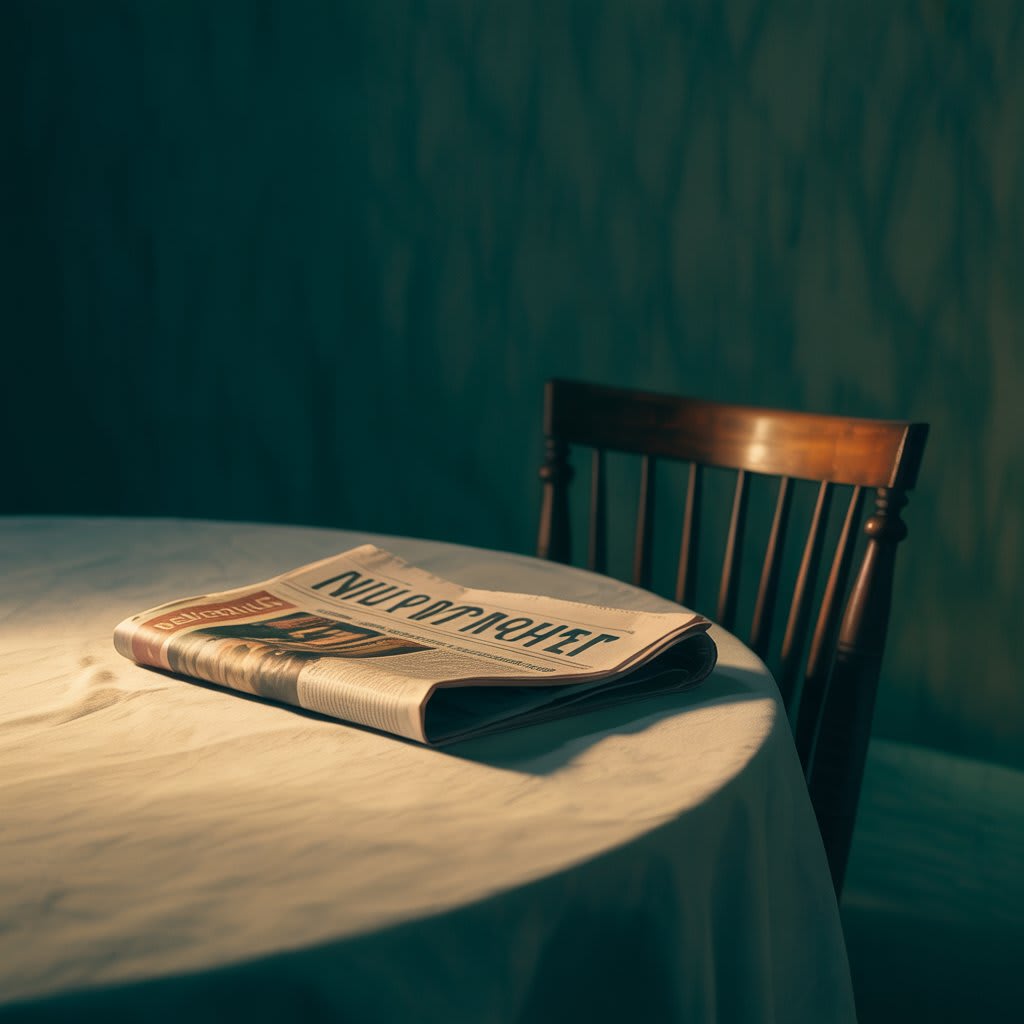
My father would come home after long shifts and sit at the dinner table with the newspaper spread wide in his hands. His body was there, but his attention wasn’t. If I told him about scoring a goal in soccer or about the teacher who praised my essay, he would give me a quick nod, maybe murmur “Good,” and then return to the newsprint.
I would stare at his hands, hoping he might lower the paper and look at me. Hoping for eye contact, a smile, maybe even a simple acknowledgment that he heard me. But the paper stayed up, and his silence said everything I wished he wouldn’t.
As a child, I didn’t understand. I thought I was doing something wrong. I wondered why he didn’t ask me questions, why he didn’t laugh at my stories the way other dads did. His silence wrapped itself around me like a cold blanket, and I wore it without realizing how much it was shaping me.
Silence that Screams
When parents yell, at least you know they feel something. Anger, disappointment, frustration—those are emotions you can recognize. But silence? Silence is harder. Silence makes you guess, and in the guessing, you build painful stories in your own mind.
My father’s silence screamed at me. It told me I wasn’t interesting. That I wasn’t worth speaking to. That my achievements, no matter how big, weren’t important enough to break through his wall of quiet.
That belief followed me into adulthood. I remember graduating high school and looking for his face in the crowd. He was there, I knew he was. But I don’t remember him clapping or smiling. I only remember the hollow ache of absence, even when he was sitting just a few feet away.
Learning What Silence Really Means
For a long time, I thought his silence meant I wasn’t good enough. But as I grew older, I began to realize something: his silence wasn’t always about me.
My father grew up in a world where men were expected to be providers, not nurturers. His own father had been distant and cold, and he had inherited that way of living without ever questioning it. He believed love was shown by keeping the lights on, by working hard, by being present physically—even if he was never present emotionally.
Understanding that truth gave me some peace, but it didn’t erase the damage. Because children don’t analyze family histories. They don’t say, “My father is emotionally unavailable because his father was too.” They just feel the ache of being unseen.
Breaking the Cycle
The silence left its mark on me, and for years, I was afraid I’d repeat it. I worried that one day I’d become a parent who struggled to say the words my father never said. But when I held my own child for the first time, something in me shifted.
I looked down at that tiny face and made a promise: I would not stay quiet. I would not let silence be my legacy.
The first time I said “I love you” to my child, the words felt awkward, almost foreign. But I said them anyway. I keep saying them—every day—because I know how heavy silence can be. I know the way it lingers, the way it makes you doubt your worth.
Breaking the cycle isn’t easy. Sometimes, the weight of old habits tugs at me. But I remind myself: my child deserves more than nods and folded newspapers. My child deserves words, affection, and presence in more than just the physical sense.
Finding Peace
Today, when I see my father, the silence is still there. It lives in the pauses, in the half-sentences, in the way he nods instead of speaks. Part of me still aches for words that will likely never come. But I’ve stopped expecting him to be someone he cannot be.
Instead, I’ve learned to fill the silence myself. I speak the words I needed to hear when I was young. I give the love I once longed for. And in doing so, I’ve discovered that silence doesn’t have to define me forever.
Yes, my father’s silence hurt more than his words ever could. But it also taught me something valuable: sometimes the greatest vow you can make is to break the silence. To use your voice where another could not. To speak love loudly, so no one you care about ever has to doubt it.
Because love left unspoken can wound, but love spoken—clearly, openly, and often—can heal.
About the Creator
LUNA EDITH
Writer, storyteller, and lifelong learner. I share thoughts on life, creativity, and everything in between. Here to connect, inspire, and grow — one story at a time.
Keep reading
More stories from LUNA EDITH and writers in Families and other communities.
Why My Grandmother’s Stories Still Guide Me Today
When I think about the person who has influenced my life the most, it isn’t a famous author, a teacher, or a public figure. It’s my grandmother. She didn’t leave behind wealth or possessions, but she gave me something far more valuable—her stories. They were simple, told in the quiet of evenings, yet they still guide me today, shaping the way I see challenges, kindness, and the importance of remembering where I come from.
By LUNA EDITH6 months ago in Families


Comments
There are no comments for this story
Be the first to respond and start the conversation.