
Overparenting & Children Who Can't Regulate Their Emotions.
Research says to let your children take control.


As a mother without a coparent, I must carefully arrange my day around the children, the home, work, and study to maintain a happy home.
Single parenting can mean a lot of judgement, often from people who either don't have children, or are blessed with enough support to not have as many responsibilities as other single parents need to manage during the day.
I also have parenting and protection orders that keep us safe, but does tend to affect how I parent.
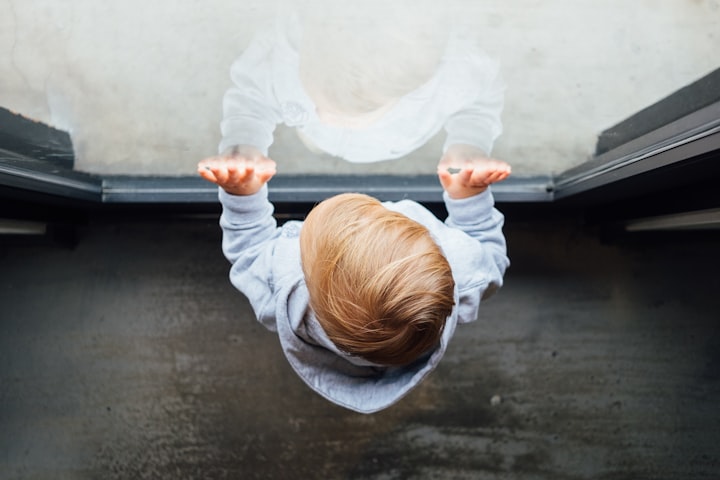
It turns out that if you spend your extra time and energy overparenting, you may be causing more harm than benefiting your children.
.....................
It makes sense that if you let children learn independently, they develop independence, but what about their emotional health?
It just so happens that children who learn independently also handle their emotions better than those who are interrupted, even when those interruptions are made with good intentions.

I made the terrible mistake of allowing my children around the mother of our abuser. I don't know if these grandparents know they're abusive, the scariest thing about abusers is that they can deny it with evidence and even lawyers telling them they need help before they can be around children without supervision.
The control started small, picking on their art, their stimming, their hair, the way they dress, the way their mother looks, dresses, and who their mother spends her time with was all somehow some of this woman's business. Yes, the mother of my children's abuser, who just met them aged 6 and 7, tried me!

Parents that prevent their children from stimming are preventing their children from developing the skills they need to regulate their emotions, particularly around love and trust.
Children prevented from stimming also fail to develop a strong bond with that parent, feeling like they’re not living up to unnecessarily high standards interpreted by the child as not being loved for who they are.
Parents that prevent their children from stimming will likely micromanage the most minute details of a child’s thoughts, actions, and behaviours, becoming a barrier to that child’s growth.
My children basically suffered the same coercive controlling behaviour their father and his siblings did, but unlike anyone in their family (except our abuser's brother) I stood up, well I was made to stand up when family harm services had enough and it got so bad that other people's children were exposed to the violence in a very public, very policed, and very "I was in the middle of giving birth" way.
Children allowed to follow instructions and then learn on their own, without too much involvement from their parents, are more emotionally resilient than children of parents who frequently disrupt their child's learning opportunities.
“The children of parents who more often stepped in to provide instructions, corrections or suggestions or to ask questions … displayed more difficulty regulating their behaviour and emotions at other times.” — Krysten Crawford.
Researchers at Stanford University found that children with over-involved parents had low self-control and lacked many essential executive functions, such as the ability to delay gratification and control impulses.
The ability to delay gratification and control our impulses is what sets savers apart from spenders and school achievers from school leavers. No matter how you define success, it takes effort and dedication.
How many times have your impulses set you on a downward spiral? Or, at least pushed you away from what matters in your life?
-----------
While research on adolescent children suggests strong parental involvement in education has significantly improved their child’s academic performance, toddler to school-age children could benefit more from parents offering less direction.
Stanford researchers found that if a child is fully engaged in a task or leading an activity such as cleaning their room or learning a game, parents should leave their child to do it themselves. The best time to participate is when a child is passively engaged in a task or activity.
A little over a hundred 4 to 7-year-old children participated in the Standford study, which focussed on the vital shift from home and pre-school to school when a child’s parents are not available to direct them.

The study found that over-direction by parents does indeed prevent children from developing strong emotional self-regulation skills.
It’s important to note that parental over-involvement does not refer to positive direction and engagement in parenting; most studies clearly distinguish involved parents from those too involved to the point of control.
It’s essential to be accessible and provide guidance when your child needs your assistance, but delving into every opportunity to learn, whether during play or doing a chore, could stifle their ability to regulate their emotions.
Try not to feel too guilty if you’re struggling to get involved, particularly under current circumstances. Taking a few steps back and allowing your children to work on tasks independently teaches them strong personal and emotional skills.
Thank you for reading.❤
You may also enjoy:
About the Creator
writemindmatters
Writing about all matters of the mind, narcissism, personality disorders, parenting, writing, naturopathy and nutrition. BApsy.GradDipPsy.PGDipPsy research student.
Keep reading
More stories from writemindmatters and writers in Families and other communities.
When Parents Don't Turn Up To Supervised Visits.
When the Family Court orders tax-payer funded court-supervised visits, they anticipate the parent will turn up and show up as the parent they presented themselves to be in court. From experience, they know that many do not turn up.
By writemindmatters4 years ago in Families
Wise~Guys
— Look Behind what's in Front of You ~ Make Good Choices — Hey, So how you Doin'..! Made~Men — Mobster Movies romanticise a distinctive, elegant appearance, impeccable attire style, along with the 'Families' expressive lingo. Making their 'Bones' gave them Panache — with vintage fedoras, tailored pin-striped suits, mirror-polished wing-tip shoes adorned with tassels; with their 'Gun Moll' gorgeous dates on their arms.
By Jay Kantor17 days ago in Families
Filial Piety: Appreciating the Cycle of Asian Justice
Filial Piety is the central part of a Confucian value system concerned with the need to produce beneficial patterns from children who are expected to care for their parents. According to Confucius, a variety of virtues are needed to maintain a strong society: filial piety, righteousness, love, loyalty, sincerity, justice, tranquility, moderation, and harmony.
By WILD WAYNE : The Dragon Kingabout 4 hours ago in Families
Miss Persephone's Manual to a Seemingly Ordinary Life
Miss Persephone was found at the dining table, her blue eyes swollen, her tears arriving and retreating like the tides of the ocean. Earlier that day, her family had visited her in the retirement home where she had lived for eight years. It was her eightieth birthday.
By Imola Tóth2 days ago in Fiction



Comments
There are no comments for this story
Be the first to respond and start the conversation.