
Nina’s Gift
A story of deep love, loss, and unexpected fortune.

I awoke to screams.
My body jumped reflexively and I nearly fell off the bed. A soft chuckle arose from beside me. Then I remembered. “That fucking rooster,” I grumbled.
My wife sat up and put her hand on my still heaving chest. “It’s still early,” she smiled, “hold me for a while.” She replaced her hand with her head, and I wrapped my arms around her warm body as I settled back down onto the pillows.
Closing my eyes, I did my best to let my senses take over. I wanted to remember every aspect of this moment. The smell of lavender and orange on her hair; the softness of her skin; her quiet, rhythmic breathing.
The sunlight began to creep through the curtains, and I was very suddenly reminded how powerless I was against the passage of time. Nothing could stop the rising and setting of the sun. Even if the world I knew was coming to an end, it was not a big enough event to stop time itself.
Nina, my wife of four years and high school sweetheart, was diagnosed with terminal brain cancer. The doctor gave her six months to live. That was four months ago.
From the minute we heard she was dying, I made it a point to commit every second I had left with her to memory. It would be all I had left of her after she was…
A tear slipped down my temple. It was too much to think about. I pushed the thoughts aside and returned to relishing the moment.
We laid there quietly until the sun chased the shadows from the room.
Nina stirred, gave my hand a reassuring squeeze, and stated she was going to go make coffee. I watched her walk away, taking mental pictures of the way her hips swayed when she walked. She casually combed her fingers through her long, golden-brown hair, letting it fall in waves down her back.
Every moment I have with her is a gift.
I got up, got ready for the day, and eventually joined her in the kitchen. She sat at the dining table with her back to the big, bay window. The sun shined down upon her, giving her a warm, ethereal glow. She looked like an angel.
I didn’t realize I was staring until she glanced up from her phone and raised an eyebrow. “Everything okay?” she asked.
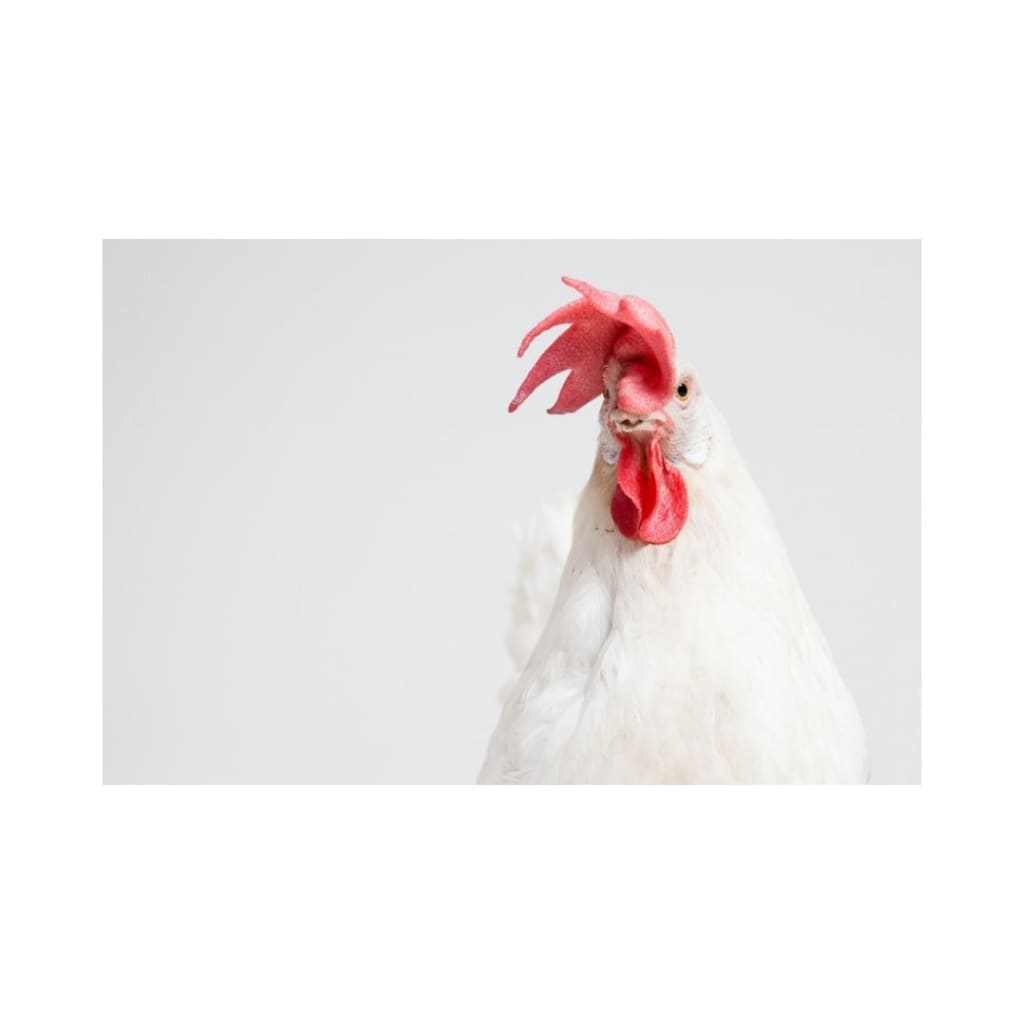
I snapped out of my trance and busied myself with fixing my coffee. Off in the distance, the rooster, Hawkins, she named him, let out another impatient crow.
Nina sighed, “Guess I better go feed them.” She stood up, then shot out a hand to grab the back of the chair, as if to catch herself. I was quickly at her side, holding her steady by the arms.
“Are you okay?” Panic laced my words.
“Yes,” she said breathlessly, “just a little dizzy.”
“Let’s get you to bed. Don’t worry about the chickens. They can wait.” I scooped her limp body into my arms and carried her back to bed. I helped her get settled, fluffed the pillows, and pulled the covers to her chin. Her eyes were already closed. I couldn’t help but notice how pale she looked.
These episodes were becoming more frequent. It was obvious she was becoming weaker with each passing day. My jaw clenched as the grief threatened to consume me, but I shoved it in a mental box and kicked it across the room. It wasn’t time for that, yet.
I put my rubber boots on and went to feed the impatient chickens. As distracting as the chickens were, my mind still began to wander.
When we found out about Nina’s diagnosis, I quit my job to be able to care for her. The nest egg we had managed to save was quickly dwindling. Relative to her condition, money was basically meaningless to her, but we were still concerned about what would happen to me, financially, after she was gone.
I wasn’t even sure if I could afford the funeral.
“Just have me cremated,” she had insisted, “I don’t need a tombstone or a funeral. Just plant a tree somewhere in my memory. That would be enough for me.” She gave a slight smile and squeezed my hand, but she knew how hard it was for me to think of such things.
We had several deep conversations about what she wanted for me after she was gone. We were still young, she had said. She wanted me to live my life, to find love again, and to have the family we always wanted.
I was trying to stay focused on cleaning out the coop while the chickens pecked at their food. Hawkins fluffed his feathers and clucked, content with finally being fed. Nina said we needed a rooster to guard the small flock of females we had acquired.
Not long after she mentioned this, the local animal shelter posted on social media an owner-surrender of a sad-looking rooster with bald patches and infected feet. Nina, bleeding heart she is, convinced me we needed to adopt him. It took him a few days, but he quickly grew into the position of leader, and his confidence, along with his feathers, returned.
With the chickens tended to, I decided to check in on Nina. She was still in the same position I left her but looked even paler. I lightly touched her forehead with the back of my hand. My heart sank. She felt cold. A knot of panic bloomed in my gut. I quickly phoned the doctor who advised she be taken to the hospital immediately.
The next several hours were a blur. Nina was responsive but very tired when we first arrived. Within a few hours, her condition quickly deteriorated, and she slipped into a coma. The doctor said all they could do now was make her comfortable, and it was unlikely she would recover.
I stayed by her side, her delicate hand in mine, hopeful she would spring back and we could go home. Instead, her vital signs became weaker and weaker, and suddenly I found myself in the back of a cab, going home alone with nothing but a bag of her belongings and a lock of her hair.
I awoke to a scream, my body jerked from a dead sleep.
That fucking rooster, I thought to myself. Then reality hit me like a train. It seems I cried myself to sleep. I found myself in my recliner, wearing the same clothes as the day before. My brain was in a fog, but the pain in my chest was clear.
She’s gone. The tears came freely, and a pathetic sob escaped my throat. She’s gone, she’s gone. The thought echoed infinitely in my mind.
Eventually, after the third or fourth increasingly annoyed crow, I managed to wipe my tears and regain some composure. My world was in shambles, but the chickens still need to be fed. I envied them and the ignorant bliss they lived in.
I heaved my numb body out of the recliner, zombie-walked to the back door, stepped into my rubber boots, and grabbed the metal bucket next to them. Stepping outside, my foot landed on something funny, rolling my ankle to the point I had to quickly catch myself on the screen door handle. Cursing under my breath, I righted myself and whirled around to see what I had stepped on.
My eyes widened...a book?
A little black book sat on top of the welcome mat, seemingly placed there by a mysterious person.
I looked behind me and surveyed the area, but saw no one. Our home was thirty minutes from the nearest town and butted up against a state forest. The nearest neighbors were several acres away.
Dropping the bucket with a clang, I cautiously grabbed the book. The cover was soft, leather-bound, and encased worn gold-leaf pages. Opening it to the first page, I looked for some sign of who it belonged to. Instead, I found an elaborately scrawled note, written in faded, brown ink.
“To reveal the treasure hidden inside
Write your name on a page supplied.”
What on earth was this?
Nearby, the chickens were voicing their impatience. I stuck the book in my back pocket and resumed my trek to the coop.
With the chickens satisfied, I sat at the dining table with the mysterious book, flipping through each page to try and find more clues, but the rest of the pages were blank.
As I was re-reading the mysterious message for the twentieth time, my phone buzzed, breaking my train of thought. It was my mother, no doubt calling to try and console me and express her sympathies.
“Honey, I’m so sorry,” she responded gently. Hearing the genuine pain in her voice, I quickly caved and we cried together for the next hour.
After a long day of phone calls from grieving relatives, I was numb and exhausted. I just wanted to sleep and forget for a while. As I was turning the lights off through the house, I remembered the book I left on the table. Retrieving it, I wrote my name on a random page as it specified, and set it down. I felt somewhat foolish but decided I was too exhausted to care.
Sleep proved impossible. Her absence was palpable. Eventually, I glanced at my phone to check the time: 4:34 am. I sighed. This was pointless. I decided to get up and have a cup of coffee. Normalcy was difficult but necessary, my mother had told me.
I made my way to the dark kitchen and flipped on the light, and froze.
The book was gone.
A chill crawled up my spine. Who took it? Grabbing a kitchen knife, I made my way through the house, checking windows, behind doors, and in closets. Nothing. I tried to rationalize its disappearance. Perhaps I left it elsewhere and forgot. After all, grief can cause strange behavior.
Some time had passed since the death of my wife. It rained during her funeral, which I found an appropriate reflection of my mood. The wake was boring and unremarkable.
Since then, I had done my best to carry on with day-to-day activities. The ache in my chest was still prominent, almost too much to bear at times. The promise I made to her was the only thing that kept me going.
I decided to check the mail. My heart sank when I received the bill from the funeral home. There was no way I could pay. At her family’s urging, I had to opt for a headstone. They needed a place to lay flowers, they said.
Tears flooded my eyes. Blinking through them, I gathered my courage and decided to check the balance in my checking account.
My heart stopped.
The balance read twenty thousand.
There had to be some mistake. I quickly phoned the bank to see where the deposit came from. The pleasant lady on the other end stated with an upward inflection, “All it says is Hidden Fortune as the company name. Does that sound familiar?”
I was confused, “No, it doesn’t -” I stopped, suddenly remembering the black book that disappeared a couple of weeks ago. Could this be the mysterious treasure it mentioned? Was it even possible?
“Sir?” the lady asked.
“I mean, yes,” I cleared my throat. “Yes, yes. I remember now. Thank you.” I hung up on her, lost in thought.
I spent the next hour in silence, trying to figure out how this was possible. While no answer was satisfactory, I decided it was a heavenly miracle orchestrated by Nina herself. This rationalization was only solidified when the black book reappeared after the initial twenty thousand ran out.
And so, ten years later, it has been the same. My three-year-old, Nina, came running into the kitchen, the familiar black book in hand, exclaiming she found something on the back porch.
About the Creator
Keep reading
More stories from writers in Families and other communities.
Wise~Guys
— Look Behind what's in Front of You ~ Make Good Choices — Hey, So how you Doin'..! Made~Men — Mobster Movies romanticise a distinctive, elegant appearance, impeccable attire style, along with the 'Families' expressive lingo. Making their 'Bones' gave them Panache — with vintage fedoras, tailored pin-striped suits, mirror-polished wing-tip shoes adorned with tassels; with their 'Gun Moll' gorgeous dates on their arms.
By Jay Kantor24 days ago in Families
A Story of Leavie Scott
Leavie Scott’s story begins with a simple but powerful belief: that growth is possible at any stage of life. From an early age, Leavie understood the value of resilience, shaped by family influence and real-life experience rather than shortcuts or easy answers. Growing up, the lessons that mattered most were not always spoken aloud—they were shown through perseverance, responsibility, and the expectation that hard work would eventually open doors.
By Organic Products a day ago in Families
📢 Raise Your Voice Thread: 01/22/2026
Our “Raise Your Voice Threads” are hosted most alternating Thursdays at 12PM ET to offer creators more avenues to uncover exceptional stories on Vocal. As we are continuously searching for fresh creators and inspiring stories, this thread provides an opportunity to exchange and discuss the stories that have moved and motivated us on Vocal.
By Raise Your Voice by Vocal3 days ago in Resources




Comments
There are no comments for this story
Be the first to respond and start the conversation.