
My Mother’s Voice in Every Room I Leave
A meditation on grief, memory, and healing.

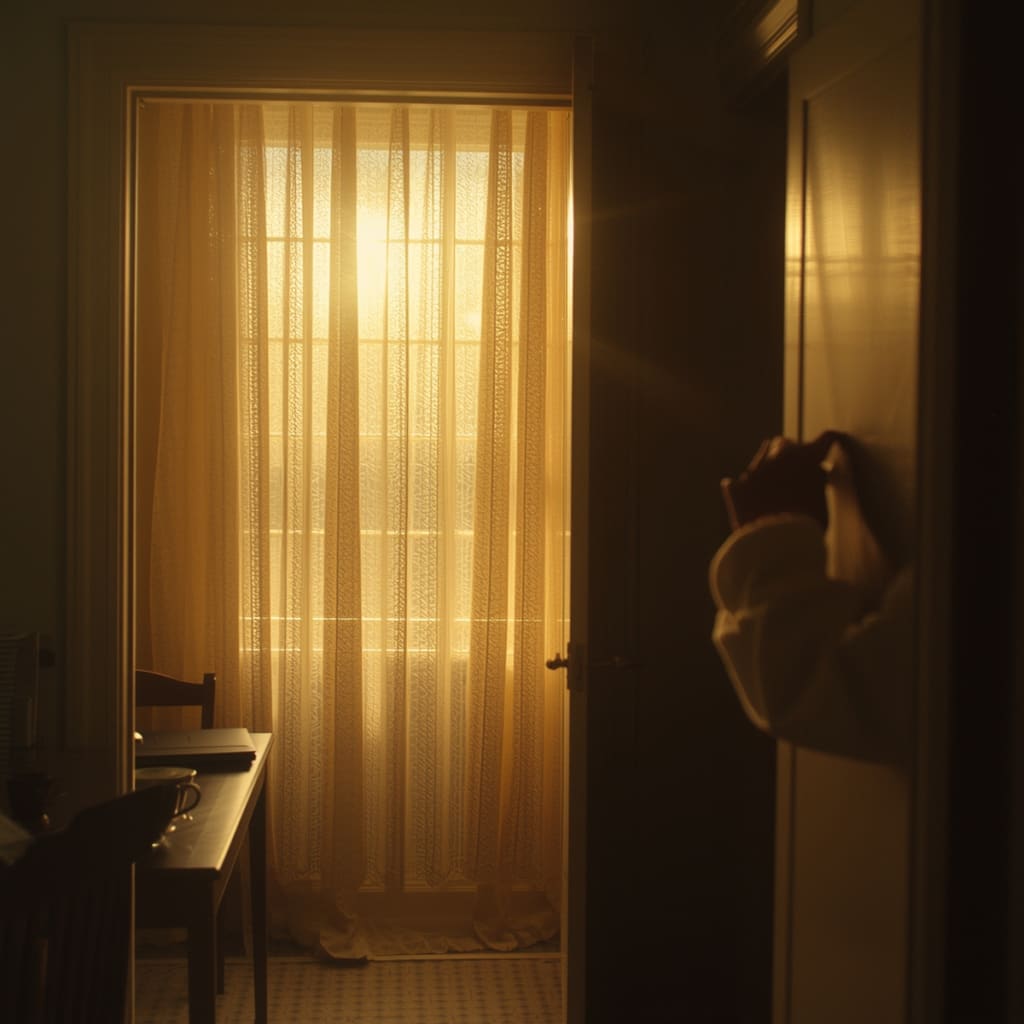
My Mother’s Voice in Every Room I Leave
By Hasnain Shah
A meditation on grief, memory, and healing
I didn’t realize how loud silence could be until she was gone.
When my mother was alive, her voice filled the house like sunlight — not always bright, but always present. Sometimes it was soft, humming to the rhythm of her chores, the sound of a broom on tile. Other times it was sharp, like the snap of a dish towel when she caught me sneaking cookies before dinner. She never shouted, but she had a way of making my name sound like both a question and a warning.
Now, the house is quiet. Too quiet.
When I moved back home after her funeral, the walls felt different. The air was heavier. The scent of her lavender lotion still lingered in the bathroom, though the bottle sat capped and unused. The couch cushions still bore the soft dent of where she used to sit during her evening shows. Every room felt haunted — not by a ghost, but by an echo.
The first few nights, I kept thinking I heard her voice.
“Close the window, you’ll catch a chill.”
“Don’t forget to water the fern.”
“Did you eat something today?”
It was my own voice, of course — the part of me she had shaped, repeating the rhythms of her care. But in the dark, half-asleep and half-hurting, it felt real enough to answer.
“Yes, Mama,” I’d whisper into the empty room.
When grief first arrives, it doesn’t knock. It just walks in and starts rearranging the furniture of your life. Things that used to make sense — breakfast, laughter, sunlight — all shift to unfamiliar angles. You think you can clean it away, organize it, make it manageable. But grief is not clutter. It’s architecture. It changes the structure of who you are.
For weeks, I lived in a fog of doing — sorting, cleaning, boxing up her clothes. Every drawer I opened told a story: the church bulletins tucked beside her lipstick, the grocery lists with “milk, bread, prayer” scrawled in her looping handwriting. She’d written my name on everything — in recipe books, in old cards, in the corners of photo albums. As if to say, this too is yours someday.
I found her voice in the smallest things.
In the recipe for cornbread that said, “Don’t rush it — good things need warmth.”
In the voicemail I couldn’t delete, where she said, “Call me back, no reason, just love.”
In the hum of the washing machine that always seemed to start right after she said, “We’ll tackle it together.”
At first, I tried to silence it. I told myself to move on, to stop listening for her in every creak and whisper. I filled the rooms with music, invited friends over, turned on the TV just to drown out the quiet. But the harder I tried to bury her voice, the louder it became.
It wasn’t until I started painting — something she’d always encouraged but I’d never made time for — that I understood what she’d left behind. I painted one afternoon in the kitchen, sunlight falling across the table where she used to knead dough. The colors bled together, soft and imperfect, but when I looked up, I could almost hear her laugh. That small, delighted laugh she had when I did something just for the joy of it.
I realized then that her voice wasn’t trapped in the house at all. It was in me.
Every time I make tea and let it steep a minute longer because “patience brings flavor,” that’s her voice.
Every time I pause before speaking, weighing kindness over being right, that’s her too.
Every time I forgive myself for not being okay yet, she’s there, whispering, “Healing isn’t a straight line, sweetheart.”
Grief, I’ve learned, is not the absence of love but its most faithful echo. It doesn’t fade. It reshapes.
The day I finally left the house — the day I closed the door behind me for the last time — I stood in the doorway for a long while, waiting for the wave to hit. The silence pressed in again, but it didn’t feel empty anymore. It felt full, like a breath I could finally take.
As I walked away, I heard her again — not a sound, exactly, but something deeper. A pulse. A memory that breathed.
“Go on now,” she said. “You’ve still got living to do.”
And for the first time in months, I smiled through the ache.
Because she was right.
Her voice isn’t something I’ll ever lose.
It’s in every room I leave — and every one I’ll ever enter.
About the Creator
Hasnain Shah
"I write about the little things that shape our big moments—stories that inspire, spark curiosity, and sometimes just make you smile. If you’re here, you probably love words as much as I do—so welcome, and let’s explore together."
Keep reading
More stories from Hasnain Shah and writers in Families and other communities.
The Shoes My Father Left Behind
The Shoes My Father Left Behind By Hasnain Shah When my father passed away, the first thing I noticed was the row of shoes lined neatly in the corner of his closet. They were ordinary shoes to anyone else, but to me, they were a timeline. Every scuff, every crease in the leather, every sole worn thin told a chapter of his life—and mine.
By Hasnain Shah5 months ago in Families
The Day I Saw My Father Cry
Most of us grow up believing that our parents are unbreakable. As children, we see them as pillars of strength—people who always know what to do and how to solve every problem. Especially fathers. They are often seen as the strong ones, the protectors, the people who never show weakness. For most of my life, I believed that about my father. Until the day I saw him cry.
By Shoaib Afridi7 days ago in Families




Comments
There are no comments for this story
Be the first to respond and start the conversation.