
Love in a Pashtoon Heart
The power of money in a pashtoon society

Introduction:
The story I’m about to share is not fiction, but a heartfelt truth—an echo of a young Afghan man's soul. It is a reflection of a society shaped by love, struggle, tradition, and the harsh realities of poverty.
Body:
Pashtoons are a beautiful, loving, and peace-seeking people. If only peace prevailed in our homeland, Afghanistan. Sadly, after the war with Russia, my family became refugees and moved to Pakistan.
In the early years, we didn’t even realize we were refugees. We only began to understand when the harshness of life became evident. Our house was made of mud, and whenever it rained, my mother would pull us close to her chest, fearing the roof might collapse. She’d comfort us, saying, "Be strong, there’s nothing to worry about."
Years passed, and I grew up. My mother continued sewing clothes for people, while my father worked in a factory. Despite our poverty, my parents’ greatest wish was for me to study, and I shared that dream—to serve my people and my country one day.
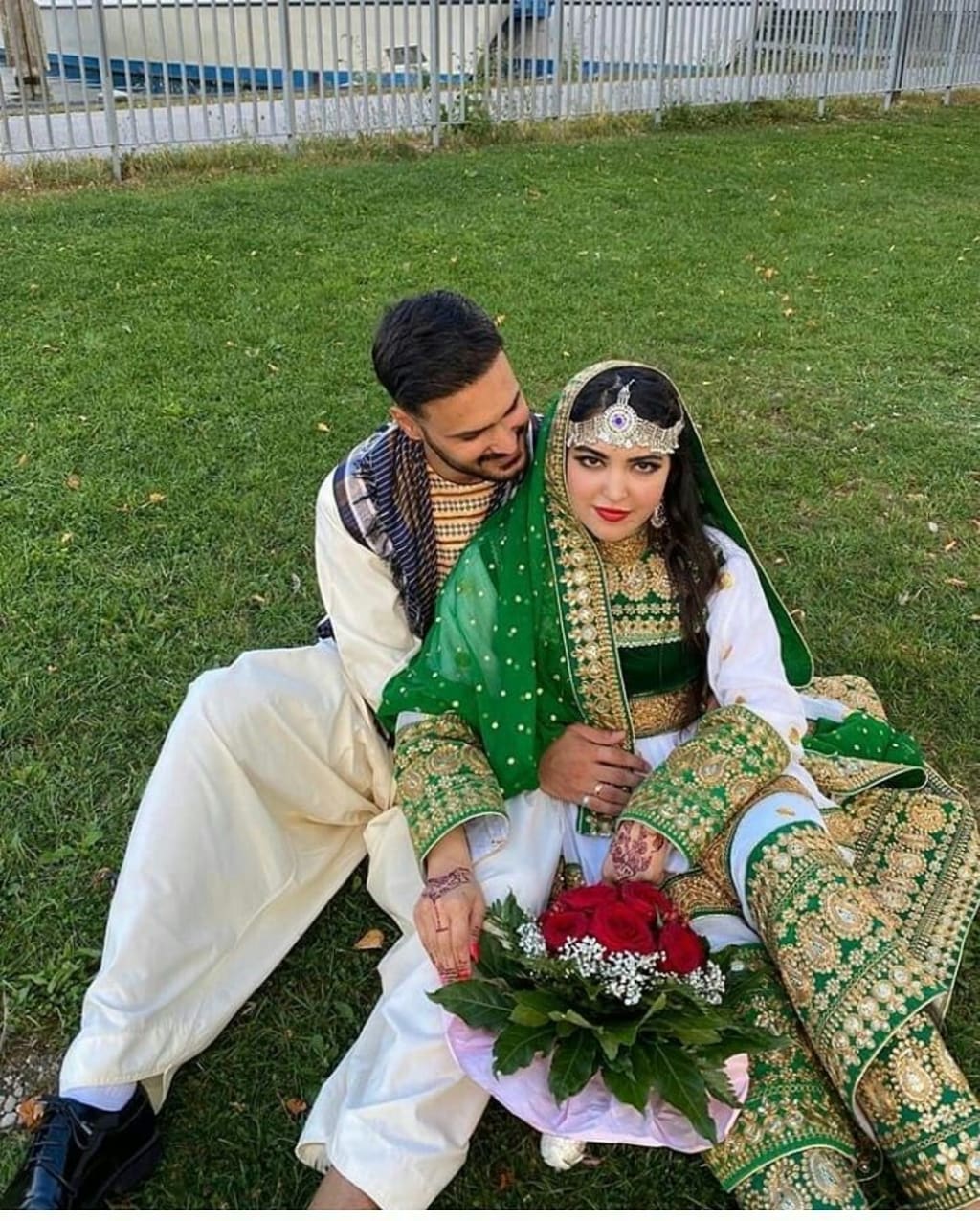
Since childhood, I had deeply loved a girl, and she loved me too. We kept our love hidden because in Pashtoon culture, expressing love openly is considered a grave sin. If a girl's family discovers a relationship before marriage, the result could be death or dishonor for both lovers and their families.
Yet, I was not afraid of death or shame, and her love for me was unwavering. She used to say, "I would rather die than marry anyone else." We were happy in our secret bond and eventually decided to tell our families. I was hesitant, but her love gave me strength. I first confided in my mother, fearing my father’s anger.
My mother wept and turned away, whispering, "My son, we are poor and refugees." Still, she comforted me, assuring me she would speak to my father.
That evening, my father came home exhausted and asked for food. My mother quickly warmed vegetables and served him. As he ate, she gently suggested, "There’s a beautiful girl in the neighborhood. If you agree, we could arrange her marriage to our son." My father, unaware of our love, replied, "I’ll think about it."
The next morning, during tea, my mother brought it up again. Once more, my father gave the same answer: "I’ll think about it." That evening, when my father returned from work, a boy handed him a letter. It was from the girl. She wrote that if she wasn’t allowed to marry me, she would take her own life.
My father, furious, shouted at me. "I had such high hopes for you! I work day and night so you can study and become someone respectable, and you do this?" My mother rushed in, saying, "What’s going on? My son has done nothing wrong. He will study and marry the girl he loves!" Her words filled me with joy, and I left the house, relieved.
Later, my father said he would visit the girl’s family the next evening. But he added painfully, "I’m a poor man. What if they demand a dowry?" (In our culture, dowry refers to a large sum of money given to the bride’s family for wedding expenses and to keep for themselves.)
My father visited them. After some discussion, they agreed to the marriage—but asked for a dowry of 1.6 million Pakistani rupees. My father came home devastated. When my mother learned of this, she wept with me the entire night, saying, "Oh Allah, even our smallest dreams cannot come true." Soon after, she fell ill with heart disease and passed away, leaving just my father, my younger sister, and me.

I completed my BS in Computer Science, but the girl I loved married a wealthy businessman. I then started working and supported my sister's education. My father also fulfilled his dream of performing Hajj. But I have not married yet.
Conclusion:
I want to send a message to our Muslim brothers, and especially to the elders and fathers in Afghan society: Stop this dowry system and harmful customs. They are neither part of Islam nor found in the cultures of other countries or religions.
And to the youth—I urge you to work hard. Work for your country, for yourself, and for your families.
May Allah be with you all.
Author: Akhtar
About the Creator
Keep reading
More stories from Akhtar Gul and writers in Families and other communities.
Wise~Guys
— Look Behind what's in Front of You ~ Make Good Choices — Hey, So how you Doin'..! Made~Men — Mobster Movies romanticise a distinctive, elegant appearance, impeccable attire style, along with the 'Families' expressive lingo. Making their 'Bones' gave them Panache — with vintage fedoras, tailored pin-striped suits, mirror-polished wing-tip shoes adorned with tassels; with their 'Gun Moll' gorgeous dates on their arms.
By Jay Kantor17 days ago in Families




Comments (4)
Vary imparasive great👍
Nice graet
Follow the rules of islam and make easily life
Great