
Lost Hearts
“The hearts we lose in kindness are never truly lost.”

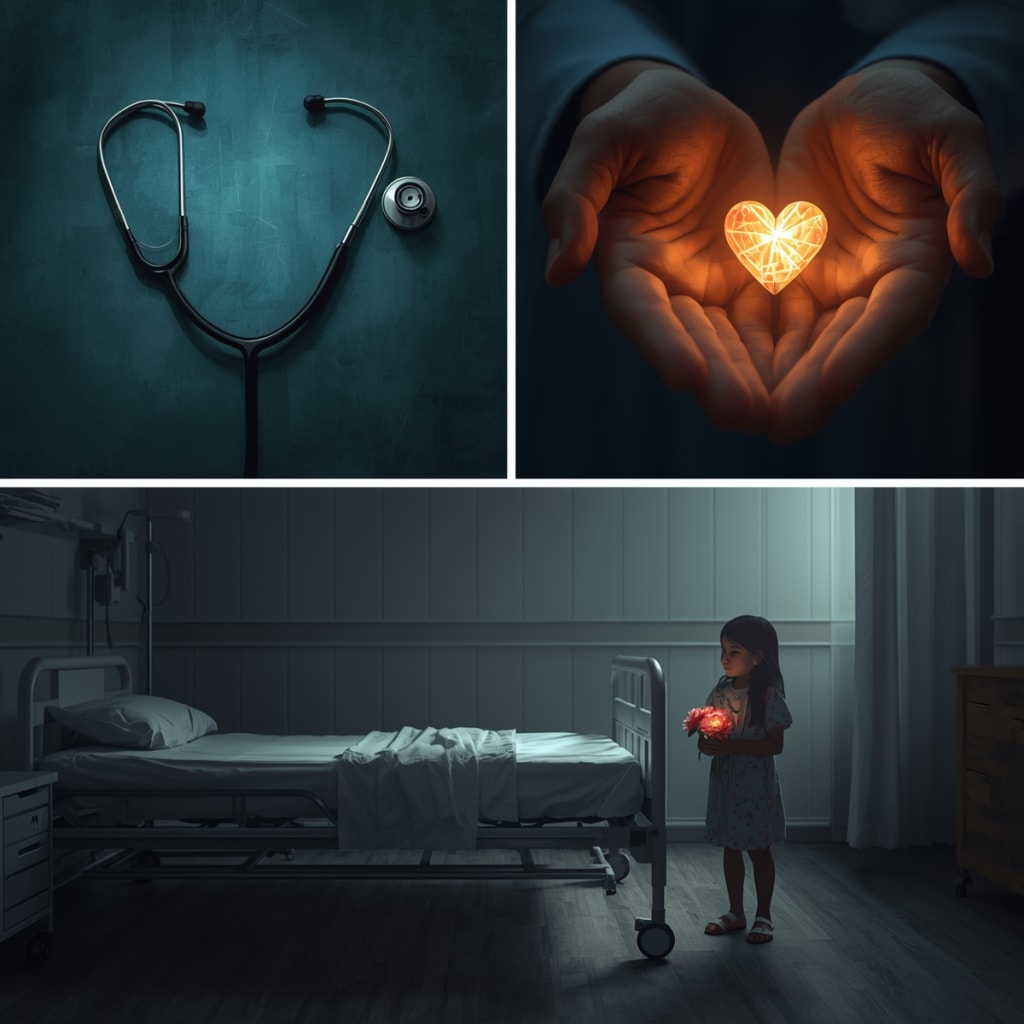
The Beginning
Ayesha was only nine years old when the accident happened. The car crash took her parents’ lives in a single night, leaving her in the care of an uncle she barely knew. The house that once echoed with laughter became a place of silence.
People said, “She’s young, she’ll forget.” But they didn’t see how her small hands still searched for her mother’s fingers in the dark. They didn’t hear her whisper to the empty air, “Abbu, don’t leave me.”
Her uncle tried. He sent her to school, bought her clothes, and provided meals. But Ayesha’s heart was different now. She walked through hallways with downcast eyes, never joining games, never answering questions. Teachers worried. “She’s intelligent,” they said, “but her heart is lost.”
The Weight of Silence
Years passed. Ayesha became a teenager, excelling in studies yet carrying a quiet heaviness. She kept her pain locked away, fearing that if she spoke, the cracks in her soul would burst open.
In class, she was the silent observer. She noticed how other children laughed with their parents after school, and she quietly folded her loneliness deeper into her chest.
At night, she wrote in her diary:
“My heart feels like glass — shattered pieces, hidden so no one cuts themselves on me.”
Her uncle once asked, “Do you miss them?”
She wanted to scream every second, every breath but instead only nodded. Silence was safer.
A Teacher’s Light
In the final year of school, a new literature teacher, Miss Nadia, joined. She noticed Ayesha’s withdrawn nature. While others recited poems, Ayesha only read softly, her voice trembling.
One day, Miss Nadia gave the class an assignment: “Write about something you’ve lost and what it means to you.”
The paper remained blank for hours in Ayesha’s room. Her pen hovered, her chest tight. Finally, she wrote:
“I lost my parents when I was nine. Since then, I feel I have lost my heart too. People think I am strong, but I am only carrying pieces inside me. I don’t know if hearts can be found again.”
The next day, she placed the essay on Miss Nadia’s desk, hands shaking.
When the teacher returned it, there was no grade, only a note:
“Hearts may break, Ayesha. But they are never truly lost. They wait to be mended — and you are stronger than you know.”
The Slow Healing
Something shifted that day. For the first time in years, Ayesha felt seen. She began staying after class, talking with Miss Nadia about books, poetry, and life. Slowly, words that had been locked in her chest spilled out.
Miss Nadia encouraged her to join the school’s writing club. At first, Ayesha hesitated, but then she began to write short stories about children who found hope in the darkest places. To her surprise, her stories touched others.
One classmate said, “Ayesha, your writing makes me feel less alone.”
For the first time in years, she smiled — a small smile, but real.
Love in Unexpected Places
By the time she entered university, Ayesha was no longer the silent girl. She had grown into a thoughtful young woman who used her words to heal. She studied psychology, determined to help children who carried invisible wounds like hers.
In one of her field trainings, she met a boy named Bilal, ten years old, who had lost his sister to illness. He refused to talk, sat in corners, and scribbled angry drawings. Ayesha recognized the silence.
She sat beside him, sliding a notebook forward.
“Draw your pain,” she whispered, “or write it. I’ll be here.”
Weeks passed. Slowly, Bilal began to share — first through pictures, then through words. One day, he said, “It feels like my heart is broken.”
Ayesha smiled gently and replied, “I once thought my heart was lost too. But broken hearts are not useless. They are stronger because they know pain.”
The Realization
Helping Bilal reminded Ayesha of herself. One evening, she walked past a park and saw families playing, children laughing. Instead of pain, she felt something different: a soft ache, but mixed with gratitude.
She whispered into the sky, “Ammi, Abbu… I thought I lost my heart when I lost you. But you left pieces of it with me. And every time I help someone else, I find another piece.”
The Full Circle
Years later, Ayesha stood on a stage at a conference, speaking about child psychology and trauma recovery. In the audience sat her uncle, tears brimming in his eyes, and Miss Nadia, smiling proudly.
She began her speech with the words:
“Once, I believed I had a lost heart. But I’ve learned that hearts are never lost. They break, yes, but in the breaking, they teach us how to love deeper, how to understand pain, and how to bring light into the darkness of others.”
The hall erupted in applause. But what mattered more to Ayesha was the quiet peace in her chest. For the first time since that night of loss, her heart felt whole.
Closing Message
Hearts are fragile, but they are also resilient. Ayesha’s story is not about losing, but about rediscovering. She learned that while love can be taken suddenly, its echoes remain — guiding us, healing us, and reminding us that the heart is never truly lost.
About the Creator
Nomi
Storyteller exploring hope, resilience, and the strength of the human spirit. Writing to inspire light in dark places, one word at a time.




Comments
There are no comments for this story
Be the first to respond and start the conversation.