
Living in Colombia: What I Gained, What I Paid, and Why I’d Do It All Over Again
How moving to Colombia transformed my life, tested my strength, and taught me the real meaning of home.


Living in Colombia: What I Gained, What I Paid, and Why I’d Do It All Over Again
When I decided to move to Colombia, a lot of people thought I was crazy.
“You’re giving up your life in the U.S.? For what?” they asked.
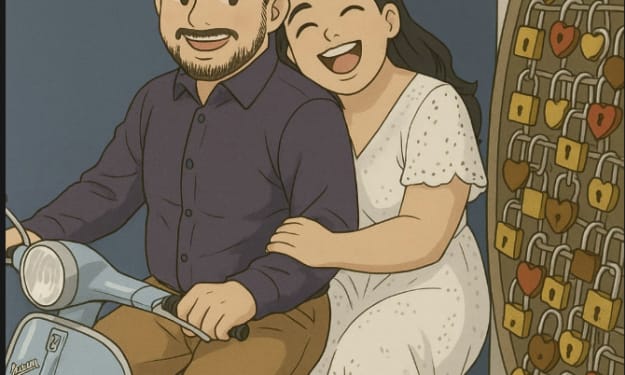
But they didn’t understand. I wasn’t giving up anything—I was walking toward something. I was walking toward love, toward peace, toward a chance at something more meaningful than just a paycheck and a routine. I had just fallen deeply in love with a woman who would eventually become my wife, and I wanted to build something real with her. My job was remote, so I asked for permission to work from Colombia—and when they approved it, I didn’t even hesitate.
I packed up my life and left.
What I didn’t know then was that this choice would test me, grow me, humble me, and ultimately redefine who I am as a man, a partner, and a father.
Adjusting to a New Life as an Expat
Moving to Colombia wasn’t just a change of scenery—it was a complete shift in reality.
I went there fully aware that I was stepping into a country with fewer resources than what I was used to in the U.S. But I wasn’t afraid of that. What was harder to accept was the fact that my own family back home—the people you’d expect to support you—wanted no part in this chapter of my life.
My parents didn’t believe in what I was doing. They thought I had lost my mind. But honestly, they had never really supported me before, so this wasn’t new. Still, their rejection hurt.
So I did what I’ve always done—I kept going.
I landed in Barranquilla with determination in my heart. I told my now-wife, Katherine, “Find us a place where we can build a peaceful home.” She did. It wasn’t big, and it wasn’t fancy, but it was ours.
The first house we lived in was located in a busy area called Hipódromo. Rent was about 850,000 Colombian pesos—roughly $225–$245 USD, depending on the exchange rate. It was humble, but the noise from the traffic made it hard for me to work during the day.
Later, we upgraded to a spacious apartment in Nuevo Horizonte, one of my favorite neighborhoods in Barranquilla. That one cost around 1,300,000 pesos or $300–$380 USD. It was close to everything—hospitals, parks, schools—and finally, I had a quiet place where I could work, and we could dream.
Colombia taught me quickly: you don’t need a lot to feel at home—you just need the right people around you.
The Real Cost of Living in Colombia
People often ask me, “Is it cheap to live in Colombia?” And my answer is always the same:
Some things are cheap. Some things will surprise you.
⚠️ Important:
Everything I’m sharing here is based on my personal experience living in Barranquilla, Colombia, from 2020 to 2023. Prices can vary depending on the city, neighborhood, exchange rate, and lifestyle—but this is what life looked like for me and my family.
One critical factor influencing living costs in Colombia is the estrato system. This is a government classification that assigns a socioeconomic level to residential properties, ranging from 1 (lowest income areas) to 6 (highest income areas). Your property's estrato affects not only your rent but also your utility bills—the higher the estrato, the more you pay. Conversely, lower estratos receive subsidies, making utilities more affordable.
Here’s what we typically spent:
Rent: $200–$400 USD/month, depending on the area and estrato level. For instance, in a strato 3 neighborhood, we paid about 850,000 Colombian pesos (roughly $225–$245 USD). Later, we moved to a strato 4 area, where rent was around 1,300,000 pesos (approximately $300–$380 USD).
Electricity: Can be pricey—especially with AC—ranging from $100 to $500/month, influenced by estrato and usage.
Water bill: Very affordable—around $18 to $40/month for a family, depending on usage and estrato.
Gas (for cooking or heating): Extremely cheap—$3 to $7/month
Groceries: For a family like mine, expect to spend $300–$550/month
Healthcare: Public plans like EPS are affordable, but for serious care we often paid out-of-pocket to see private doctors
Transportation:
- Local rides (Uber, InDriver, taxis): $2–$12
- Long-distance buses: $15–$30/person
- Domestic flights (e.g., Barranquilla to Medellín): $50–$80 one-way
- Car rentals: Around $35 to $100/day, depending on vehicle type and season—great for those who prefer independence or plan to travel with family.
Entertainment: A movie outing with snacks and drinks for a family of four or five can cost under $60 USD total.
Understanding the estrato system is vital when planning your move or visit, as it significantly impacts your monthly expenses.
If you learn how to live modestly and smartly, you can live well in Colombia. But you have to be intentional, especially with energy usage and where you shop.
Bonus: A Day at the Beach in Colombia
If you're planning a beach day in Cartagena or Santa Marta, you’re in for something special—and surprisingly comfortable.
On most public beaches in these cities, you'll find setups that include:
- A beach tent or canopy with lounge chairs
- Personal space to leave your belongings safely
- A dedicated attendant who checks in with you, offering cocktails, beer, alcohol, and even food
What makes it even better?
These attendants are usually partnered with local restaurants right on the beach, so the food is fresh, clean, and delicious. Think coconut rice, fried fish, plantains, fresh ceviche—straight to your tent.
A full setup like this can cost around $35 to $60 USD, depending on how much you eat or drink. And it’s worth every penny for the comfort and convenience, especially if you’re with family.
Safety, Awareness, and Cultural Insights
Colombia is beautiful—but let me be real: you’ve got to keep your eyes open.
If you're a foreigner, especially from the U.S., you will stand out. That doesn't mean you're in danger—it just means you need to be alert and respectful.
Here are some truths I learned:
- Stick to well-known areas, especially in the north of Barranquilla
- Don’t flash expensive jewelry or tech in public
- Keep your important documents in a hotel safe or secure bag
- Most people are kind—but always ask for prices upfront, especially in tourist zones
Despite what some news might say, most Colombians are hardworking, friendly people. But like any country, there are good and bad apples. Use common sense, and you’ll be fine.
My Top Cities to Visit in Colombia
I didn’t get to travel as much as I wanted, but the places I did visit? They left a mark.
🌴 Santa Marta
Coastal city with beautiful beaches, affordable boat tours, and a great aquarium with an underwater tunnel. Taxis are honest, and the nightlife is lively but safe.
🏛️ Cartagena
More expensive, but full of history. The Ciudad Amurallada (Walled City) feels like stepping into a movie—literally.
Fun fact: Will Smith’s movie Gemini Man was filmed right here, especially in the Getsemaní neighborhood and inside the Walled City, where scenes like the motorcycle chase were filmed in Cartagena’s historic center. The city has charm, color, and soul—but watch out for inflated tourist prices.
🐄 Montería
This one’s more countryside—but the food is the freshest I’ve ever had. You can find a huge house for under $1,000 USD/month. Great for peace and quiet.
🏙️ Barranquilla
My home for years. Great for starting a business, raising kids, and enjoying city life with Caribbean flavor. The boardwalk has a massive Shakira statue, and the city pulses with culture, especially during Carnaval.
🎶 Colombia’s Musical Legacy
Colombia isn't just renowned for its breathtaking landscapes and rich culture; it's also the birthplace of several globally acclaimed musicians:
- Shakira, born in Barranquilla, has become an international pop sensation, known for her unique voice and dance moves.
- Camilo, hailing from Montería, has made significant strides in Latin pop music with his heartfelt lyrics and melodies.
- J Balvin and Karol G, both from Medellín, have played pivotal roles in bringing reggaeton to the global stage, earning numerous awards and accolades.
- Even Nicky Jam, the Puerto Rican reggaeton icon, lived in Medellín for several years. It was during this time that he collaborated with artists like J Balvin and played a significant role in the city's modern music renaissance.
Whether you’re a fan of Latin pop, reggaeton, or romantic ballads, Colombia has produced sounds that have reached millions—and it all stems from the deep passion and rhythm woven into its people.
These artists reflect the diverse musical tapestry of Colombia, making it a hub for music lovers worldwide.
☕ A Coffee Lover’s Paradise
Let’s not forget the coffee.
Colombia is world-renowned for producing some of the smoothest, most flavorful coffee beans on the planet. In fact, as of 2023, it was the third-largest coffee exporter in the world, with exports totaling $3.19 billion.
This isn’t just a number—it’s a testament to the richness of the soil, the altitude of the Andes, and the dedication of local coffee farmers.
If you ever sip Colombian coffee straight from a farm-side café in the mountains, you’ll taste why it’s so special.
What Colombia Taught Me
Living in Colombia stripped me down to the core—and rebuilt me as a better man.
I learned that:
- Peace doesn’t come from money—it comes from presence
- Being a provider isn’t just financial—it’s emotional, spiritual, and physical
- Love is louder than distance, fear, or even doubt
I discovered what family truly means. I found a woman who stood by me through storms. I became a father—not just to a newborn, but to two boys who looked up to me even when I didn’t feel worthy.
And I found… me.
About the Creator
Nelson Morales
I’m someone who’s faced real challenges, made my share of mistakes, and kept moving forward. I believe every setback can teach us something powerful. I hope to share lessons, encouragement, to help others find strength and resilience.
Keep reading
More stories from Nelson Morales and writers in Families and other communities.
Wise~Guys
— Look Behind what's in Front of You ~ Make Good Choices — Hey, So how you Doin'..! Made~Men — Mobster Movies romanticise a distinctive, elegant appearance, impeccable attire style, along with the 'Families' expressive lingo. Making their 'Bones' gave them Panache — with vintage fedoras, tailored pin-striped suits, mirror-polished wing-tip shoes adorned with tassels; with their 'Gun Moll' gorgeous dates on their arms.
By Jay Kantor19 days ago in Families
My Mother And George Michael
On Christmas Day 2016, news broke that George Michael had died. It was late in the evening, and my mother and I were sat in front of the TV. Our friends and family had gone home, we had eaten way too much food and we were tired. My mother was asleep, in fact. I wasn’t. I was scrolling, looking for anything to watch. It was Christmas Day, surely something good would be on. But what I got were reruns, repeats, Christmas specials from the year before that I had already seen… I sort of gave up and logged onto Facebook just to pass the time. That’s when I saw it. George Michael had died. I immediately jumped out of the sofa. That couldn’t be. Or maybe it could. It was 2016, after all. I put on Sky News because who can believe anything they see on Facebook these days? And there it was. The man I had grown up with had died. My mother didn’t know. Not for another minute, when I had to gather the courage to wake her up. I was crying and I knew she would immediately know something was wrong. I gently woke her up and pointed at the TV…
By Carol Saint Martin7 days ago in Families
Wild Card Weekend Recap: What Happens Now?
I think I figured out why I love Wild Card Weekend so much. It's because it's the first playoff anything of the calendar year. The NFL season starts in the fall, and once upon a time, the champion was crowned either on or slightly before New Year's. The evolution of the NFL schedule has resulted in the playoffs starting just into the New Year, and currently, the final week of the season falls on the first weekend of the New Year, with Wild Card Weekend coming a week after that. So yes, chronologically, the NFL's Wild Card Weekend serves as the first playoff anything of the calendar year.
By Clyde E. Dawkins6 days ago in Unbalanced



Comments
There are no comments for this story
Be the first to respond and start the conversation.