
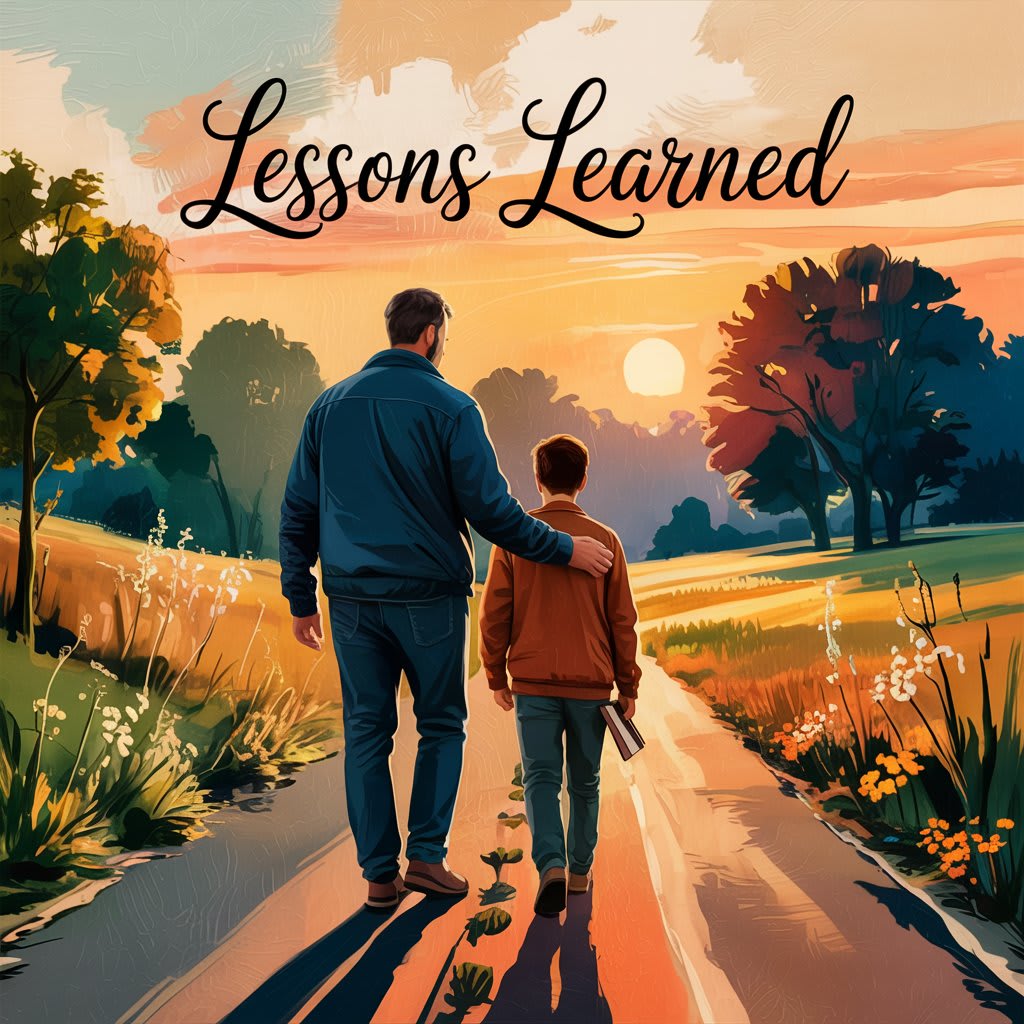
The last time I saw my father cry, I was twelve years old. He had just buried his own father, and as we stood at the edge of the cemetery, his strong shoulders shook under the weight of grief. That was the first time I saw that strength doesn’t always look like silence. Sometimes, strength is letting yourself feel.
My name is Mr Bublo, and this is the story of how I became a man—not through age or success, but through the quiet, powerful lessons my father passed down to me, often without saying a word.
My father, Edward Bublo, was a man of few words but a happy presence. A carpenter by trade, his hands were calloused and scarred, each line in his palms telling a story of struggle, dedication, and sacrifice. He built houses, furniture, fences—and unknowingly, he built the foundation of my character.
Growing up, I thought love came with grand gestures—gifts, praises, and affectionate words. My friends’ parents were expressive, laughing loudly and hugging often. But my father loved in quieter ways. He’d wake before sunrise to cook breakfast when my mother worked the night shift. He’d sit silently on the sidelines during my soccer games, clapping once when I made a good pass, but never cheering loudly.
As a teenager, I resented it. I mistook his silence for disinterest. I thought he didn’t care, didn’t see me. I remember one evening, after an argument about my college choices, I yelled, “Why do you never say anything? Don’t you care what I want?”
He didn’t yell back. He simply walked out into the backyard, picked up a piece of wood, and began sanding it. I sat inside, fuming, thinking he didn’t understand me. But what I didn’t realize then was that he was trying to make sense of his own feelings—in the only language he knew: action.
It wasn’t until years later, when life gave me the painful gift of perspective, that I began to see the truth. I was in my late twenties when my father suffered a mild heart attack. I flew home immediately. Seeing him in a hospital bed, tubes in his arms, monitors beeping quietly—it felt like the strongest tree in my forest had fallen.
He recovered slowly, stubbornly, insisting on walking alone even when he wasn’t ready. I moved in for a few months to help him. And it was during that time—those quiet mornings and long evenings—that I truly met my father for the first time.
One day, while we sat on the porch watching the sun sink behind the trees, he handed me a small, carved wooden box. Inside was a collection of old letters and photos—his father’s handwriting, my childhood drawings, and notes he had written but never sent. One letter was addressed to me, written when I was eighteen but never delivered. I read it with shaking hands.
"My son," it began, "I know I am not the kind of father who says the right words. I’ve made mistakes in silence. But I see you. Every step you take, I notice. I just never knew how to say it. Your strength amazes me. Your heart, even more."
I couldn’t finish it the first time. Tears blurred the ink. My heart cracked open that night—not from pain, but from a long-awaited understanding. My father didn’t show love the way I expected. He showed it the only way he knew how—with presence, with sacrifice, with quiet devotion.
We started talking more after that. About life. About his regrets. About my dreams. I told him I wanted to write, and for the first time, he said, “I always knew you would.” Just six words, but they filled a space in me I didn’t know was hollow.
Years later, after he passed, I found myself walking down the same path he used to take every evening—hands in pockets, gaze low, thinking deeply. I now understood why he walked alone. It was in those walks that he carried the world, processed pain, and found peace.
Now, as a father myself, I catch echoes of him in the way I tie my son’s shoes, or how I check the locks three times before bed. I try to tell my son that I love him often—but I also show him, just like my father did. In the little things. The quiet things. The steady presence.
Because love, I’ve learned, doesn’t always shout. Sometimes it whispers through worn hands, tired eyes, and silent sacrifices. And those are the lessons of the heart—the ones that aren’t spoken, but lived.
About the Creator
In the End, Family Is Everything
"Family is not always about blood. It is about the people who choose to stand beside you when life becomes difficult." In a world that moves too fast, where everyone is chasing something — success, money, recognition — there is one place where we can still return without needing to prove anything.
By Zakir Ullah3 days ago in Families
Hottest in the Office
Dear Rafi, You’re very distracting to work around. For the first second I saw you the other day, I thought you were some type of executive. It took a moment to realize no, you were just the new guy, dressed up for the job he wants. Be still, my heart.
By Gabriel Shames3 days ago in Pride


Comments (1)
This was such an engaging read! I really appreciated the way you presented your thoughts—clear, honest, and thought-provoking. Looking forward to reading more of your work!