
Its 2021. Why are we still hitting our kids?
Science has spent years exploring its ineffectiveness. Why is spanking our kids still the norm?

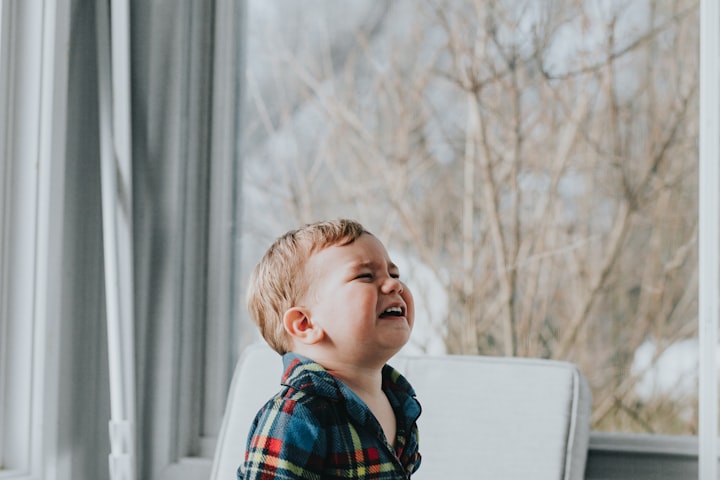
I get it. It’s the reality of parenting. We love our kids every day, and yet we sometimes find ourselves to be exponentially frustrated with them. This is called an emotional paradox. And if anything from this article sticks with you today, let it be this: it’s normal.
If frustration often leads to spankings in your home, you should know that you’re not alone. According to the Pew Research Center, a survey of over 1800 parents (with children under 18) conducted in late 2015 reported that one in six parents have spanked their kids as a form of discipline at some point. Four percent of those parents who admitted to spanking their children admit to doing it “often.”
As a parent to a toddler who can absolutely be the ultimate jerk sometimes, this statistic is incredibly problematic to me. Not only do children learn to mimic behaviors from inside the home when they’re in public (quite possibly putting other children in danger), but most importantly, science just doesn’t support the effectiveness of spanking.
In March 2018, the Journal of Pediatrics was able to find a direct association between young adults who experienced corporal punishment as children and those who inflicted physical violence on their partners while dating. If that’s not enough to convince you that spanking is more hurtful than it is helpful, the American Psychological Association has also attempted to make a case against spanking. According to data collected by the APA, studies show that spanking and other forms of physical punishment directly result in increased aggression, physical injury and mental health issues in children. Point blank, spanking is harmful to our kids.
More troubling to me, is that anytime this topic gets brought up, you will find many adults will admit to being spanked as a child and, yet, are quick to follow that up with “…but, I turned out just fine.” This is a notoriously popular debate topic on platforms like Twitter and Facebook, where I’ve been privy to a series of these discussions.
Like many others, as a child, I was also spanked. “Spanked,” might be putting it lightly, to be honest. As a child, I was subject to being hit with anything in my mother’s general vicinity. Electrical wires, belts, cooking spoons, umbrellas, and for many who follow pop culture, the dreaded “chancla,” too, aka my mother’s sandals. There were times I was made to kneel on uncooked rice for hours, eyes swollen from crying, unable to eat, drink, or take bathroom breaks while I was under punishment. Punishment, which was never for a set number of hours or consistent every time. My punishment ended whenever my parents were satisfied with the length of time I’d spent there. Looking back, my abuse as a child was quite cruel. Yet, like many others, this was just standard. It was “normal” for me. All my friends growing up got hit too, so it wasn’t like my parents were doing anything that my friend’s parents weren’t already doing. When I wasn’t being punished, I was well-fed, groomed, and always had clothes on my back. My parents were hardworking, and never let my sister and I forget that everything they worked for was “for us.” Over time, I learned to associate that sacrifice with love. If my parents were willing to sacrifice so much for me, it’s obviously because they loved me.
I’d be lying if I said that for a long time, I didn’t also think that I turned out just fine. After all, I had a great job that I loved, a good co-parenting relationship, supportive family members, a list of hobbies and a really great kid.
Years later, when I found myself sitting across the room from a therapist, forcing my swollen, weepy eyes to make contact with hers, I discovered that a lot of the source of my internal anxiety and depression was rooted in the relationship I had with my parents growing up. I held a lot of passive resentment toward my parents as an adult that I refused to acknowledge for years. I had issues with boundaries in relationships, and consistent fears of abandonment. In my daughter, who didn’t even speak yet, I’d somehow made myself believe that when she grew up, despite working hard to secure a better future for her, she’d likely passively resent me, as well—just as I did to my own mother.
“Because it’s normal,” I thought.
“Everyone feels this way.”
But I was wrong, and it took many recurring visits to acknowledge that pain. I’d told my therapist that I never punished my daughter the way my parents punished me, but that every now and then I would hit her on the hand when she touched something she wasn’t supposed to, or didn’t follow my instructions to leave something alone. However, it never really seemed like she was learning from it. I thought that she’d quite possibly been getting worse. I admitted that if she ever got too out of line, I would consider spanking her as an option—something her father was vehemently against. One time, my daughter’s incessant crying over going to bed got so bad and so loud, that I screamed at the top of my voice and slapped her on the thigh once. The result? The screaming terrified her, and the spanking hurt, so she cried louder. She cried longer. I regretted it immediately, thinking I’d given my daughter an excuse to fear me. The next week, I still felt an awful amount of guilt over the spanking and brought it up to my therapist. She urged me to reconsider my punishments—and she was right.
Upon doing a bit of research online, I came across the discipline method 1,2,3 Magic, and implemented it immediately. After three days, my one-year-old daughter successfully understood that if I counted to three, and she didn’t stop whatever behavior it was I didn’t want her doing, she’d go in timeout. The general rule of thumb is to only place your child in time out for the same number of minutes as their age. For example, a two-year-old goes in time out for two minutes, and once they’re three, you can stretch that to three minutes. I’d use those two minutes to cool down, too. Once her timeout was over, I’d explain why she’d gone in time out. Then she was allowed to go back to doing whatever she wanted. Early on, my daughter would test her boundaries and wait until I counted to three before stopping her behavior. Two years later, I would be surprised if she ever let me count past one before she quits and focuses on something else.
Now that she's almost five, I never use time-outs as punishment at all. Instead, any meltdown or fit she has that can't be cured with a hug and a talk is met with "Do you want to go to your room and call me when you're ready to talk?"
Surprisingly, this works for us. It works extremely well for us.
This isn’t to say this method will work for you, or that there are any “right” ways to discipline your children. However, there are ways that are definitely wrong, and spanking is one of them.
I urge you to take an introspective approach to your discipline methods and stop spanking your children. Yes, even on the hands. As parents, we tend to believe that children are mini adults. We believe that they think like us, rationalize like us, and should be as perceptive as us. In reality, children are emotion-driven, curious little creatures whose brains develop at an incredible speed. Children learn every day. So, when you are dissatisfied with your child’s behavior, ask them to stop and proceed to spank them, your child’s lack of perception may register as the following: “When someone I love and trust is doing something I do not like, it’s okay to inflict physical pain on them to get them to stop.”
This is not a concept we should allow our kids to go into adulthood with. It is not fair to them, their children, or partners who may be subject to our children’s aggression in the future.
About the Creator
Kimberly Ramirez
I'm a word lover and story-teller. I write about what's important to me. Cultural struggles, mental health, relationships, and parenting.
Keep reading
More stories from Kimberly Ramirez and writers in Families and other communities.
Wise~Guys
— Look Behind what's in Front of You ~ Make Good Choices — Hey, So how you Doin'..! Made~Men — Mobster Movies romanticise a distinctive, elegant appearance, impeccable attire style, along with the 'Families' expressive lingo. Making their 'Bones' gave them Panache — with vintage fedoras, tailored pin-striped suits, mirror-polished wing-tip shoes adorned with tassels; with their 'Gun Moll' gorgeous dates on their arms.
By Jay Kantor19 days ago in Families
Bettijo Hirschi
Introduction Bettijo Hirschi is a multi‑talented creative professional from the United States. She works as a designer, art director, photographer, writer, and event planner. Bettijo has built a long career in creative work and media. People know her for her artistic skills, her work in magazines and television, and her lifestyle blog. She is also known in recent news because of changes in her personal life.
By Farhan Sayed4 days ago in Families




Comments
There are no comments for this story
Be the first to respond and start the conversation.