
Is There Any Science Behind Gua Sha?
Have you heard about gua sha benefits? Is there any science behind gua sha? Here we go to learn!
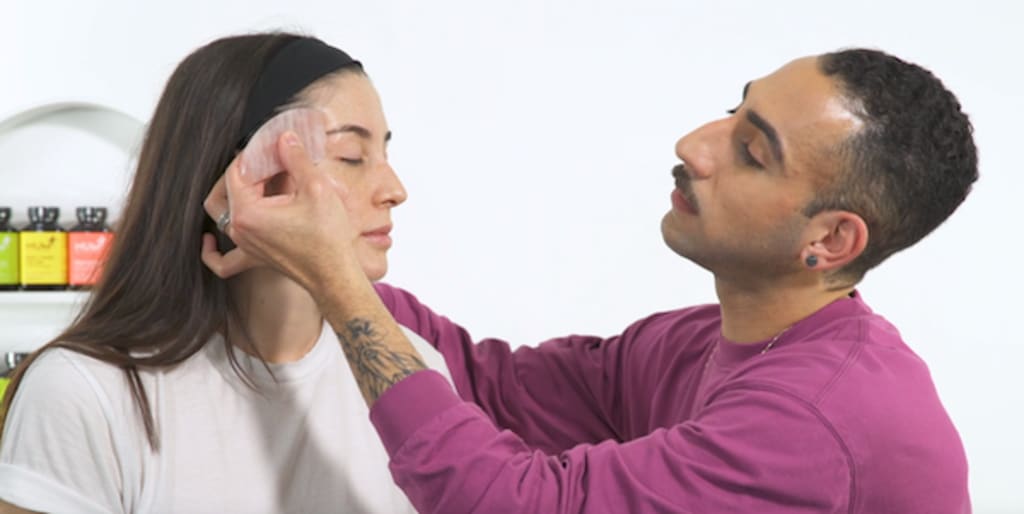
Centered around a set of mysterious, invisible energy pathways and techniques that confuse Westerners, traditional Chinese medicine is esoteric to say the least. In this regard, Gua Sha, a therapeutic method of scraping, relieving pain and strengthening the body, will certainly not disappoint. Gua Sha is an ancient and perhaps one of the earliest known medical practices that has stood the test of time and is still widely practiced in Asia today. But how does provoking an angry-looking rash improve any health condition, let alone suppress pain? In recent years, modern science has taken a critical stance on gua sha, unraveling some mysteries in the process.
Increased Blood Flow
The scraping action of Gua Sha is a mild irritation that causes rapid circulation of blood to the treated area. In one study, scientists using laser Doppler imaging demonstrated a four-fold increase in microcirculation in the treated area within 7.5 minutes of a gua sha treatment, followed by a sustained increase in microcirculation 25 minutes later1. The measured increase in microcirculation was accompanied by an immediate reduction in muscle pain in the treated area. In addition, some participants reported pain relief in untreated parts of the body.
Analgesia
Of course, immediate local swelling attracts pro-inflammatory molecules such as histamine, prostaglandins and bradykinin, as well as serotonin - which activates pain receptors at the treatment site2. And, while the increased blood flow was short-lived, the pain reduction is known to last at least 2 days, and in some cases as long as a week.
The answer to how gua sha induces inflammation but reduces pain may lie in part in its effect on the nervous system. Microtrauma from mild surface stimuli associated with gua sha activates specific pain fibers belonging to neural relays called the spino-thalamo-cortical pathway.
This pathway carries incoming information from the spinal cord (spino) to the thalamus -- an important sensory filtering system located above the brainstem -- and then to the cortex, where the brain interprets and decides how to respond to the information. Most notably, this pathway also activates parts of the brain that strongly inhibit pain. In fact, this is the system your body uses to suppress pain during times of stress or sudden trauma.
As a result, the mild trauma caused by Gua Sha resulted in a huge analgesic payoff. In contrast, other treatment modalities, such as massage, use different pathways and have different, and in some cases less, effects on pain suppression.
Anti-Inflammatory Effect
While it's hard to miss the immediate swelling and fiery appearance of gua sha, scientists have found that the procedure reduces inflammation throughout the body. One such study in laboratory mice measured levels of a specific anti-inflammatory and antioxidant enzyme called heme oxygenase 15. Use an imaging procedure to measure enzyme levels before and after the mice received Gua Sha. Images taken 18, 36 and 120 hours after treatment showed a stream of heme oxygenase sweeping through the guts of the mice, first concentrating in one area before advancing to the next. The overall result is a deep systemic anti-inflammatory effect.
Documented Pain Relief
In one clinical trial, patients with chronic neck pain were treated with Gua Sha over the entire neck and upper back6. Results after 7 days of treatment showed a 26% reduction in overall pain and a 51% reduction in exercise-related pain. In contrast, a control group that received heat therapy reported an 8 percent reduction in overall pain and a 10 percent reduction in pain related to exercise. Overall, participants who received gua sha were more than twice as likely to be satisfied with the results of their treatment as those who received heat therapy.
In another study, patients with chronic neck or low back pain who received a single session of gua sha treatment reported significant pain relief immediately after the gua sha treatment, with sustained pain relief seven days later.
Benefits for Other Health Conditions
According to a published case report 8 , Gua Sha reduced headache in an elderly patient with long-standing chronic migraine.
A common and painful problem some women experience after childbirth is breast swelling. In one study, gua sha therapy successfully reduced swelling and pain associated with this condition and was as effective as a traditional massage and heat regimen.
Safety Precautions
While gua sha is one of the safest treatments, it is not without certain risks. Before performing gua sha on yourself or on other people, it is important to learn the proper technique.
Occasionally, the scraping action of gua sha draws blood to the surface of the skin. If you share gua sha tools with others, be sure to take proper hygiene precautions to prevent the spread of blood-borne diseases
Does Gua Sha Have An Effect on Facial Beauty?
Relieve Facial Puffiness
have. Scraping has a certain effect on facial beauty. According to comparative tests, Gua Sha can effectively relieve facial swelling caused by sleep problems or other blockages of the lymphatic system.
Reduce Wrinkles
There is no special effect in this regard. Gua Sha has no obvious effect on directly removing facial wrinkles, so don't expect to directly improve your facial wrinkles after using Gua Sha.
Improve Face Shape
OK in the short term. After using Gua Sha, users can feel a significant improvement in the shape of their faces, with their faces slimmer. But it is only a short-term effect. After a long period of time, the face will return to its original state. So the effect of Gua Sha on improving the shape of the face is not permanent.
Clear Acne
No, Gua Sha cannot clear up acne on the face. And we don't recommend you to use gua sha tools on acne-prone areas, it may make acne worse.
About the Creator
In the End, Family Is Everything
"Family is not always about blood. It is about the people who choose to stand beside you when life becomes difficult." In a world that moves too fast, where everyone is chasing something — success, money, recognition — there is one place where we can still return without needing to prove anything.
By Zakir Ullahabout 9 hours ago in Families
My Body Found the Red Flags Before My Brain Did
The Weight of the Interior: An Unfinished Map of a Marriage The stiff blue cotton of my nursing scrubs still smells like the clinical lab, a scent that shouldn’t feel like a relief, but it does. There is a brown cardboard box sitting on the laminate counter, its tape shredded open by a house key because he couldn't wait the ten minutes I asked for while I was finishing a call.
By Brooks Ghost Max 7 days ago in Families
Guard Your Battery
Why are some people so attractive just by standing there? It’s not because they are "likable," but because they don’t need everyone to like them. I realized later that truly charismatic people allow themselves to be criticized, but they never criticize themselves. They never try to please the world; instead, the world stops to watch them.
By Emily Chan - Life and love sharing7 days ago in Poets




Comments
There are no comments for this story
Be the first to respond and start the conversation.