
Insights from Su Yeong Kim on Parenting, Family Obligation, and Teen Outcomes in Mexican American Families
By Su Yeong Kim


How Cultural Values Influence Parenting and Adolescent Outcomes — Findings by Su Yeong Kim
Family is a noted determinant to Mexican American adolescents, not only due to its provision of care, but as the central cultural identity. Some of the most dominant cultural principles include family obligation, which contends that a person ought to respect, assist, and make sure that the family members are well.
A research by Dr. Su Yeong Kim in the Journal of Early Adolescence, maps out the effects of family obligation values as enacted by both parents and adolescents. He discusses changing the patterns of parenting activities and consequently, the psychological, as well as academic conditions of adolescents. Based on two waves of data on 604 Mexican Americans families, the study developed a complex insight regarding how cultural values may be used as an asset in the development of adolescents.
Finding the Link: Why Family Obligations Matter
Understanding the linkage is crucial to understand the reason why the family obligation matters. Family obligation values reflect the perceptions and ideas of supporting and respecting one family. Unlike family obligation behaviors which consist of concrete tasks such as chores or caregiving that may not always be stressful.
The paper focused on the values and discovered that they are a promoting factor in adolescent development. The beliefs enhance better parent-child relationships and cause more parenting support behaviors and also results in positive results as:
- A greater sense of life meaning
- Higher resilience in the face of challenges
- Better academic performance
This view goes a step further in discussing the burden of obligation as we see it traditionally and demonstrating the importance of obligation in making Mexican American families prosper.
Family Obligation and Teens: Study Results
Parenting Connection
This paper discovered that adolescents and the family obligation of the parents were correlated with more effective parenting which was done by being warm, monitoring consistently and inductive reasoning which was explained (rulings and reasons).
When adolescents cared significantly about family obligation, they were more likely to feel that their parents were more warm and engaged. Those of the parents who also agreed to family obligation have employed higher assistive parenting practices themselves.
Such mutual impact falls in line with the transactional model of development, which suggests that, as time goes on, parents and adolescents exert mutual influence on each other in terms of their behaviors.
Adolescent positive outcomes
Supportive parenting was also a mediator between the family obligation values and the adolescent outcomes:
- Meaning of Life- Teenagers characterized by good values and positive parenting had a better answer to the question meaning of life.
- Resilience - Parenting that was supportive assisted the teens in a better way to respond to the challenges set before them, which is particularly necessary when the stressors are due to social and cultural adaptation.
- Academic Performance- there were better academic self-reports associated with positive parent/child interaction.
Family Factors as Moderators
It was also discussed at what point and for whom these connections tended to be strongest:
Parent Gender: The family requirement of the adolescents was more closely connected to the images of maternal parenting as compared to paternal parenting.
Informant Perspective: The associations were highest when both sets of association at individual level, with the same person reporting on family obligation and parenting style, against a background of differentiating the perceptions by parents and teens.
Gender: With no significant differences between boys and girls, there is no relationship between family obligation and outcome in respect to adolescence.
Implications on Families, Educators and Practitioners
1. Identify Family Obligation Strength as a Strength : The value of family obligations could lead to positive development of an adolescent only with warmth, guidance, and comments.
2. Help the parents have warm and consistent parenting behaviors : Parenting programs are supposed to foster accompanying and inductive thinking which will help parents relate to cultural values with supportive practices.
3. Use Cultural Values in Interventions : Familism can be incorporated in the school and community cycles to make them engaged and relevant to Mexican American families.
4. Close the Perception Gaps between Parent and Child
It is possible to reduce the gap between the visions of family interaction held by parents and their teen sons by encouraging honest discussion.
Moving Forward: Communities as Cultures of Anchors
The research highlights the importance of the values of family obligation in strengthening the family relationship and acting as a protective influence against the adverse events in life achieved when practiced together by both the parents as well as the adolescents. Such values support teens to become resilient, find meaning, and do well in school because of engaging and motivating parenting styles.
Instead of believing that obligation is a curse, this study pivots it onto the position of a cultural virtue through which it is demonstrated that, through the traditions whose core is respect and mutual assistance, e.g. oppressed minorities can be directed to prosperity in personal and academic life.
Learn More:
This summary is based on the peer-reviewed article Family Obligation, Parenting, and Adolescent Outcomes Among Mexican American Families, published in the Journal of Early Adolescence (2022).
Read the full research article: Family Obligation, Parenting, and Adolescent Outcomes Among Mexican American Families
Visit suyeongkim.com | suyeongkimresearch.com
About the Creator
Su Yeong Kim
Dr. Su Yeong Kim is a Professor of Human Development and Family Sciences at the University of Texas at Austin. She serves as an Editor for the Journal of Research on Adolescence.
Keep reading
More stories from Su Yeong Kim and writers in Families and other communities.
Su Yeong Kim’s Research on the Acculturation Gap: How Mexican-Origin Families Create Meaning and Strength
Rethinking the Acculturation Gap: Su Yeong Kim Highlights Strengths in Mexican-Origin Families Much of the prior research on the “acculturation gap” has relied upon what scholars call a deficit perspective, focusing on how mismatches between parents’ and children’s levels of cultural adaptation generate conflict and predict negative outcomes such as depression or poor academic performance. While these findings are valuable, they leave out an equally important question: Can cultural mismatches also generate positive outcomes for immigrant families?
By Su Yeong Kim5 months ago in Families
Wise~Guys
— Look Behind what's in Front of You ~ Make Good Choices — Hey, So how you Doin'..! Made~Men — Mobster Movies romanticise a distinctive, elegant appearance, impeccable attire style, along with the 'Families' expressive lingo. Making their 'Bones' gave them Panache — with vintage fedoras, tailored pin-striped suits, mirror-polished wing-tip shoes adorned with tassels; with their 'Gun Moll' gorgeous dates on their arms.
By Jay Kantor19 days ago in Families
Men who eat nuts tend to have better quality sperm
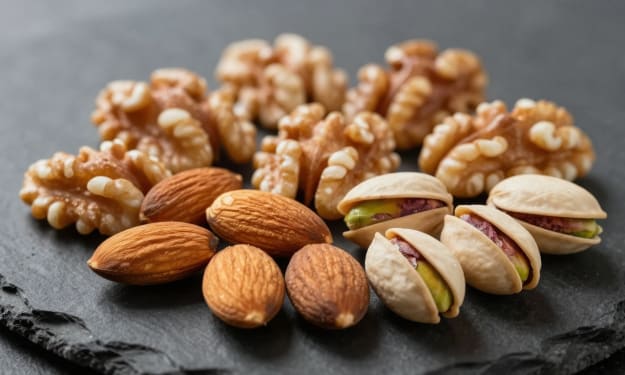
Peak Potency: How a Daily Nut Habit Elevates Male Sperm Quality Male fertility rates have dropped in recent years. Many couples struggle to conceive, and men often overlook their role in this challenge. Your diet can make a big difference here. Nuts stand out as a simple fix. They pack antioxidants and healthy fats that support better sperm quality. Think of them as fuel for your reproductive system. Studies show men who eat nuts regularly see real gains in sperm health. If you're planning a family or just want peak vitality, adding nuts could be your smart move.
By Story silver book 3 days ago in Families



Comments
There are no comments for this story
Be the first to respond and start the conversation.