
Ink Bleeds, Not Words
Some truths were too heavy for an envelope, too fragile for the post.
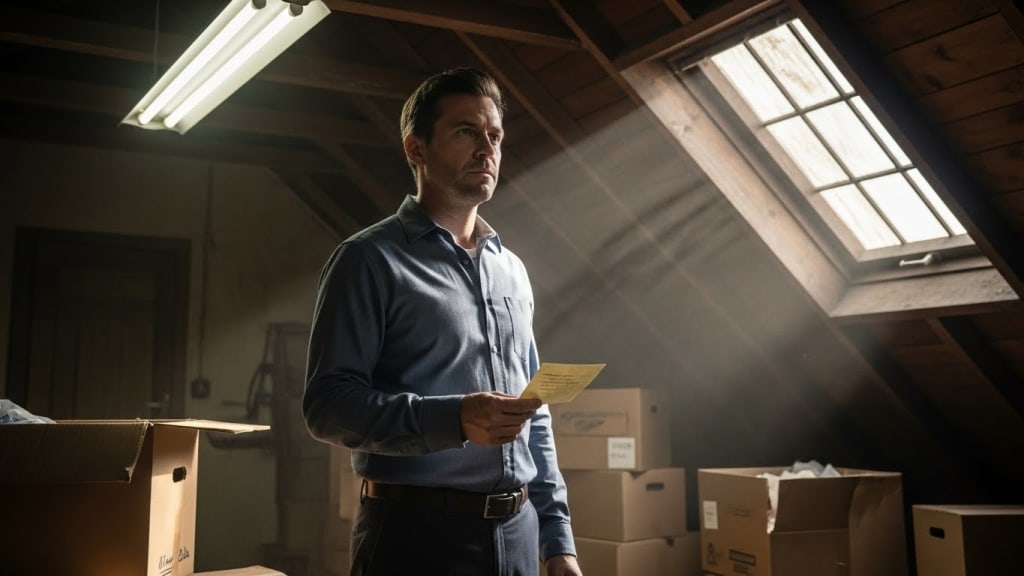
The attic air, thick with dust motes dancing in the one weak beam of sunlight from the grimy dormer window, smelled like old paper and forgotten things. Michael coughed, swiping a hand across his forehead. Forty-seven years old and still dealing with his parents' ghosts, even if only in cardboard boxes. He’d told himself this was just a purge, a necessary declutter before Sarah really started pushing the renovation. But every box he opened felt like prying a lid off a tomb.
He pulled out another one, labeled in his mother’s neat, looping script: ‘Michael – Keep’. Inside, layers of ancient school reports, a faded Cub Scout scarf, a dried-up corsage from some long-forgotten prom. Then, beneath a stack of comic books he vaguely remembered trading for a stolen cigarette, it was there. A thick, cream-colored envelope, heavier than it should have been. No stamp. No address. Just his own shaky handwriting across the front: ‘Dad’.
His stomach clenched, a cold knot tightening in his gut. The edges of the paper were yellowed, soft to the touch. He knew what was inside. Every word, every clumsy paragraph, every desperate plea. He remembered the night he wrote it. Mom had been dead three weeks. Three weeks of quiet, of Dad moving like a shadow through the house, leaving plates of untouched food on the kitchen table, his eyes always fixed on some distant point past Michael's shoulder.
Michael had been twenty-two, freshly returned from college, thinking he knew everything. Thinking he knew how grief worked. He didn’t. Not a damn thing. He’d found his father in the garage, sitting on an overturned bucket, staring at his toolbox. Just staring. No tears. Not a single sound. That quiet, that absolute, stone-cold silence, had been worse than any screaming.
He’d gone to his room, taken out the fancy stationery his mother had bought him for graduation – ‘for important letters, darling’ – and started writing. His hand had trembled so hard the ink bled in places, dark smudges against the cream. He’d poured it all out. The anger at his father’s distant, unspoken grief. The unfairness of losing Mom, the only one who seemed to understand anything. The accusation, raw and ugly, about all the times Dad hadn't been there, not really.
He'd written about the Little League games Dad missed for overtime. About the parent-teacher conferences Mom always went to alone. He’d written, *Why couldn't you just say something? Anything? Just once, tell me you loved her. Tell me you loved me.* It was a storm of a letter, a desperate attempt to crack open the granite man his father had become, or maybe, always been. To make him feel something, anything, out loud.
He pulled it from the envelope now. The folds were deep creases, almost splitting the paper. His younger self’s rage and pain jumped off the page, vivid as the day he wrote it. He skimmed paragraphs, cringing at some of the overly dramatic turns of phrase, but recognizing the absolute truth of the feeling behind them. *You built this wall, Dad. Brick by brick. And now Mom's gone, and I don't know how to climb over it, or if there's even anything left on the other side.*
He remembered sealing it, addressing it, walking it down to the mailbox at the end of their driveway. The red flag on the box stood up, waiting. The air was cold that night. Winter was coming. He’d stood there, the letter heavy in his hand, the paper feeling thin as tissue against the biting wind. A car drove past, its headlights cutting across his face. He’d stood there for what felt like an hour, staring at the flag, at the dark slot where the letter would disappear.
And then he'd walked back inside. The fear had been too much. Fear of what his father would say. Fear of what he *wouldn't* say. Fear of the finality, of breaking something that, even broken, was still *something*. He’d pictured his father reading it, his face unreadable, then tearing it up without a word. Or worse, saying nothing, just letting the silence grow even wider, even colder. He hadn't wanted to risk making things worse, or making them truly, irreparably final.
He folded the letter again, carefully, smoothing the creases with his thumb. Dad was eighty-two now, slowing down. His memory came and went, like a faulty light bulb. Some days, he’d call Michael ‘Frankie’, his own brother’s name. Other days, he'd be sharp, asking about Sarah, about work. The window for profound conversations, if it had ever truly existed, was long gone. The words in his hand, those furious, tender, accusatory words, were for a father who didn't exist anymore, or perhaps, had never existed outside Michael’s own young, hurt mind.
He didn't put it back in the box. He didn't tear it up either. He just stood there, the dust motes dancing, the letter a thin, fragile weight in his palm, the silence of the attic stretching out around him.
About the Creator
HAADI
Dark Side Of Our Society
What Families Should Carry for a Safe and Comfortable Desert Safari in Abu Dhabi
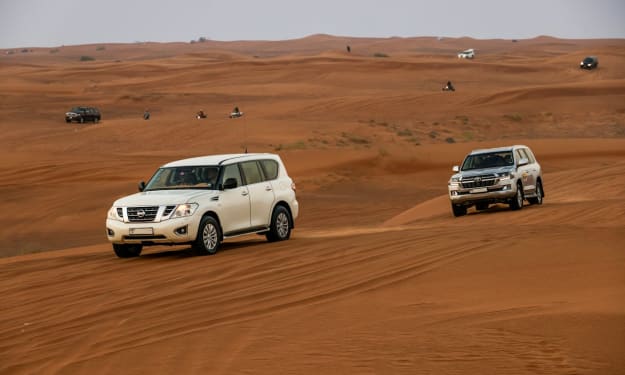
The UAE can be a really fun destination to visit, especially for a family. Its capital, Abu Dhabi, has a lot to offer families, and a desert safari is one such thing. Beautiful skies, sandy dunes, and the wide-open space create a setting that feels different from everyday life. To enjoy it fully, preparation is key. Packing the right essentials helps families stay comfortable, confident, and safe while spending time in the desert.
By Claudia Fennel5 days ago in Families
Tatt~Master
— Assembly Line Tatt Machine ~ Impressions to Impress — As I begin to understand more about the Tattoo Phenomenon. I've written silly, yet verbatim, dating site anecdotes in 'Frazzled.' So let me ask you: Would you be More attracted to someone slathered with tattoos, or Less?
By Jay Kantor3 days ago in Humor


Comments
There are no comments for this story
Be the first to respond and start the conversation.