
Inheriting Radical Empathy
An intangible family heirloom
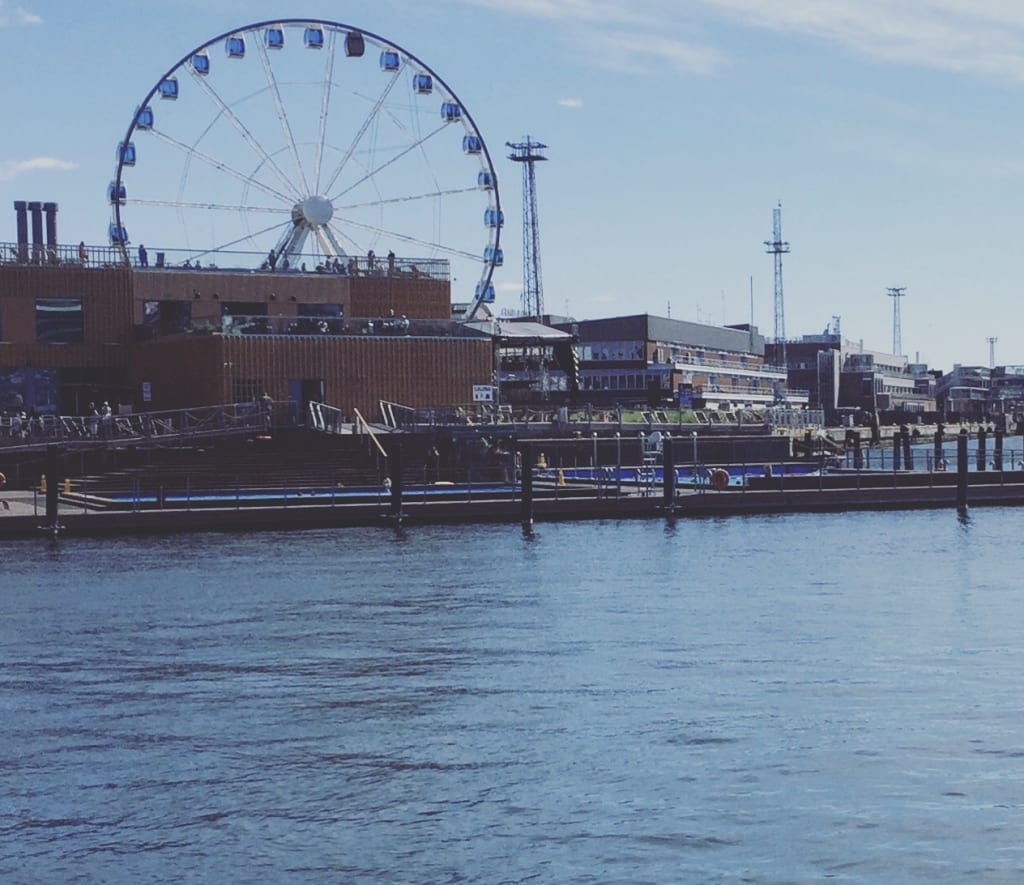
The blue water of the Baltic sea reflected off of my oversized aviator sunglasses. I was grateful that they were large enough to cover the grimace that spread across my face. I looked down at the generous portion of fried herring my mother passed to me. The herrings returned my stare with their wide, open glazed eyes.
“Come on, beautiful girl, just try it,” my mother said in an attempt to coax me into eating the fish. “Your great-grandmother would want you to try it.”
This exchange occurred in the summer of 2019 on the Old Town Pier in Helsinki, Finland. Finland is our ancestral home, a beautiful land my great-great parents left in the late 1800s to create a new life in the United States, or at least that is what my mother chooses to believe.
My mother’s mother (my grandmother) was adopted by Katherine, a woman I have always called my great grandmother. It is Katherine’s heritage that my mother clings to, the familial roots she has chosen to adopt for herself, because it was the loving-spirit of this Finnish woman who nurtured, inspired, and sustained the beauty in my mother’s soul.
As a child, my mother experienced extreme physical and psychological abuse, the acts of which are too atrocious for me to name here. When my mother was a young teen, Katherine took her in and finished raising her. Katherine was a source of stability and a fountain of maternal love that my mother never had. If anyone has a right to be apoplectic at God or mistrustful of the world, my mother does, and yet she chooses not to carry that heavy burden. My mother is jovial, optimistic, compassionate, and is a well of gratitude for the little joys in life such as a warm home-cooked meal, a favorite song playing on the radio, or a warm southern evening spent sitting on the porch listening to a symphony of cicadas.
For many years, my mother worked with children, able to serve as a protector and advocate that she never had as a little girl. Her desire to care for children and young adults from difficult homes extended beyond her career to the friends my brother and I invited over for play dates. Both my brother and I had a tendency to find and befriend children with neglectful parents. Our mother taught us to always be kind to everyone, and her spirit radiated through us. My mother’s home was a safe place to dock for children adrift in this world, and my brother and I unintentionally acted as her lighthouse. My mother greeted each child who passed through our front door with a hug and a “Hello beautiful/handsome, are you hungry? What can I make you?”
As a child, I witnessed these interactions but never gave them much thought, taking for granted the power of my mother’s love for everyone. As a teenager and young adult, it is hard to see the influence of your parents on yourself or others, or if you do, you choose not to acknowledge it as you forge your own identity and place in the world. It took me until my early 20s to understand the influence of my mother.
I was at a restaurant with high school friends during the holiday season when everyone was home from college for the winter break. As my friends and I caught up on our lives, experiences, and their adventures in new cities and states, the conversation naturally flowed to catching up on our family members. A friend asked how my mother was and before I could respond she said, “You know, I always loved coming to your house to see your mother because every time she greeted me, she called me beautiful and no one else did.” What had been a trite greeting in my home was a significant affirmation to a woman raised in an emotionally vacant household.
There is a quote most often attributed to Maya Angelou that says, “People will forget what you said, people will forget what you did, but people will never forget how you made them feel.” My mother not only understands this quote, but she lives it. My mother makes people feel seen, respected, acknowledged, and loved…truly loved.
My mother taught me compassion, the power of a good beat especially in a 90’s hip-hop track, the joy of laughter, curiosity, and travel, as well as charming persuasion which is how she got me to finally eat that fried herring in Helsinki. But above all else, my mother’s gift to me was to teach me radical empathy, a gift she inherited from Katherine—the most significant intangible family heirloom one can receive.
About the Creator
Keep reading
More stories from writers in Families and other communities.
Wise~Guys
— Look Behind what's in Front of You ~ Make Good Choices — Hey, So how you Doin'..! Made~Men — Mobster Movies romanticise a distinctive, elegant appearance, impeccable attire style, along with the 'Families' expressive lingo. Making their 'Bones' gave them Panache — with vintage fedoras, tailored pin-striped suits, mirror-polished wing-tip shoes adorned with tassels; with their 'Gun Moll' gorgeous dates on their arms.
By Jay Kantor27 days ago in Families
The Banyan Tree
It’s always a “must see” place to visit in our family on my maternal mothers side. When making our way into Haleiwa for our shaved ice and day at the beach. Watching the tourists enjoy the sun and waves. While reflecting and thinking to myself. Am I now considered a “tourist” now? Since I was uprooted at the age of 5, and planted into a small dinky little town that on I5 you pass in the blink of an eye. Then I bring myself back to the banyan tree that my great grandfather planted. I remind myself that my roots are forever solidified in the red volcanic dirt that stains anything and everything it touches. I reflect and remember all my family members who hold this location and tree, as a reminder of where are roots are planted. And I can’t help but wonder, was this my great grandfathers purpose? A place where his family can come back and be reminded of where we are from? And who we are? And no matter where we go? Home is rooted in the hearts and memories that we create. I find myself yearning to learn more about each individual and the lives they lived and the struggles and successes in every day life. As I navigate my own life. Do we have things in common more than a bloodline. Do we think the same? Do we move the same? Do we love the same? Amazing how one act by one person with purpose/intention or without. Can inspire an individual generations later. To dig deeper, question more, appreciate more. Growing up as a child. I heard stories, looked at pictures. Imagined myself in a time in which we may say is much simpler than today. Slower pace, less chaos, black and white less grey. A time that felt more protected and safe in its own way. As a middle age woman. I often find myself reflecting on who I am? Do I carry any of the same traits and thoughts as my great grandparents? The same will and resilience in life’s short comings or maybe even my own? If we could be in each others presence. What would our conversations be like? Would they value me as I value their memory and stories? Would they be proud of who I am? Since I can remember I always had a close relationship with my grandma. She is the woman whom I hold dearest to my heart. A strong woman, who took such great care of her family immediate and extended. Being the glue that held everyone together. So I always understood why she was highly regarded and respected. I can say I took a lot of her traits and teachings, she helped mold me into who I am today. When she passed away when I was 15, it felt as if my entire world and safety net disappeared and took one of the biggest parts of me that I can never get back. Her absence set the tone for many infortunate events in my life. I recently went back to Hawaii with my younger sister. Just like we used to as kids for the summer. We visited the cemetery, all the family time allowed, our favorite food spots. And of course the banyan tree. The feeling is overwhelming in a good sense. To stand in the same spot as my great grandfather did when he planted it. You almost feel his presence around and it brings a smile to my face and a warming in my heart. This is where I am rooted. This is where my story began. So thank you great grandpa Miyoshi Ideguchi, for inspiring your great grand daughter to dig a little deeper into the roots that you have planted.
By Deana Cabison6 days ago in Families
🅼🅸🅳🅽🅸🅶🅷🆃 🆂🅽🅰🅲🅺🆂
"It's 10 in Tuscon! We all know what that means... It's Time for Midnight Snacks with your man, Gerald Gee! Ready to spend the night together? Me too! I'm full of snacks and can't wait to regurgitate them all back into your hungry ears. Crack a brew! Pop some corn! Anything to get ready for one hell of a show where the talk maybe cheap but the words cut deep...
By Lamar Wiggins5 days ago in Fiction



Comments
There are no comments for this story
Be the first to respond and start the conversation.