
In your daily life, do you often label your children?
The "Label Effect"

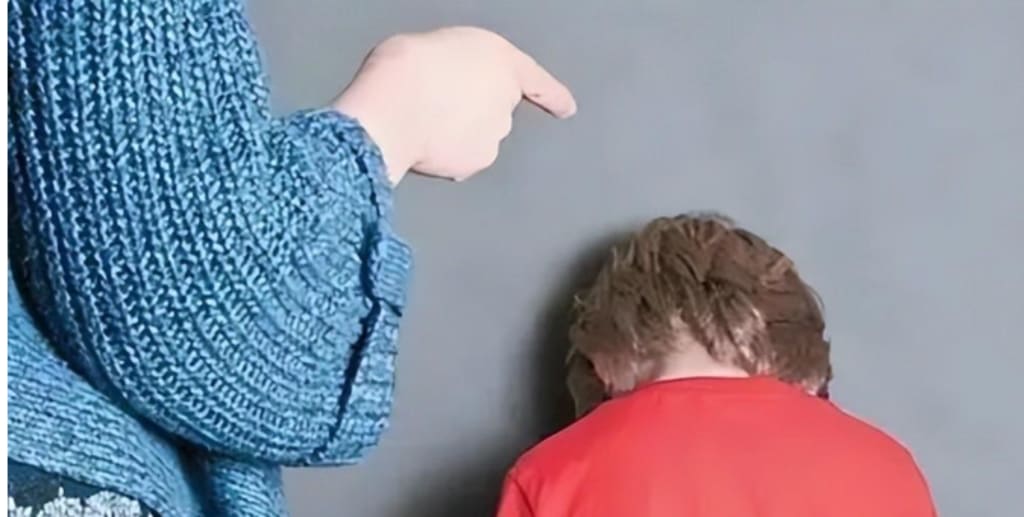
The so-called label is to solidify the child into a stereotype, and there is this concept in psychology called the "label effect".
If we always yell at our children, "Why are you so stupid?" "You can't even do such a simple thing." "You're always dawdling and dragging your feet." "You're still really lazy." "You can't even organize your school bag.
Over time children may become what we say they are.
According to the American psychologist Becker, "Once people are labeled in a certain way, they become the person the label labels them to be."
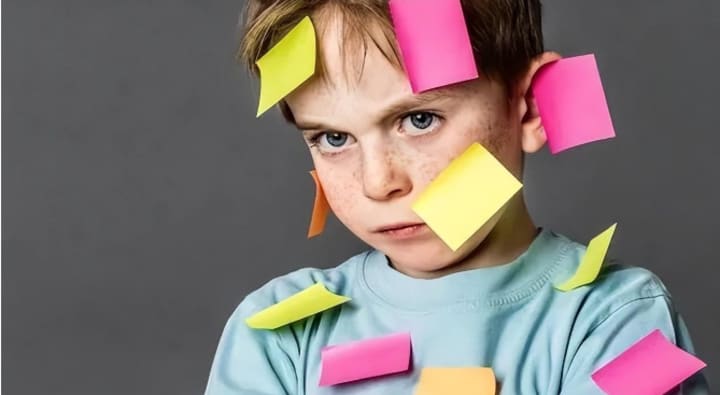
When a person is labeled by a word or name, he or makes "self-impression management. When a person is labeled with a word or name, he or she engages in "self-impression management" and makes his or her behavior consistent with the content of the label.
The "labeling effect" occurs mainly because "labels" have a qualitative orientation, whether "good" or "bad," and have an impact on a person's It has a strong influence on a person's "self-identity of personality".
The result of "labeling" a person is often to move him or her in the direction that the "label" suggests.
Negative labels are a permanent "scar" on the heart
Safe Kids, a global child safety organization, has published this poster.
The child's hands are holding a 26-point exam paper. The whole person is slightly retracted, the corners of the mouth drooping, looking nervous and timid. Inscribed on his body are the words his parents said to him.
Did you let the pigs eat your brain? How dare you go home with such a test?
The words that are hard to hear are carved into the child's body, just like scars that are carved into the child's heart. The pain caused by this injury is not something that can be easily erased by time.
The other day a friend said she was chatting with her husband and overheard him talking about her son being a bit "stupid", otherwise how come he scored so few points on every test, and her husband also said that he might be a bit "stupid".
At that time, her son just came out of the room and froze when he heard this, and she did not take it seriously.
After a few days, I noticed that the child was acting a bit strange, no longer as lively as usual, and not very talkative, the whole person is very depressed and sad look.
Sometime later, on the way home from school, my son suddenly said a shocking sentence: "Mom, I want to ask you a question. In the eyes of you and dad, am I, especially useless ah?"
The son bowed his head: "I heard you and dad, that day, say I'm stupid."
Every word that parents say, the child will silently listen in the ears and remember in the heart. Because parents are the most important people to their children, how can they not care about what the most important people say about them?
The words that we casually say to our children are labels for them, and there is no way to take back the truth.
Psychological research says that children aged 0-6 are most receptive to their parents' psychological cues. If we often say angry things to our children, it will be easier for them to form negative and negative personalities. When they grow up, the possibility of developing low self-esteem, introversion, sensitivity, and depression is greatly increased.
The child's memories may fade, but the child's emotions seal the memories in the subconscious and the damage remains forever in life.
Positive labels also expressed in moderation
Positive labels, usually in the expression of good comments. It can have an encouraging and positive effect on the child. From the human point of view alone, everyone likes to be affirmed and praised.
Of course, positive labels should also be moderate and should not make the child lose his or her objective perception.
Know how to accept your child's imperfections
A healthy parent-child relationship provides children with the necessary conditions to learn and grow but also establishes an adequate emotional link with them.
No child is born with 100% parental expectations, and if parental expectations are forcibly instilled in a child, not only will the child not improve but he or she may develop in the opposite direction.
Therefore, it is important that the process of educating
Helping children overcome practical difficulties
Sometimes a child is labeled as "difficult" because he or she is experiencing difficulties. For example, a child who is
If the child is willful, it may be because he or she is not very articulate.
Dawdling may be due to difficulty in getting dressed.
Shyness may be a result of not knowing how to get along with others.
Although these behaviors of children can sometimes drive people crazy. But Ta is simply due to a lack of experience, common sense, or confidence. So when your child throws a tantrum and throws things around, you can tell Ta that it's okay to talk about it when you're angry. When you find that your child is having trouble getting dressed, you can also set aside time specifically to help him do the exercises.
When the difficulties are solved, the child can naturally behave well.
Accepting the real child
Each child is an individual, so don't treat normal child development as a problem.
Accept the imperfections of life together with your child. Although children's personalities vary greatly, it is perfectly normal for them to be either quieter or more active.
You can't think that your child is "autistic" if he or she is a little introverted or "ADHD" if he or she is a little extroverted.
Children before the age of 6 have not yet developed the ability to think independently, are very dependent on their parents, and are very receptive to psychological cues. Follow the labels that parents put on their children to find a place to belong.
Don't just label your child, don't negatively evaluate the child's personality, intelligence, ability, etc. ......
When you want to call your child "stupid," say, "It's not that hard, we'll remember it if we say it a few times."
Instead of saying your child is "lazy," say, "You should put your toys away."
When you want to say your child is "naughty," say, "It's not right for you to raise sand on another child."
Accepting each child as he or she is and not defining him or her by labels is the best way to teach him or her. Don't be a parent who sees your child with "one eye" and "ruins" your child.
Wise~Guys
— Look Behind what's in Front of You ~ Make Good Choices — Hey, So how you Doin'..! Made~Men — Mobster Movies romanticise a distinctive, elegant appearance, impeccable attire style, along with the 'Families' expressive lingo. Making their 'Bones' gave them Panache — with vintage fedoras, tailored pin-striped suits, mirror-polished wing-tip shoes adorned with tassels; with their 'Gun Moll' gorgeous dates on their arms.
By Jay Kantor18 days ago in Families
Blue Room 🛏️
Loneliness has never been about being alone. I have felt it in crowds, in homes full of family, in rooms buzzing with voices. It is not the silence of solitude I know—it is something older, deeper, stitched into my chest. It is a weight in my stomach, a tightness around my heart, a companion that clings when I try to laugh or speak or reach for someone. It has been with me since I was a child, a shadow from the very beginning.
By Saiydaa Hayesabout 4 hours ago in Families
Miss Persephone's Manual to a Seemingly Ordinary Life
Miss Persephone was found at the dining table, her blue eyes swollen, her tears arriving and retreating like the tides of the ocean. Earlier that day, her family had visited her in the retirement home where she had lived for eight years. It was her eightieth birthday.
By Imola Tóth4 days ago in Fiction




Comments
There are no comments for this story
Be the first to respond and start the conversation.