
I Was Weeks Away from Foreclosure — Then I Took Back Control
"You never think you’ll be the one Googling ‘How to stop a foreclosure’—until it’s your name on the notice."
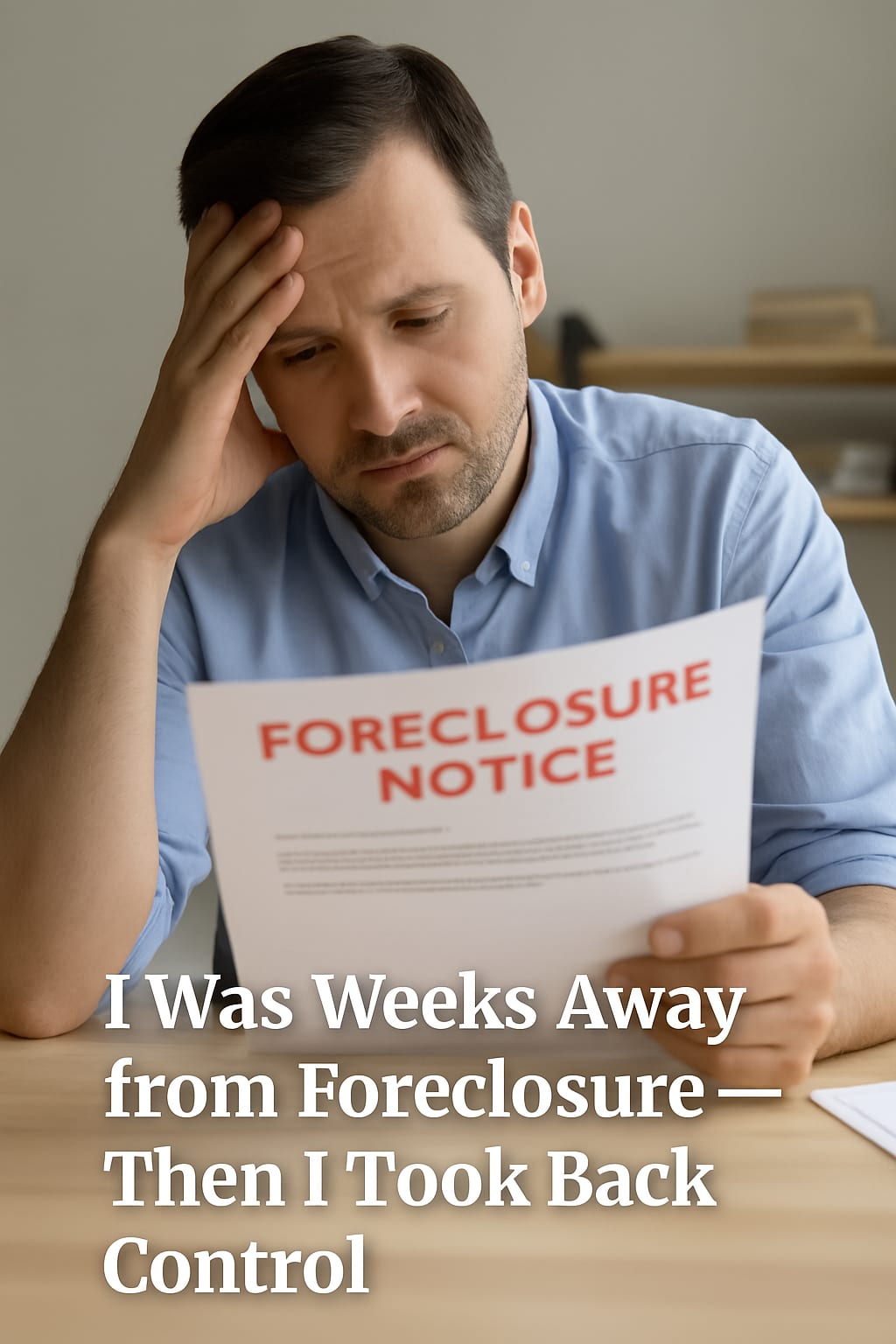
The Quiet Descent
The first time I realized I might lose my home, I didn’t cry.
I didn’t scream or punch a wall. I sat quietly on the edge of my bed and stared at a line on my bank statement that said “$84.17.” That was all I had left after paying utilities, groceries, and gas to get to work.
No cushion. No savings. Just a mountain of unpaid mortgage bills, each one stamped with bigger red letters than the last.
I used to believe foreclosure was something that happened to other people—people who were irresponsible or made poor choices.
But life doesn’t check your credit score before it hits you.
How It All Fell Apart
My slide into foreclosure started with a car accident. I broke my leg, missed six weeks of work, and fell behind on everything. The missed payments stacked like dominoes.
By the time I was healed enough to get back to work, my mortgage company had already filed a Notice of Default.
I was terrified. I didn’t know what I didn’t know. And every time I searched for help, I ran into walls—dead links, scammy websites, or advice that didn’t apply to my state.
That kind of stress doesn’t just sit in your inbox. It follows you into the shower, the grocery store, and even into your dreams.
The Moment I Stopped Pretending
I was about to give up. I had even started packing boxes. And then I heard a podcast episode about foreclosure assistance programs. They mentioned Foreclosure Rescue and a man named David Litt, who had helped thousands of people find real solutions without judgment.
I called. I didn’t expect much.
But instead of a robotic voicemail or someone trying to buy my house, a calm, clear voice answered:
“This is David. Tell me what’s going on.”
No judgment. No sales pitch. Just questions—and real answers.
The Plan That Changed Everything
David walked me through my options:
✔ How to request a reinstatement quote
✔ Whether I qualified for a hardship-based loan modification
✔ What to include in a hardship letter
✔ How to document my finances in a way lenders would respect
He also told me about a state emergency housing fund I had no idea existed. That grant covered two months of my arrears—and his team helped me fill out the application.
Within three weeks, I had a pause on foreclosure proceedings and a trial repayment plan I could actually afford.
Here is what I learned
Asking for help isn’t weakness—it’s strategy.
Foreclosure doesn’t make you a failure.
People like David Litt and his team aren’t unicorns. They’re real. They exist. You just have to know where to look.
Where I Am Now
I’m writing this from the same living room I thought I’d lose. My kids still sleep in their own rooms. I still get to shovel the same sidewalk (and weirdly, I’m grateful for that chore now).
I came back from the edge. And if I did, someone else can too.
One Final Call to Action
If you’re staring at unopened envelopes or wondering if this is the month it all falls apart—don’t freeze. Don’t assume it’s too late.
Even if it feels like everything is slipping away, foreclosure doesn’t define your future. What matters is what you do next. With the right help, one decision can shift everything. The path back may not be easy, but it is possible—and you're stronger than the paperwork suggests.
📞 Call David Litt at 224-344-5700
🌐 Visit: www.4closurerescue.com
You’re not alone. You’re not powerless. And this doesn’t have to be the end of your story.
About the Creator
Keep reading
More stories from David Litt and writers in Families and other communities.
The Room with the Blue Light
There’s a small room in my apartment with a single lamp that glows soft blue at night. I never meant for it to become anything special. The bulb was on sale, one of those “smart lights” you can control with your phone. I didn’t even like the color at first — it made the walls look colder, the air heavier. But somehow, over time, that blue glow became the only light I could stand.
By David Litt3 months ago in Families
Wise~Guys
— Look Behind what's in Front of You ~ Make Good Choices — Hey, So how you Doin'..! Made~Men — Mobster Movies romanticise a distinctive, elegant appearance, impeccable attire style, along with the 'Families' expressive lingo. Making their 'Bones' gave them Panache — with vintage fedoras, tailored pin-striped suits, mirror-polished wing-tip shoes adorned with tassels; with their 'Gun Moll' gorgeous dates on their arms.
By Jay Kantor20 days ago in Families
Becoming a sleeve snake
The Treacherous Minister A long time ago, in the land of Greece, there was a wise and just king who ruled his kingdom with fairness. The king trusted all of his ministers and often consulted them on matters of governance. Among all his ministers, there was one whom the king favored above the others—a man named Faisal. The king valued Faisal’s advice and often sought his counsel for important decisions.
By Sudais Zakwan7 days ago in Families




Comments
There are no comments for this story
Be the first to respond and start the conversation.