
How to Raise a Secure Child
Security affirms, in a psychological sense, the connectedness of human beings in the first place.

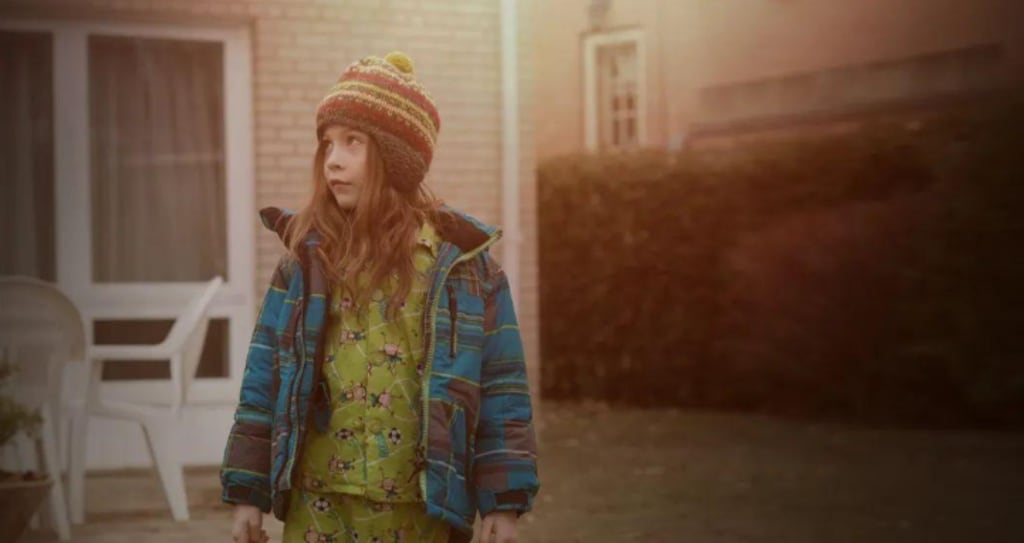
Why do so many children, who have a seemingly warm home with loving parents, act distant, withdrawn, and even hostile in their interpersonal lives?
I think that every parent knows that they should give love to their children, but love is so broad, so sacred and so reckless that it often obscures the imperceptible mistakes.
Those mistakes are never a problem in isolation, but over time, they are the origin of a person's psychological trauma, also known clinically as developmental trauma.
If "love" is deconstructed into those day-to-day interactions between parents and children, then it becomes more perceptible and actionable, and it is in these important human interactions, appropriate or inappropriate, that one's security is built.
Image credit: The movie "Room
Security is first and foremost interpersonal security, which young children use as a secure base upon which they can psychologically rely, and then develop a sense of security in the sense of exploration in response to adventure and the unknown.
Here, we must understand that security is not a lone hero type of bravery, but security in a psychological sense first affirms the connectedness of human beings.
All of one's psychological qualities are derived from internal psychological traits internalized through sustained interaction with significant nurturers.
This includes internal relationship patterns, and internal ways of experiencing the world, which is often multiple and complex.
All those who have been deeply involved in the emotional world of their children have imprinted on their psyche templated relationship patterns and ways of interpretation that encompass what the other person is like, what they are like, and how they expect to be responded to.

Image credit: The movie "Step by Step
This is why there are multiple relationship strategies for the same person with different people, but the deepest core is constant and consistent.
What determines this is what kind of nurturer, what kind of parenting style is provided, and how these interactions are experienced and interpreted in the child's inner psychological world.
From the earliest infancy, as unrepressed, emotionally driven, freely expressing beings, they are a mold with great potential for shaping who they are and what kind of person they are in response to their emotional needs.
What children always need is a nurturer who can emotionally echo them.
It's like Winnicott said: Babies need to see themselves in their mothers' faces.
Image credit: The movie "Lost: The Lady Vanishes
This statement can be understood on an operational level as follows.
The nurturer develops sufficient match and attunement to the emotional signals emitted by the child in terms of emotional congruence, level of emotional arousal, verbal usage, and nonverbal gestures, in both implicit and explicit ways.
And in this process, the mother needs to both make the infant feel similar to each other (also called follower response) and experience a sense of difference (also called markedness).
How is this understood? For example, when the child presents a cheerful smiley face, the mother will inevitably automatically surface a smiley face in response to the mirror neurons and process within her psyche an emotional experience that resonates with the child.
However, if we look carefully, we will find that the mother's smiling face often contains some of her interpretative colors. For example, the high raised eyebrows, the round wide eyes, the wide open and closed mouth, the long drawn out voice, the repetition of intimate superlatives, the shaking of the body, etc.
Photo credit: TV series This Day of Ours
These ways of responding surfaced the mother's independent subjectivity while assonantly frequency the child, and this way of inter-subjective interaction allowed the child to experientially differentiate between what was his or her own, what was the mother's, and what was shared by both.
So what Winnicott calls mirroring at an operational level is not a complete alignment between mother and child; if it were complete, the child would not be able to distinguish whether this emotional experience is his or her own or the mother's, at which point the subjectivity of the self would be overwhelmed and fall into a psychological equivalence model-external is psychological.
Similarly, when a child cries, it is not a gentle smiling face that can quickly soothe him, but the mother's seemingly sad, yet witty "sad face".
When the child is angry, the best mirror reflection of the mother is a gentle pretense of annoyance.
In this process, the similarities and differences I mentioned above are always reflected.
When similarity and difference are present at the same time, it allows the child to go through a secure yet complex process of internal experience - both feeling that his or her needs as an individual are being met and recognizing that the mother's presence as an individual is secure, and this experience of both co-existing and sharing allows the child to believe that interpersonal is possible and Sharing is possible.
Sustained intersubjective experiences allow children to become increasingly willing to express themselves to others of their own and to accept the existence of differences in others, which is an important prerequisite for the establishment of reciprocal interpersonal relationships.
This is why developmental psychologist and psychoanalyst Stern says that only the experience of being tuned in by a nurturer becomes self-referential, becomes safe and sharable, becomes freely expressed, and expected to be responded to.
Image credit: The film "The Book of Henry
Experiences that are not tuned in become non-ego, other-ego, and eventually experienced as shameful, fearful, destructive, and unsharable. This leads to the child's spiritual subject having to split and deny parts of his or her true emotional experience to maintain basic coherence. This is also the cause of traumatic projection and empathy.
In addition to this, the nurturer needs to see the child as a psychosexual being.
The sensitivity of the caregiver to the psychological needs of the child directly determines the development of the child's ability to mentalize and empathize.
Only when the child can confirm that his mind can be placed in another mind can he be sure that he is truly important and retained by the world.
About the Creator
De Ji Yue
And I know it's long gone and there was nothing else I could do
He Saved My Life With His Kidney… Then Asked Me to Pay Him Back
I still remember the day the doctor told me my kidneys were failing. The room felt smaller, the air heavier, and every word that followed sounded distant, like it was meant for someone else. Dialysis, waiting lists, uncertainty—it all came crashing down at once. I was terrified, not just of dying, but of what my life would become.
By Lukáš Hrdlička4 days ago in Families
WHEN SILENCE SPEAKS.
There is a kind of silence in children that does not feel peaceful. It feels heavy, almost charged, as if something unspoken is filling the space between their small bodies and the world around them. As adults, we are trained to listen for words, to expect explanations, to believe that if something is wrong, it will be said aloud. But children do not always work that way. Many of them do not have the vocabulary for what they are feeling, and some of them, especially when something truly painful has happened, do not feel safe enough to try.
By Yolanda Cristobal a day ago in Families
Flower Bloom 369
FLOWER Bloom 2/25/26 Wednesday By Mariann Carroll Karen had been with Tony for 7 years. Tony started acting strangely after her surgery. He would mow the lawn in the rain and be on his cellphone. He started pushing Karen away. Tony came clean about seeing someone. Karen moved out two months later. Karen moved in with a friend. She felt betrayed.
By Mariann Carroll5 days ago in Fiction



Comments (1)
Good article