
How to Pack Things for Storage
Save Space & Cut Storage Fees in Half

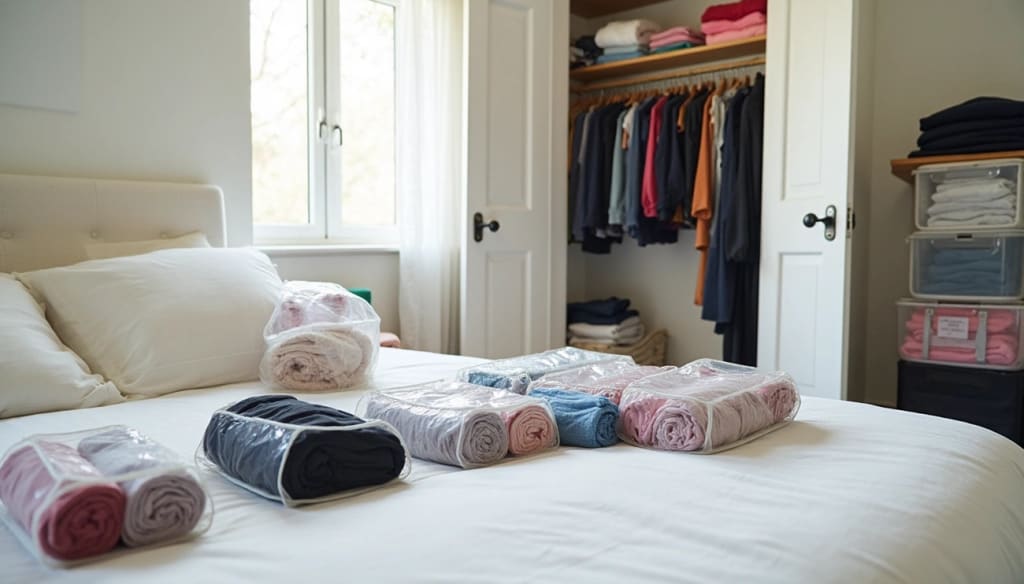
Did you know vacuum-sealed bags can reduce bulky items like bedding and winter clothes to a fraction of their original size when packing things for storage? This simple technique alone can significantly increase your storage efficiency.
We've all been there - staring at piles of belongings and wondering how they'll ever fit into a limited storage space. However, with the right space saving packing tips, you can effectively organize and compress your items. From rolling clothes to save space and reduce wrinkles to using packing cubes that keep everything organized, these packing for storage strategies can cut your storage needs—and fees—in half.
The popular 5,4,3,2,1 packing method (five pairs of socks and underwear, four tops, three bottoms, two pairs of shoes, and one hat/accessory) isn't just for travel—it's a fantastic approach to streamline your storage decisions too. Additionally, techniques like the "Russian doll" method of nesting smaller boxes inside larger ones can help maximize every inch of your storage unit.
In this article, we'll share our best packing space savers and practical advice on how to pack things for a storage unit efficiently. Before you know it, you'll be organizing like a pro and potentially cutting your storage costs dramatically.
Declutter and Plan Before You Pack
Successful storage begins long before the first box is packed. Decluttering thoroughly prior to packing will not only save you time but also money by reducing what you transport and store. Furthermore, this process allows you to start fresh without carrying unnecessary baggage—both literally and figuratively.
Take inventory of what you need to store
The first step toward efficient packing for storage is creating a comprehensive inventory. Start by systematically going through each room, making note of everything you own. This approach helps you visualize the full scope of your belongings and identify items that haven't seen use in years.
For optimal organization, create a master list either on paper or digitally. Number each box and record its contents—this makes retrieval infinitely easier later. Moreover, consider taking photos of valuable items and creating a visual diagram of your storage layout. This documentation proves invaluable when you need to locate specific items months later.
Decide what to donate, toss, or keep
Once your inventory is complete, it's time for the crucial sorting phase. Consider using the four-box method to streamline this process:
- Keep: Items you use regularly or have significant sentimental value
- Donate: Gently used items in good condition that others could benefit from
- Sell: Valuable items you no longer need or want
- Toss: Broken, damaged, or expired items that serve no purpose
Be honest with yourself during this assessment. If you haven't used something in the past 12 months, it's likely unnecessary baggage. For sentimental items, consider keeping just one representative piece rather than entire collections.
Group items by category or usage
After decluttering, organizing remaining items by category creates a logical system that simplifies both packing and retrieval. Instead of packing by room, try grouping similar items together. This approach helps identify duplicates and creates more efficient use of storage space.
Consider organizing by:
- Function (baking supplies, winter clothing)
- User (personal items for each family member)
- Frequency of use (seasonal vs. everyday items)
This categorization not only maximizes your storage efficiency but also makes unpacking remarkably simpler whenever you need to access your belongings.
Best Packing Techniques to Save Space
Maximizing space when packing for storage requires mastering a few essential techniques. After decluttering, your next challenge is fitting everything efficiently into your storage containers or unit. Let's explore proven methods that can dramatically reduce the space your possessions occupy.
Rolling vs. folding: what works best
The age-old debate between rolling and folding has a clear winner for storage purposes. Rolling your clothes can save up to 50% more space than folding. This technique works exceptionally well for T-shirts, pants, casual dresses, and pajamas. Meanwhile, folding remains superior for structured garments like dress pants, button-down shirts, and formal wear.
Rolling creates compact, easy-to-stack items while simultaneously reducing wrinkles in many fabrics. Notably, clothes containing stretchy materials like Lycra, spandex, or polyester respond particularly well to rolling. Consequently, this method proves ideal for maximizing storage space in drawers, boxes, and suitcases.
Try the bundling method for wrinkle-prone items
For garments prone to creasing, the bundling method offers an excellent alternative. This technique involves wrapping clothes around a central core—typically something firm yet somewhat soft, measuring about 11 by 16 inches. You'll layer clothes flat, starting with jackets at the bottom, followed by dresses, long-sleeved shirts, short-sleeved shirts, pants, sweaters, and finally shorts.
The bundling method excels at preventing wrinkles because items aren't creased through traditional folding. Instead, each piece wraps smoothly around the core, creating one secure package that won't shift during storage.
Use vertical stacking for easy access
Vertical stacking maximizes height while minimizing floor space usage—perfect for storage units. This approach allows you to see and access items without disturbing everything else. For optimal stability, place the heaviest and largest items at the bottom with lighter items on top.
Stack boxes against walls and in corners for increased stability. Similarly, consider leaving small gaps between stacks to improve air circulation, preventing moisture buildup that could damage your possessions.
Fill gaps with soft items like towels
Those small gaps between boxes and containers represent wasted space that could be costing you money. Fill these voids with soft items like towels, linens, or clothing. This technique serves two purposes: maximizing space utilization while providing additional cushioning for fragile items.
Small items like socks can fill spaces inside shoes or between odd-shaped objects. Likewise, using these soft fillers prevents items from shifting during transport, reducing the risk of damage to your belongings.
Top Packing Space Savers and Tools
Investing in the right storage tools can revolutionize your packing efficiency when preparing items for storage. From organizational aids to space-reducing solutions, these tools help maximize every inch of your storage unit while keeping belongings safe and accessible.
Packing cubes for organization
Packing cubes transform chaotic stacks of belongings into neatly organized categories, making items easy to locate months later. These fabric containers typically feature mesh windows that allow you to see contents without unpacking everything. The tight mesh links in high-quality cubes resist snags while providing visibility. Eagle Creek's Pack-It Reveal Cube Set, made from 300-denier polyester, stays upright when empty for easier packing and features smooth-sliding zippers that work even when cubes are overstuffed.
Vacuum-sealed bags for bulky items
For bulky items like bedding, winter clothing, or pillows, vacuum-sealed bags offer impressive space reduction. These airtight bags remove air through special valves, significantly shrinking items to a fraction of their original size. FoodSaver bags, for example, use multi-layer, BPA-free material with specially designed channels ensuring complete air removal. These bags not only save space but also protect contents from moisture and dust. In tests, quality vacuum bags remained compressed throughout testing periods without reinflating.
Compression cubes for travel and storage
Unlike standard packing cubes, compression cubes feature two zipper systems—one to close the cube and another to compress contents down to half their original size. This dual-zipper design squeezes out excess air, allowing you to fit approximately 30% more clothing in the same space. Brands like Monos offer compression cubes that reduce volume by up to 60%, especially valuable for bulky clothing items. The best compression cubes use water-resistant materials that protect contents from accidental spills.
Clear bins vs. cardboard boxes
When choosing between clear plastic bins and cardboard boxes, consider:
- Durability: Plastic bins offer superior strength, creating watertight seals and resisting tearing. Cardboard, especially in non-climate-controlled environments, becomes susceptible to moisture damage and attracts pests.
- Cost: Cardboard boxes cost significantly less initially but may need replacement over time, unlike plastic bins that remain usable for years.
- Visibility: Clear plastic allows you to see contents without opening, unlike cardboard which requires labeling or unpacking to identify contents.
- Space efficiency: Empty cardboard boxes collapse flat for storage when not in use, whereas plastic bins remain rigid.
For long-term storage, especially of valuable items, plastic bins generally justify their higher upfront cost through superior protection and reusability.
How to Pack Things for a Storage Unit Safely
Properly protecting your belongings goes beyond just fitting everything into your storage unit. Once you've selected the right containers and techniques for packing things for storage, the focus shifts to ensuring these items remain safe and accessible throughout their time in storage.
Label everything clearly
Effective labeling transforms a chaotic storage unit into an organized space. Indeed, I always label boxes on multiple sides—not just the top—so I can identify contents regardless of how they're positioned. For maximum effectiveness, I use large, bold lettering on waterproof labels that won't fade or peel over time. Besides basic labeling, creating a digital inventory with QR codes allows me to scan boxes with my smartphone, instantly identifying what's inside without opening anything. This system essentially eliminates the frustration of digging through multiple containers to find one specific item.
Use breathable containers for clothes
When storing clothing, breathable containers are non-negotiable. Sealed plastic containers might seem ideal, although they can trap moisture, leading to mildew and musty odors. Instead, I opt for containers with ventilation nets that allow air to circulate while keeping dust away. For expensive items like suits or elegant dresses, garment bags hung on rolling racks offer superior protection while preventing wrinkles.
Wrap fragile items with padding
Fragile items require special attention when packing for storage. I individually wrap each delicate piece with bubble wrap or packing paper, securing with tape to prevent shifting. For added protection:
- Wrap larger items like mirrors with foam sheets or moving blankets
- Place cushioning between items to prevent contact
- Fill empty spaces with soft items like towels to prevent movement
Stack heavier boxes at the bottom
Accordingly, proper stacking creates stability and prevents damage. I always place heavier, sturdier items at the bottom to create a solid foundation, with lighter boxes on top. Furthermore, I leave a narrow aisle between stacks, allowing me to access items without disturbing entire arrangements. This thoughtful approach to stacking primarily prevents boxes from toppling and damaging contents while maximizing both safety and accessibility.
Conclusion
Packing efficiently for storage ultimately transforms what might seem like an overwhelming task into a manageable project. Throughout this guide, we've explored numerous techniques that not only save space but also protect your belongings while potentially cutting storage costs significantly.
Decluttering stands as the foundation of effective storage. Therefore, taking inventory, sorting items, and organizing by category before packing will simplify your entire storage experience. Additionally, mastering space-saving techniques such as rolling clothes, bundling wrinkle-prone items, and vertical stacking maximizes every inch of available space.
The right tools make all the difference. Vacuum-sealed bags can reduce bulky bedding to a fraction of its original size, while packing cubes keep smaller items neatly organized. Furthermore, choosing between plastic bins and cardboard boxes depends on your specific storage duration and budget considerations.
Safety remains paramount when storing your possessions. Proper labeling, breathable containers for clothing, adequate protection for fragile items, and strategic stacking prevent damage and make retrieval much easier later.
Most importantly, these methods work together as a system. You don't need to implement every technique—even adopting a few key strategies will dramatically improve your storage efficiency. Remember that thoughtful preparation before packing saves time, space, money, and stress during both the storage and retrieval phases.
The next time you face a storage challenge, you'll approach it with confidence, knowing exactly how to maximize space while keeping your belongings safe and accessible. These practical packing strategies certainly transform storage from a dreaded chore into a satisfying organizational achievement.
About the Creator
Keep reading
More stories from Tina Bizan and writers in Families and other communities.
How to Eliminate Asthma Triggers in the Home
Did you know that asthma triggers in the home could be affecting your child's health more than you realize? Surprisingly, children, teens, and adults now spend up to 90% of their time indoors, with at least half of that time spent in their own homes.
By Tina Bizan10 months ago in Families




Comments (1)
Vacuum-sealed bags are a game-changer for storage. I've used them for my seasonal clothes and it really works. Rolling clothes also helps save space. What's your favorite packing tip from this article? And how do you think the 5,4,3,2,1 method would work for daily essentials in storage? I like the idea of the "Russian doll" method too. Have you ever tried nesting boxes like that? It seems like it could be a great way to make the most of a small storage area. Planning ahead and decluttering is key, as you said. How do you usually decide what to keep and what to get rid of?