
How to Have a More Positive Relationship with Your Aging Parents
Now that you are the adult, you find yourself in an all-too-familiar sandwich: parenting your kids, while at the same time taking care of your parents.


Remember how you used to think as a teenager, “Oh, I’ll never say that to my child," or, “I’ll definitely do that differently,” immensely looking forward to being the adult. I can vividly see myself at the kitchen table, my mother practically force-feeding me broccoli. I vowed never to feed my kids that odious green vegetable. Needless to say, I made broccoli soup just the other night.
Surprise, surprise: being the adult is not all that it’s cracked up to be, is it?
And most importantly: as a child, you have your parents to look up to, turn to, ask for advice and help when you need it. They shoulder most of the burden. Now that you are the adult, you find yourself in an all-too-familiar sandwich: parenting your kids, while at the same time taking care of your parents.
If you feel there’s more to be had from your relationship as your parents are getting a bit on, here’s my take on coping and making the most of this phase in your lives.
Parent vs. child
However old we get, we will forever be our parents’ children.
Which is fine.
What is not fine is behaving like a child when they’re around.
I used to expect my mum to make the coffee up until she actually had to tell me to make my own. I was shocked, honestly. What do you mean, make my own coffee, in your house?
It slowly dawned on me that we need to make an effort to change the way we view our relationships. We are their children, but we are no longer kids, and we need to treat each other more as friends.
This will feel very odd—but with a little effort, you can get there.
Now vs. then

It was easy to account for the age gap when you were in your teens, but now that you are all adults, you might forget that your parents grew up in a different world.
I used to begrudge my mother every time she would pester me about the cost of diapers. Little did I remember there were no diapers when she was young, not the kind you pick off a shelf and discard. You had to wash these huge white cloths every time.
We may feel we are better (or worse) off than our parents in some respects, but the key takeaway is that we were born and grew up in different societies. Don’t force them to understand social media or the internet, or Fortnite or Kindle.
Advice vs. meddling
We all think our parents are the meddling kind at some point. And unless they’re extreme helicopter parents, this is to be expected.
Now that we’re no longer in need of their help and parenting, we tend to brush their opinions and suggestions off without even considering them.
But why wouldn’t you like advice from your parents? They’ve accumulated so much knowledge over the years, why would you be foolish enough not to use it?
Just because they have something to say doesn’t mean they want to run your life. Listen to them, if only out of respect. You don’t have to take their advice if you really don’t want to, but you’d be surprised what they can share. For example, would you ever have thought that my dad knows the world’s best brownie recipe? Not my mum, the ex-chef (no, I can’t share it, thanks).
Age vs. youth
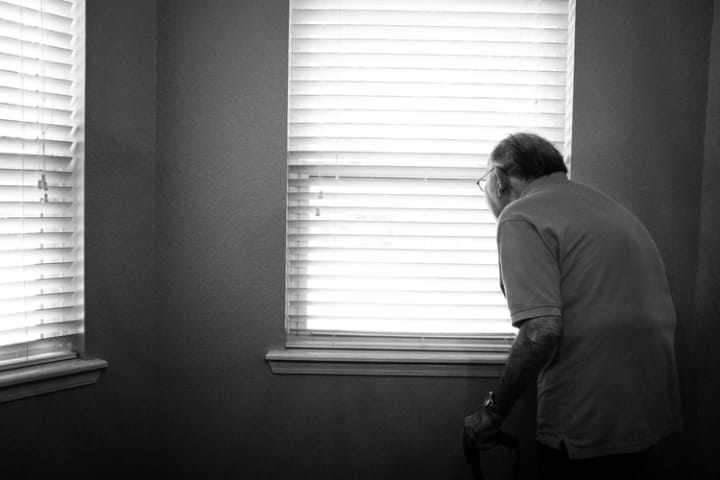
The one thing that used to bug me the most was the seven and a half hours my parents need to get out of the door. There’s the bag, the coat and the umbrella, and what if it gets chilly, and the did you turn the stove off, and is the cat inside or outside and so on.
As our parents get older, we need to teach ourselves to forgive them for getting older. They will be slower, they will repeat themselves, they will tell the same story five times. And they are not doing it specifically to ruin our day.
While bringing its own rewards, aging also exacts a somewhat heavy toll, and don’t think your parents wouldn’t like to be as fit as they used to be. But things decay, and you need to learn how to be patient and more understanding. Don’t expect them to teach you this lesson—you need to teach yourself.
Honesty vs. little white lies
Finally, the most important piece of advice I can give you is to be honest, even when it hurts. Especially when it hurts.
More likely than not, your parents will face some more or less serious medical conditions. Being open about how well they are, what sort of treatment they may need, how much you can be involved in taking care of them—all of this needs to be out in the open. All of you need to know what’s going on, if you hope to function well.
My dad tried to hide his illness from me. And I very nearly wanted to kill him when mum told me. But I do understand the desire not to burden your children.
This is why you need to sit your parents down, and have an open talk—they need to tell you when things go wrong, because you don’t want to be blindsided.
Managing loving relationships is not always easy—but with a little effort and a lot of understanding, it can be a fulfilling experience.
About the Creator
Keep reading
More stories from Sarah Kaminski and writers in Families and other communities.
4 Ways to Help Your Parents from a Distance
A parent-child relationship is one of the most evolving and versatile relationships we, as humans, are ever going to have. Our parents are there to teach us, help us, and guide us in the right direction as we grow up. They’re there to take all of our lashing out in our teens, and there as silent support as we take our first steps toward adulthood.
By Sarah Kaminski6 years ago in Families
Why the Maldives is the Ideal Destination for a Family Holiday
The Maldives is often linked with couples and luxury travel, but its island resort system also makes it very suitable for families. Most resorts are based on private islands, which create safe, organised, and easy-to-manage environments. This structure helps families travel together with less stress and more time to relax.
By ameliarosanna5 days ago in Families
Hottest in the Office
Dear Rafi, You’re very distracting to work around. For the first second I saw you the other day, I thought you were some type of executive. It took a moment to realize no, you were just the new guy, dressed up for the job he wants. Be still, my heart.
By Gabriel Shames6 days ago in Pride




Comments
There are no comments for this story
Be the first to respond and start the conversation.