
Growing Up with a Parent in Prison
The silence, the shame, and the secret life I lived as a kid

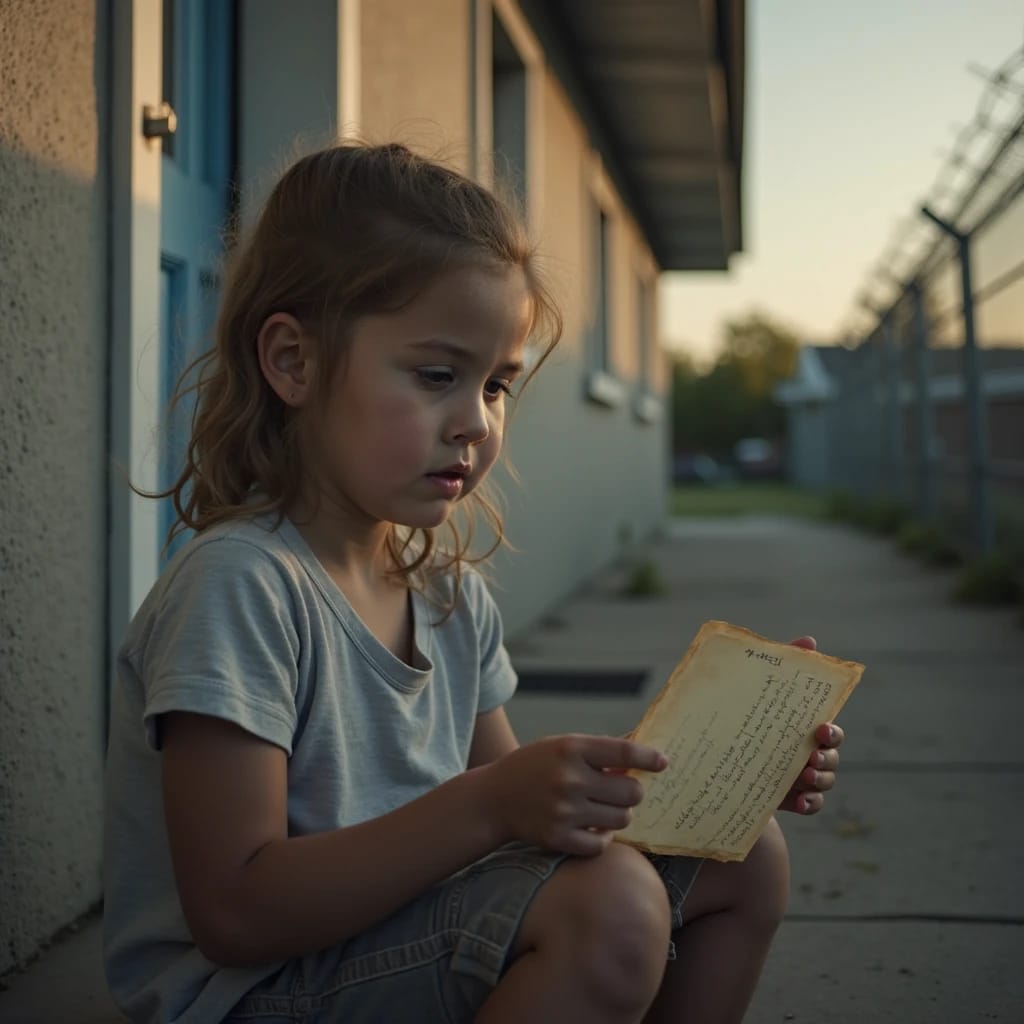
When I was seven, my dad stopped coming home.
There was no explanation that made sense at the time. One day he was there, sitting on the worn couch with his usual cup of tea and half-smile, and the next, he was just... gone.
My mom told me he had “gone away for a while.”
That was it.
No details, no timeline. Just a vague sentence that didn’t match the empty seat at the dinner table.
I learned to stop asking.
What I didn’t know then was that my father had been sentenced to twelve years in prison.
It wasn’t until I was ten that I stumbled upon the truth.
We had moved cities. My mother changed jobs. Everything about our life had shifted—except the heavy silence that hung over our home like fog. I found an old envelope hidden in a drawer, stamped with the Department of Corrections logo. Inside was a letter—handwritten in my dad’s slightly slanted cursive.
“I miss you, kiddo. I’m sorry I can’t be there.”
The rest blurred in my vision. My hands trembled. Suddenly the puzzle pieces started to click in place—the whispers, the tension, the tears I sometimes heard through thin walls at night.
My dad wasn’t just “away.” He was locked behind bars.
I didn’t tell anyone.
How do you explain to other kids that your dad isn’t in the military or on some long work trip but in prison for something too complicated to understand?
I had no words for the shame I carried.
At school, I lied. When kids asked what my dad did, I said he was working out of state. I invented details—construction jobs, road trips, deadlines. Anything but the truth. I smiled through school plays and parent-teacher meetings where only my mother sat in the audience. I never corrected the teachers who asked why my father never came.
I became a master at pretending.
The few times I visited him—twice a year, maybe—I was both excited and terrified.
The process was invasive. Security checks, cold metal detectors, stern faces. I hated the smell of that place—like bleach, sweat, and old despair. But when I saw him through the glass or across a cold plastic table, my heart still raced. He looked older every time. His smile more tired. But he was my dad. And I wanted that to be enough.
We talked about school. He always asked if I was doing okay, if I needed anything. I always said no. What I really needed was to cry in his arms, to tell him I hated all of this—but the tears had dried up long ago.
The guards would signal the end of the visit, and we’d hug—tight, desperate, like we were trying to freeze the moment.
And then I’d go home, quieter than before.
The worst part wasn’t the visits. It was the birthdays.
Each year, I waited for the mail. My father never forgot. He always sent a handmade card with a joke or a drawing. I kept them in a shoebox under my bed like they were treasure. But I never showed anyone. Other kids had dads at their parties. I had excuses.
I grew resentful—not of him, but of the life that had been stolen from me. I hated the narrative of “he did wrong and now he’s paying the price” because it made it seem clean. Just. Fair. But what about me? I didn’t do anything wrong. Yet I was serving a sentence too.
Middle school came. Then high school.
Teenagers can sniff out secrets. The pressure to fit in, to explain the gaps in my life, became unbearable. I kept my circle small. If anyone got too close, I pulled back. I feared judgment, pity, or worse—being treated like I might follow in his footsteps.
Sometimes, I'd catch people making jokes about "jailbirds" or "deadbeat dads," and I'd laugh along. Pretending was easier than explaining. Shame has a way of teaching you silence.
But deep down, I was lonely. Exhausted. And full of questions no one had the courage—or the right—to answer.
College was my escape.
I got a scholarship and moved three states away. For the first time, I was somewhere I didn’t have to explain gaps in my family tree. I could just say, “My dad isn’t around,” and leave it at that. Nobody probed. It felt like freedom.
But with that freedom came guilt.
Because as I was building a new life, my father was still behind bars—counting days, growing older. I didn’t visit him that first year. Or the second. I told myself I was busy, that I needed space. But the truth was—I was afraid. Afraid I’d outgrown the little boy who used to send letters back. Afraid that seeing him again would unravel everything I’d built.
Then came the call.
After eleven years and eight months, my father was being released. Early parole for good behavior.
I stared at the phone screen like it had betrayed me.
What did this mean? Was I supposed to let him back into my life? Was I still the kid who missed him—or the adult who had learned to live without him?
We met a few weeks later at a quiet diner.
He looked older—grayer, slower, smaller somehow. But his eyes? Still kind. Still searching.
We sat for an hour, mostly in silence. Then, suddenly, we were talking. About everything. About nothing. About books, about work, about what he missed and what I’d never told him. I didn’t cry—but he did. Quietly, with a hand over his eyes.
He apologized. Not with excuses, not with explanations. Just honesty.
And for the first time in years, I let myself breathe.
Now, when people ask about my dad, I still hesitate.
Not because I’m ashamed—but because the truth is complicated.
Yes, my father went to prison. Yes, it shaped my childhood in ways I’m still unraveling. But he also loved me. He also tried. And that matters too.
I’ve learned that silence is its own kind of prison. That the secrets we carry aren’t always protection—they’re weight. And at some point, you have to let them go.
So here it is—my story. Not for sympathy. Not for shock value.
But for that kid out there, still hiding their pain. Still making excuses. Still pretending their family is whole when it isn’t.
You’re not alone.
I wish I could go back and tell younger me:
You don’t have to lie. You don’t have to carry shame that doesn’t belong to you.
Your parent’s choices aren’t your identity.
You’re allowed to be both angry and loving, hurt and hopeful.
And one day, your story will make someone else feel seen.
That day is today.
Because growing up with a parent in prison didn’t break me.
It taught me resilience, empathy, and the quiet power of truth.
And now that I’ve spoken mine—I’m finally free.
About the Creator
Muhammad Sabeel
I write not for silence, but for the echo—where mystery lingers, hearts awaken, and every story dares to leave a mark
Keep reading
More stories from Muhammad Sabeel and writers in Families and other communities.
Boomers, Gen X, and Gen Z in One Living Room
"Is it hot in here or is it just the WiFi tension?" my cousin quipped as my family gathered around the oakwood table for what we optimistically labeled a "multi-generational game night." It was a modest attempt to bridge the growing canyon between my grandfather (a proud Boomer), my Gen X mother and uncles, and us—Gen Z kids raised on TikTok, therapy speak, and hyper-awareness.
By Muhammad Sabeel9 months ago in Families
The Last Letter From My Mother
Life moves very fast. Sometimes we are so busy chasing our dreams that we forget the people who love us the most. A few years ago, I was living in another city because of my job. My life was busy. Every day, I worked long hours, met new people, and tried to build a better future. I thought success and money were the most important things in life. I had little time for anything else, and I often ignored the small things that truly mattered.
By Muhammad Tanveer2 days ago in Families
healthy and unhealthy relationships The Year I Stopped Telling the Truth About My Marriage
There is a specific silence that happens in a car when you realize you're editing your own thoughts before they become words. I remember it precisely. We were driving somewhere,
By Understandshe.com7 days ago in Families


Comments
There are no comments for this story
Be the first to respond and start the conversation.