
“God Wants Me to Be a Fierce Mother”: Motherhood and the Antiheroine
Motherhood and the Antiheroine in Sons of Anarchy (2008) and Desperate Housewives (2004)

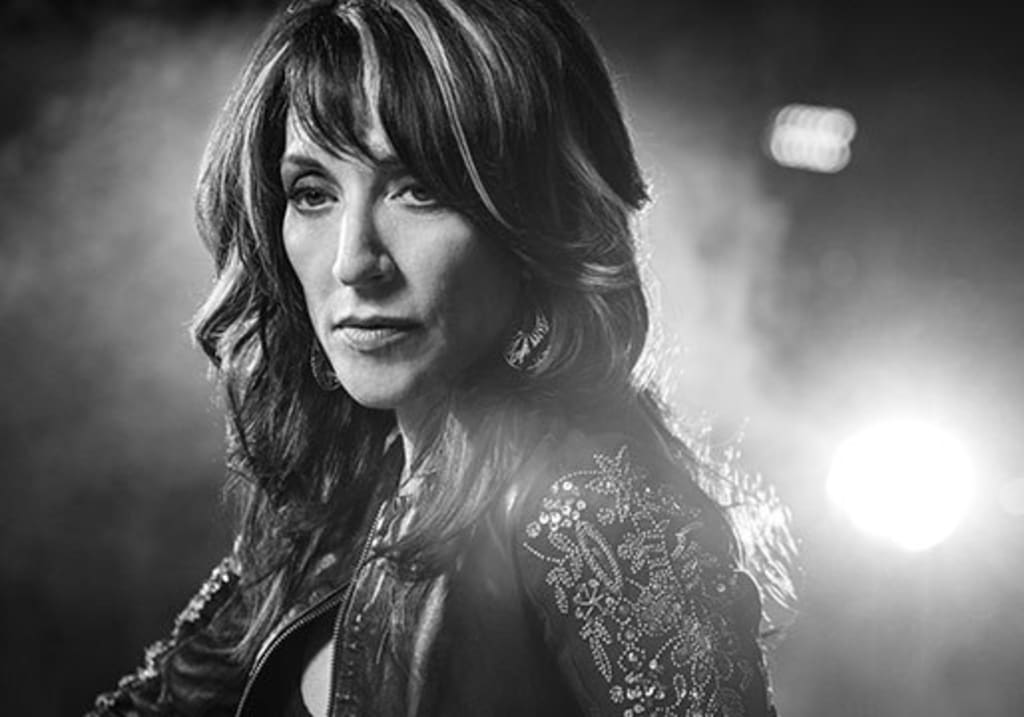
Are you a fan of Sons of Anarchy? Me too. How about Desperate Housewives? Me too! Though for very different reasons. (WARNING: Contains spoilers for both shows)
In this post, I will explore my thoughts on motherhood and the anti-heroine in Sons of Anarchy and Desperate Housewives.
“It is not simply that the strong woman commits bad acts, but that she does so with some awareness of the impact that it has and the morally questionable decision to behave in this way regardless” (Tally, 2016, 23). With this terminology she becomes conceivably more engaging than the arguably one-dimensional „hero‟ or „villain‟. This woman becomes an „anti-heroine‟. The antiheroines who will be observed within this essay are the characters of Bree Van de Kamp, played by Marcia Cross, in Desperate Housewives (2004) and Gemma Teller-Morrow, played by Katey Sagal, in Sons of Anarchy (2008).
Before discussing Bree and Gemma‟s impact as post-feminist, neoliberalist anti-heroine mothers in television it first must be understood what is meant by such terms. Neoliberalism can be defined as the philosophical shift that took place in the mid to late 20th century to counteract the idyllic classical liberalism view and instead present it as “a general agreement on the fundamental of a socio-economic system where there is no such thing as society, only individual men and women and their families, and thus all social solidarity is to be dissolved in favour of individualism” (Stratton, 2016, 175). In television terms the neoliberalist impact paved the way for characters that embodied these values, which lived and looked out for themselves first and, by extension but not priority, their families.
In order to discuss and attempt to understand the term „anti-heroine‟ it is important to first define the term and place it in a neo-liberalist society, specifically how it is separate from the parental superficial terms „hero‟ or „villain‟. “Ever since the origins of storytelling there have been heroes and villains captivating audiences” (Hirschberg, 2009, 8). The villainous woman defies the norm and lives outside of what is accepted, often with malicious intent, however “where in some
cases we were offered simply cosmetic updates of villainess figures, which have never been in short supply in popular imagination and fictional storytelling, quite a few female characters created for television in the 2000s were actually endowed with moral ambiguity, damaging flaws, enduring strength, unapologetic wickedness and the relatable qualities that work together to shape a conflicted and nuanced, despicable and admirable antiheroic figure” (Buonanno, 2017, 3). In parallel, heroes often can „do no wrong‟ in the eyes of the other characters in their narrative or the viewers reading the text. Prior to the 2000s, “designated female-centred shows whose protagonists negotiate femininity „trying to cope‟ with contradictory demands made on women” (Buonanno, 2017, 4) were thus branded heroic in their feminine portrayal, as the “feminine interest has been manifested and subsumed into the larger category of „heroine television‟” (Brunsdon, 1997, 82).
This is in part to the politics appearing in the world at the time, not least the attention around specific feminist movements. Therefore, in television, the moment a hero displays anything that could be considered flawed, not enough to render them evil, they are branded an „anti-hero‟ or „anti-heroine‟, a term that covers the middle ground: those who walk the line between good and evil but could tip either way during the course of their specific narrative. Cynicism, jealousy and vice are amongst the character tropes of the anti-heroine stereotype, alongside and simultaneously juxtaposed against confidence, courage and virtue wrapped up delicately in the same character.
Often these tropes are tied in with a woman‟s sexual appetite and the way her body is portrayed. “Her body has become her battlefield and paradoxically her only weapon and possession. Yet it is not her own, for she too has come to see it as a territory staked out by heroes and monsters, a landscape mapped by desire, and a wilderness.” (Thornham, 2016, 69). It takes a strong woman to appear flawed and to do so for the entire world to see. The anti-heroine is a walking contradiction that is often more relatable to an audience than the standard hero or villain character trope simply because they are more realistic and therefore more achievable.
When the television anti-heroine is held up beside the feminist politics of the 2000s they begin to make more sense in the eye of the viewer but only so far as these feminist or post-feminist politics is understood. The anti-heroine is recognisable, achievable and conceivable as making her way in a patriarchal world, forming her own path and own ideals. In order to place these fictional anti-heroines within their narrative it is important to understand the feminist politics occurring in the world around them, specifically the tropes of post-feminism. Women were being recognised as politically active; women were seen as having a valid voice and put an emphasis on the importance of taking a woman's background, race, sexuality and diversity into account. “The patriarchal culture of a fantasised homebound woman is married with images of transnational, high-achieving men but that imagery has no place in a post-feminist society” (Negra, 2008, 17).
When Bree Van De Kamp is first introduced in Desperate Housewives (2004) Bree is constructed on face value as the idyllic housewife of second-wave feminist American suburban values. However when the character is continually developed and dissected beneath the watchful eye of the audience Bree becomes a postfeminist anti-heroine. She rejects her ideals and adopts a postfeminist approach. Desperate Housewives (2004) premiered on the ABC network and became “phenomenally successful, taking the suburban ideological agenda for granted to such an extent that it barely needed to account nor focus on the exclusively stay-at-home wives and mothers of Wisteria Lane. Indeed the series‟ aggressive eroticization of retreatism registered as innovation for many viewers” (Negra, 2008, 34). The premise of the socialite anti-heroine whose series of bad acts, thus presenting her with such a title, seems to have first appeared in 1998 with the introduction of Carrie Bradshaw in Sex and the City (1998): the strong woman who simultaneously holds down a career whilst still going after what she wants and appears affluent with both money and sex appeal seems to have it all. Carrie Bradshaw‟s trailblazer characteristics were taken and moulded into Bree as a character. Bree “represents an image of feminine success, the white, middle-class, über-homemaker living comfortably in the suburbs which exists to remind us that feminism never happened. When broken down, however, she understands the privilege bestowed on women prepared to live an ideal of feminine perfection applauded by dominant culture” (McCabe, 2006, 74-75).
The use of narrative and the construction of character with influence from mise en scene and Bree‟s physical appearance “leaves us no doubt about representation rising out of reproducing feminine ideals” (ibid, 78). Bree is branded an antiheroine because she perpetually seems set to sabotage her own happiness and the happiness of others to achieve a goal she desires. She uses her influence and appeal to guide those around her into doing what she thinks is best for the good of all. Her intentions are not always good but often she believes so strongly in their worth that she cannot be seen as a villain but an anti-heroine. This manipulation quickly becomes an act of selfishness that causes trouble for the characters in the narrative. As the seasons progress Bree begins to reject her own 1950s ideals and becomes increasingly wrapped up in postfeminist struggles. The very construction of the dark comedy genre and the subsequent plotlines, placing the protagonists with increasing involvement in various crimes in their very own perfect suburban neighbourhood, have a lasting impact on Bree‟s perfect life and force her to re-evaluate her own place in the world. Bree‟s thoughts on motherhood reflect the ideals of the housewife female. “Given the centrality of maternity in societal constructions of womanhood, both the mandate to become a mother and directives regarding maternal behaviour have been central in the policing of women‟s identities”(Buonanno, 2017, 127).
When her teenage son Andrew accidentally kills a woman whilst drinkdriving Bree covers for him, but sees it as her fault to the point of a personal crisis: “A good mother knows their child inside and out so that if they get into trouble they‟ll know what to do. I don‟t know Andrew well enough” (Desperate Housewives 1x18, 2004). Bree suffers from undiagnosed obsessive-compulsive-disorder and as a result of her compulsions Andrew rejects her meaning she cannot fulfil the one element of the feminine life that she is sure of: motherhood. Bree‟s mother-son relationship with Andrew is the pivotal point for many of her decisions. He continuously rebels against her idyllic suburban values, including sleeping with her own boyfriend to spite her, and so Bree rejects all ideas of motherhood and abandons him at the side of the road. This is an act that marks the turning point for Bree as a character from textbook mother and housewife. “The bad mother occupies the status of the ultimate bad woman” (Buonanno, 2017, 127). The death of her husband early on forces Bree to re-evaluate her position and her values. She becomes an alcoholic in a self-destructive act that could be classed as villainous.
As the storyline progresses and Bree becomes more involved in crimes she begins to realise her tranquil life is not sustainable. She progresses to take certain steps to protect herself and her family and contemplates terrible acts: “I used to think of myself as a good person, if I had a choice I would always choose the high road. Lately I‟ve begun to realise that I‟m capable of doing whatever needs to be done” (Desperate Housewives, 2004).
“The fact that Bree has become such a heroine to viewers is not surprising. She is proof that women, more than ever, just want the old-fashioned, domesticcontentment she promises but with all the flaws it includes” (McCabe, 2006, 49). Bree is a defined example of a neoliberalist anti-heroine; she rejects homely ideals and embraces a more outlaw state of being away from what would be considered heroic.
“Outlaw mothers do not always put their children first; actively question the expectations that are placed on mothers by society; challenge mainstream parenting practices; and challenge the idea that the only emotion mothers ever feel toward their children is love” (Mason, 2018, 230).
Seemingly worlds apart from Bree in her pleasant world of white picket-fences and apple pies there is the town of Charming in Sons of Anarchy (2008). In a patriarchal group of misogynistic antiheroes who live and die for SAMCRO, the motorcycle club to which they belong, where the only women they seem to interact with are „crow eaters‟ and prostitutes, one woman in particular rejects the stereotypical feminine mother archetype. „Old lady‟, therefore property according to biker-law, of SAMCRO president Clay Morrow, Gemma Teller-Morrow is an anti-heroine mother who fully embraces and advances the tropes assigned to her character. Portrayed by Katey Sagal, best known as archetypal sitcom mothers Peggy Bundy in Married... With Children (1987) and Kate Hennessey in 8 Simple Rules (2002), Gemma is vastly different.
In a real-life world filled with political upheaval where women struggle to find where they belong, Gemma provides a platform as an outspoken martyr of a woman to recognise as an idol and pin flaws upon. From her very introduction, in which she is blatantly breaking the law by using her phone whilst driving “Gemma displays contradictions at play between her outlaw identity and the non-traditional femininity it encompasses. Gemma is permanently clad in skin-tight pants and low-cut blouses. She carries and uses a gun, regularly smokes cigarettes and marijuana, and drinks” (Buonanno, 2017, 133) beer or bourbon, often classed as „masculine‟ drinks, as opposed to Bree‟s more „feminine‟ choice of red wine. “These outlaw attributes are then contrasted with Gemma‟s selfconstruction as a matriarch whose raison d‟être is care and maintenance of her family” (ibid).
Gemma sees herself as a perfect mother and sometimes presents herself as such: in one of the first interactions with her son Jax, the protagonist, she is seen in a flannel shirt and „mom jeans‟, an outfit dripping in motherly connotations. Yet instead of undergoing „mumsy‟ tasks she is instead smoking, drinking and swearing, pinning herself miles apart from Bree and her picket-fence. However, much like Bree, Gemma is a mother-of-two, has been married twice and is the matriarch of her family; both are framed for the murder of their first husband and her son is torn between love and resentment for her. “The matriarchal control of this woman exerts a fear within her community that extends beyond blood relations. She is seen as some sort of royalty” (Buonanno, 2017, 127). Gemma is referred to as the „Queen of Bikers‟ and „mother‟ by the men she deals with and to whom she has no blood or marriage tie. Clay and Jax have prominent positions in SAMCRO and essentially run Charming town. Where Gemma does not openly get involved in the increasingly illegal gun-and-drugrunning activities that come under „strictly club business‟, which could be argued as connotative of patriarchy, Gemma nonetheless pulls the strings from the shadows and as the narrative progresses the male characters become aware of it. She consistently uses her influence to manipulate the men around her and has an uncanny knack of seeking out weaknesses and uses them to her advantage, especially anyone who harbours feelings of any sort for her.
Wayne Unser, a former police chief who arguably should have a strong moral compass due to this position, is openly in love with Gemma despite her chaotic nature. He has been her confidante since the very first season and she is fully aware of his love for her. She uses this love to her advantage constantly to achieve her own goals, ultimately forcing Unser to betray the club and thus pay with his life. Juice, the vulnerable, sensitive youngest member of SAMCRO who suffers with depression and borderline schizophrenia, is manipulated by Gemma into helping her lie to Jax and thus jeopardising his position in the club and he, too, pays with his life. Before Jax punishes him he sees and betrays Gemma, saying of her, “Gemma knows the truth behind every lie inside every secret, she‟s the gatekeeper” (Sons of Anarchy: 7x11, 2014). Juice‟s confession ultimately causes Jax to take action against his mother and end her reign of tyranny and manipulation.
Aside from Gemma‟s exaggerated flaws she has many that are more relatable, such as a heartdefect; making the decision to put her elderly father in a care home; or being the receiver of domestic and sexual abuse. Gemma eventually confronts Clay on his abuse and, for the most part, the following fist-fight demonstrates her refusal to simply become a victim. She refers to herself as a survivor, an attribute that could be applied to a heroine. Gemma maintains that all of her actions are for her family and for her children and grandchildren but often these actions backfire. “Being a bad mother represents an act of significant transgression from patriarchal power structures that have emphasised motherhood as a primary component of value. Gemma maintains she acts for the best interests of her family and does so with cool ambivalence to her offspring, but often willingly using them as pawns in larger plans” (Buonanno, 2017, 127-130). She frequently puts the lives of her infant grandsons at risk, including crashing her car whilst stoned and putting them in the hospital. This incident and many others brand her as a bad mother and her actions against her family include almost murdering Jax‟s first wife Wendy by manipulating her desire for drugs, or succeeding in murdering Jax‟s second wife Tara in a blind rage when she believes Tara will „rat‟ and betray the club. Gemma bitterly regrets the murder almost instantly butnonetheless does not own up to it. Instead, she lies and manipulates Unser, Juice and Wendy to help her cover up her crime and hide it from Jax. Gemma‟s drive to protect her family does not go unnoticed by characters around her.
Gemma‟s boyfriend Nero exists to justify Gemma‟s actions to Jax, reminding him “women like your mom don‟t do well without family” (Sons of Anarchy, 5x7. 2012). The audience are asked to feel sorry for Gemma and to ally themselves with her through Nero‟s influence. Throughout the course of the narrative Gemma‟s position as hero or villain is constantly shifting and viewers, ultimately, are left conflicted when Jax learns to truth about her actions and is forced to execute her. Even as she accepts her fate Gemma speaks only of family, encouraging her son to do his duty: “I love you Jackson, from the deepest, purest part of my heart. You have to do this; it‟s who we are sweetheart. It‟s okay my baby boy. I‟m ready” (Sons of Anarchy: 7x12, 2014).
“As a strong-willed, assertive person with deep convictions of her own, she passionately serves and protects the club and her family in her own skilful ways” (Irwin, 2013, 166) and that is why she is not simply a villain but an anti-heroine.
“The stories told on Sons of Anarchy” (Irwin, 2013, 172) and Desperate Housewives “are familiar to us. The characters lives ebb and flow with hopes and fears, gains and losses, friendship and enmity, love and resentments and regrets and triumphs that we can identify with” (ibid-173).
Ultimately the belief that Bree and Gemma are doing the best for their family drives the characters and situates them firmly in anti-heroine territory. They defy the tropes of feminist stereotypes of pre-2000s television and accept and embody postfeminist portrayals, whilst still thinking for the individual and thus making them neoliberalist martyrs. Bree is an alcoholic with mental health issues, she loses one husband and divorces another and struggles constantly to be a good mother for her children. She seems to have a happy ending but only so far as appearances go, and her appearance and the way she and her family appear to others, after all, is all she cares for. Gemma, similar to Bree in so many ways, does not live out a conventional happy ending but her ultimate sacrifice for her son could be argued as her final heroic act.
“While there have been legitimate feminist concerns about the number and type of narratives that rely on happy endings, it is equally troubling that outlaw mothers are ultimately not allowed to find happiness or fulfilment” (Mason, 2018, 658). In their own ways Gemma and Bree do live out their happy ending. Bree lives on for her family, and Gemma sacrificed herself for her son in the ultimate repentance. “The existential dramas portrayed resonate with us. These characters strive for the ideals that make life worth living, though none seem to have achieved them perfectly in their lives. If we haven‟t either then perhaps part of the reason lies in the way we have organised out society” (Irwin, 2013, 173).
References:
8 Simple Rules (2002) ABC Television. September 17 2002.
Brunsdon, C. (1997) Screen Tastes and the Soap Opera. Chicago University Press: Chicago, USA.
Buonanno, M. (2017) Television Anti-heroines: Women Behaving Badly in Crime and Prison Drama. University of Chicago Press: Chicago, USA.
Desperate Housewives (2004). ABC Television. October 23 2004.
- Bargaining. (2009) Series 5. Episode 21. May 3. 42.50-43.35.
- Children Will Listen (2005) Series 1. Episode 18. April 10. 23.13-23.25.
- I Know Things Now. (2006) Series 2. Episode 21. May 7. 36.10-38.14.
- Pilot. (2004) Series 1. Episode 1. October 23. 23.16.
Hirschberg, J. (2009) Reflections of the Shadow: Creating Memorable Heroes and Villains for Film and TV. Michael Wiese Productions: California, USA.
Irwin, W. (2013) Sons of Anarchy and Philosophy: Brains Before Bullets. John Wiley and Sons Inc: West Sussex, UK.
Married... With Children (1987) Fox Television. April 25 1987.
Mason, J. (2018) „Mothers and Antiheroes: Analyzing Motherhood and Representation in Weeds, Sons of Anarchy, and Breaking Bad‟, Journal of Popular Culture, 52(3), pp. 645–662. doi: 10.1111/jpcu.12797. (accessed 10 December 2019) [available from: https://libkey.io/libraries/1254/articles/332125856/full-text-file]
McCabe, J. (2006) Reading Desperate Housewives: Beyond the White Picket Fence. I.B. Tauris & Co. Ltd: London, UK.
Negra, D (2008). What A Girl Wants? Fantasizing the Reclamation of Self in Postfeminism. Routledge: Oxon, UK.
Sex and the City (1998) HBO Television. June 6.
Sons of Anarchy (2008). FX Television. September 3 2008.
- Ablation. (2012) Series 5. Episode 8. October 30. 1.38.
- A Mothers Work. (2013) Series 6. Episode 13. December 10. 1.10.23.
- Hands. (2011) Series 4. Episode 10. November 8. 28.48-30.59.
- Pilot. (2008) Series 1. Episode 1. September 3. 10.36 & 28.29.
- Red Rose. (2014) Series 7. Episode 12. December 2. 1.10.58.
- Suits of Woe (2014) Series 7. Episode 11. November 18. 46.35-46.41.
- The Culling (2009) Series 2. Episode 12. November 28. 27.40-27.51.
Stratton, J. (2016) „The Price of Love: The Big Bang Theory, the Family and Neoliberalism‟, European Journey of Cultural Studies, vol 19(2), pp170-187. (accessed 10 December 2019) [available from: https://journals-sagepubcom.proxy.library.lincoln.ac.uk/doi/pdf/10.1177/1367549415585558]
Tally, M. (2016) The Rise of the Anti-heroine in TV‟s Third Golden Age, Cambridge Scholars Publishing, chapter 1: “Showtime, Anti-heroines and the question of „ladies with problems,” 21-40
Thornham, S. (2016) What If I Had Been The Hero?: Investigating Women‟s Cinema. Palgrave MacMillan: Surrey, UK.
About the Creator
Keep reading
More stories from Millie Hardy-Sims and writers in Families and other communities.
Body Image in 'Thats So Raven'
In this post, I will look at the representation of body positivity in the Disney Channel show That’s So Raven. When That’s So Raven, a supernatural, coming-of-age situational-comedy, first aired on Disney Channel in 2003 it arguably changed the channel for the future. Focusing the narrative around psychic African-American teenager Raven Baxter (played by Raven Sỳmone) the programme explored themes of racism, feminism and body positivity in the family-friendly form of a situational-comedy aimed at ages 6-14. The programme broadcast for four seasons and 100 episodes, which at the time ended the Disney Channel remit of no more than 65 episodes per programme.
By Millie Hardy-Sims5 years ago in Geeks
Wise~Guys
— Look Behind what's in Front of You ~ Make Good Choices — Hey, So how you Doin'..! Made~Men — Mobster Movies romanticise a distinctive, elegant appearance, impeccable attire style, along with the 'Families' expressive lingo. Making their 'Bones' gave them Panache — with vintage fedoras, tailored pin-striped suits, mirror-polished wing-tip shoes adorned with tassels; with their 'Gun Moll' gorgeous dates on their arms.
By Jay Kantor19 days ago in Families
Ludacris and Nelly draw backlash over bookings at MAGA-coded music festival
Ludacris and Nelly headlining a mostly right-wing event is good for them. It’s also great for the genre of hip hop. The two rap veterans have showcased their talents on other stages. Why can’t they perform for mostly MAGA folks and grab that bag?
By Skyler Saunders5 days ago in Beat



Comments
There are no comments for this story
Be the first to respond and start the conversation.