
Forgotten Voices: The Parents We Left Behind
A heartbreaking story of love, neglect, and the quiet ache of parents waiting for children who stopped coming.
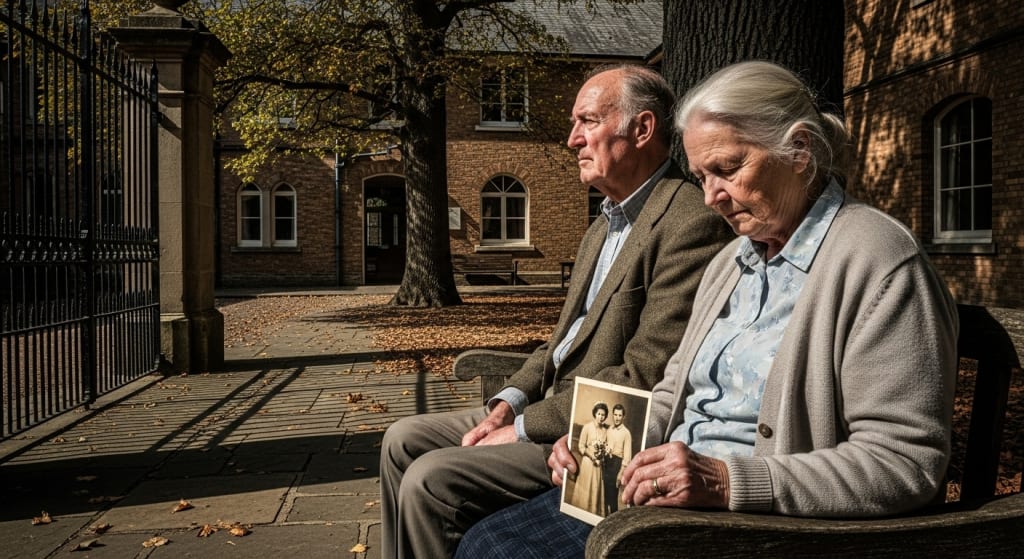
The old-age home was quiet that morning.
A slow wind carried the scent of jasmine from the garden, mixing with the faint smell of antiseptic and tea.
Mr. and Mrs. Rao sat on the wooden bench near the gate—the same spot they’d claimed months ago, when their son first brought them here.
Every day, they watched the gate open and close, hoping one day, it would open for them.
The Drop-Off
When Aarav drove them here, he said it was “just for a while.”
“Ma, you’ll be comfortable here,” he’d promised, smiling without meeting her eyes.
“Baba, they have nurses, meals, everything. I’ll visit every Sunday.”
They’d nodded, trying to believe him.
The journey from home to the old-age center had been silent except for the hum of the car.
Mrs. Rao had clutched her wedding chain, whispering prayers.
Mr. Rao had watched the road—his reflection flickering in the window like someone fading out of a picture.
When Aarav hugged them goodbye, his phone buzzed.
He answered it before they could say anything.
That was six months ago.
The Routine
The old-age home ran on schedule—breakfast at eight, medicine at nine, television at ten.
Days melted together like pages of an unread book.
Some residents had visitors.
Children came with flowers, sweets, and quick smiles that didn’t reach their eyes.
But most left quickly, checking their watches as if love had an expiration date.
The Raos watched them go, their hearts tightening in shared silence.
They didn’t blame Aarav. They told themselves he was busy, that he lived far, that city life was hard.
But every night, Mrs. Rao set two extra plates at the small dining table by their bed—one for him, just in case.
The Letter
One afternoon, while folding clothes, Mrs. Rao found an old envelope in her handbag.
It was a letter Aarav had written her as a child:
“I’ll never leave you, Ma. Promise. You’re my favorite person in the world.”
She smiled through tears. The handwriting was crooked, full of love only a child could give.
She read it aloud to Mr. Rao, who sat by the window, his eyes distant.
“Do you think he remembers writing that?” she asked softly.
He sighed. “He remembers, Meera. He just… forgets to feel it.”
The Visit
It happened one Sunday in late autumn.
The gate creaked open, and a familiar voice called, “Ma? Baba?”
Aarav stood there, wearing designer sunglasses and guilt.
Behind him, his daughter—barely ten—held a bouquet of lilies.
Mrs. Rao’s face lit up.
Mr. Rao stood too quickly, his knees trembling.
They hugged him like he’d been gone for years—which, in a way, he had.
“How are you both?” Aarav asked, glancing around the courtyard.
He sounded like someone asking about the weather.
Mrs. Rao smiled through tears. “We’re good, beta. You’ve lost weight.”
“I’m fine,” he said, forcing a grin. “Just… busy, you know how it is.”
He stayed exactly forty-two minutes.
Then his phone rang.
“I have to go, Ma. There’s a meeting. I’ll come next week.”
He kissed their foreheads and turned to leave.
His daughter hesitated, then whispered, “Bye, Dadu.”
After they left, the lilies wilted in the vase by evening.
The Rain
That night, it rained. Hard.
The sound filled the small rooms, drumming against the tin roof.
Mrs. Rao sat by the window, watching the water streak down the glass.
“Do you think he’ll come next week?” she asked.
Mr. Rao didn’t answer. He was staring at the gate, now just a dark shape in the storm.
He whispered, “Maybe next month.”
The rain hid their tears, the thunder covered their silence.
The Celebration
Weeks later, the old-age home hosted a “Family Day.”
The courtyard was decorated with balloons and lights. Music played softly.
Volunteers danced with residents. Cameras flashed.
Everyone waited for their children to arrive.
One by one, cars pulled up.
Some stayed. Most waved from the gate.
When the music stopped, the Raos were still sitting at their bench—two chairs, untouched plates, and a small bouquet in Mrs. Rao’s lap.
They smiled anyway, pretending not to notice.
Pretending that the gate wasn’t silent again.
The End of Waiting
Winter came quietly.
Mr. Rao fell ill—a fever that didn’t go away.
The doctor said he needed rest, but he refused to stay in bed.
He wanted to be near the gate.
One cold morning, Mrs. Rao found him sitting there, head resting against the bench, eyes closed.
His last words, she later told the nurse, were,
“Tell Aarav… I’m still proud of him.”
Afterward
Aarav came the next week.
He cried hard at the funeral, guilt spilling like rain.
“Why didn’t you tell me he was this sick?” he shouted.
The nurse only looked at him and said quietly, “We did, sir. You said you were busy.”
He sat by the bench, the same one his father had loved.
The gate stood still.
For the first time, he noticed how heavy silence could be.
When he looked at his mother, sitting small and alone, he realized what he’d traded away:
time that could never be replayed, love that asked for nothing but presence.
He held her hand, trembling. “I’ll take you home, Ma,” he whispered.
She looked at him with tired eyes and said, “Home isn’t a place, beta. It’s where someone waits for you.”
And she turned away, staring at the gate—hoping, foolishly, it might open again.
About the Creator
HAADI
Dark Side Of Our Society
The Shadow in the Screen: Why Your Child’s Identity is the New Gold for AI Hackers
I remember the first time I saw it. A photo of my niece, the one I had taken at her fifth birthday party, appearing on a profile that didn’t belong to anyone in our family. The name was different. The location was halfway across the world. But the smile was unmistakably hers.
By Alex Sterling 4 days ago in Families
My First Time Skiing and I Got Lost, Alone, in the French Alps
Looking back, I can trace some of my life’s biggest adventures to a simple action from my sister. She’d introduced me to Tommy (a very long time ago), a colleague of hers, who had overshared his penchant for Italian-looking women, and I ticked that box.
By Chantal Christie Weissabout 14 hours ago in Humans




Comments
There are no comments for this story
Be the first to respond and start the conversation.