
For Daddy
Jan. 6, 1945 - Sept. 30, 2022


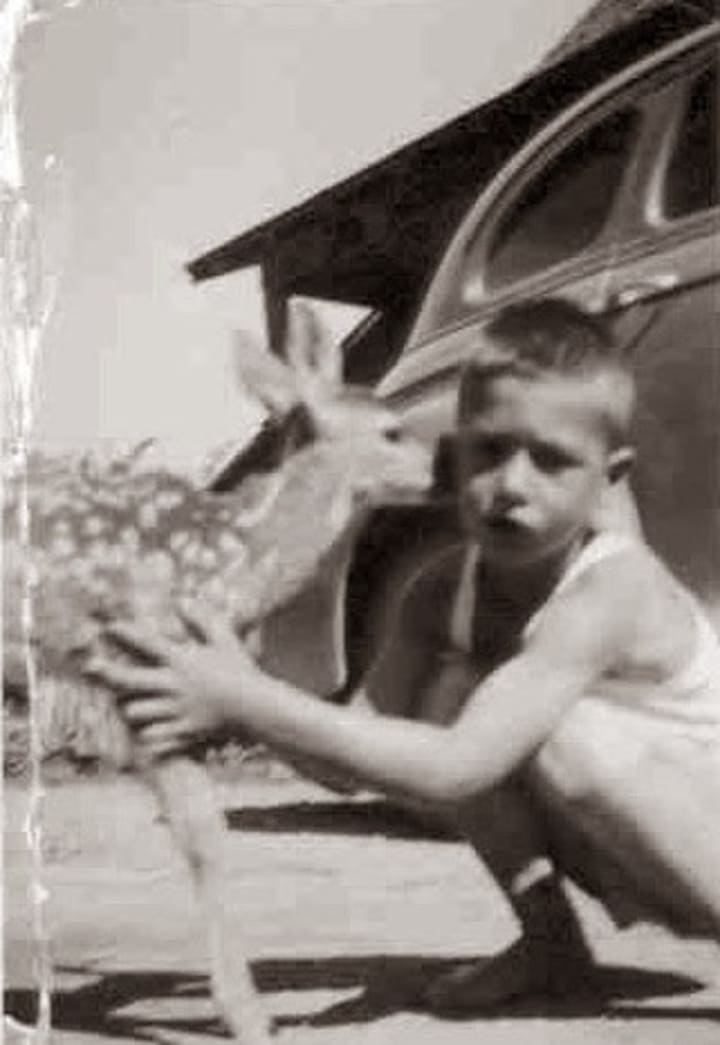
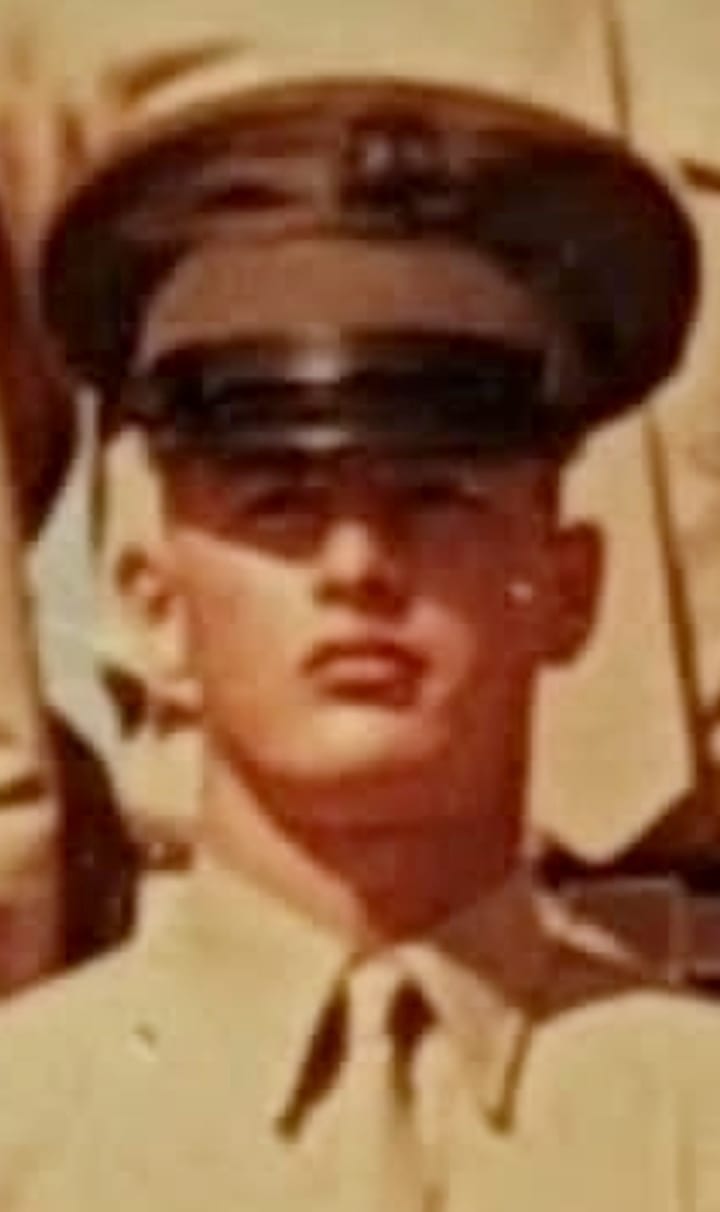
He was an Irish twin, born only 11 months after his brother, Fred, but where Uncle Fred stayed out of trouble, Dad was wild. Born in Butte, Dad was a Montana cowboy, a Marine who fought in Vietnam, suffered from PTSD, and had a hair-trigger temper. He had a thunderous, resonant voice, and large strong hands with thick calluses and enormous fingers. My mother said that when they went to pick out their wedding rings, the jeweler had to expand a size 12 to fit him because it was the largest size they had, and he was a 13. Mom’s delicate sparrow fingers wore a tiny size three.
Like me, Dad was quiet, loved nature, and was a voracious reader. Like me, he also loved animals, but his relationship with dogs was truly magical. He had a quality they really adored, and I’ve never seen anything like it in anyone else—except maybe my brother. Every dog that met my Dad became enamored with him—including dogs belonging to other people. Throughout the years, it was common to see two or three of his neighbors’ dogs spending most of their time with him, only going home reluctantly when he sent them back to their families. More than once, neighboring dogs tried to defect from their own homes and move in with him, running back to his place every time they were collected and taken to their real homes by their owners. This was a common occurrence, and at least once, one of the owners gave up and just let his dog live with my dad.
Maybe dogs adored him because he took them fishing, let them roll around in the mud, and took them to Dairy Queen, where he bought ice cream for them. He respected their nature and just let them be dogs. He had no other expectations of them. Dad was the best friend a dog could have, and the only time I ever saw my dad cry was when his dog died. My heart ached for him then because I knew how much he loved that dog.

Ever since the invention of ringtones, the one I assigned to my father's number was The Good, the Bad, and the Ugly, the song from the old Clint Eastwood movie of the same title. At the time, I believed that it was because it evoked my father's Old West tortured gunslinging hero quality. It captured Dad's aura of simmering danger and mystery. However, the title of the song pretty much sums up our complicated relationship as well.
Every time I talked to my dad on the phone, almost invariably, the call ended with my father saying, "Well, I've just about run outta bullshit," which meant he was ready to hang up whether I was finished talking to him or not. This statement was emblematic of our whole dynamic because I rarely felt like there was a satisfactory conclusion to any of our interactions. I was always left hanging, wishing for more. However, if more what is the question, here is the answer: I wished for more love between us, more respect for my bond with him as his child and his daughter, more quality communication, more mutual agreement, more of his approval, more of his interest, more of his attention, more laughter, more healing, more happy rapport, and most of all, more time to achieve these things. In his life, just as in his phone calls, I exceeded my quota of his participation long before I was ready to. My father ran outta bullshit before we ever had the chance to experience the kind of relationship we should have had.
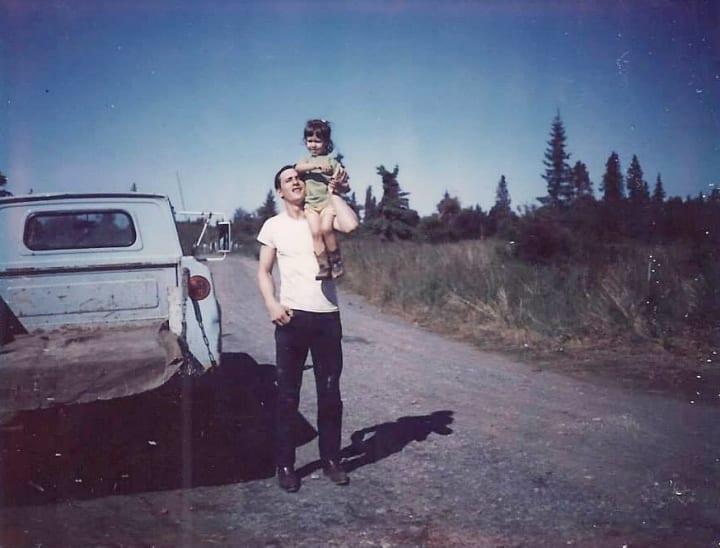
But it wasn’t always that way. For the first few years of my life, he was my daddy, and I was his little girl. I worshipped him. He was a warm, comfortable hug, a safety blanket, my protector. My mother said that I had colic when I was a baby, and my father used to place me over his shoulder and walk me around for hours as he gently patted my back and tried to soothe me. Some of my earliest memories of my dad involve snuggling with him on the sofa in my pajamas while we watched Gunsmoke or reruns of The Wild Wild West.
Christmases were magical. Daddy went all out—getting us the kinds of toys other kids only dreamed of. On Saturday mornings, he’d tickle me into fits of laughter while I tried to watch my favorite cartoons. He always had the radio on, whether he was cooking, reading, or repairing something, so there was a constant stream of music playing. This became the soundtrack of my childhood, and probably the reason why I love music so much--in spite of the pain it later caused when hearing songs that were connected to unhappy memories.

Some time during these early years, Daddy bought me a pair of child-sized cowboy boots similar to his. We always wore our boots together when we went to his personal temple, the Billiken, a bar named after the “god of things that ought to be,” both of us humming along as he drove over the bumpy dirt roads on the way there. Dad used to prop me up on the barstool next to him, buying me Shirley Temples while he had a few beers. We were partners in crime.
Unfortunately, Daddy changed when I was six years old, and our relationship became complicated. That’s when he became “Dad,” because he was a different person from the warm, loving Daddy I had known. “Daddy” smiled and played with my brother and me. “Dad” thundered and raged, punishing us for things that most people would consider minor infractions—or no infractions at all. It became terrifying whenever he was home. This is when the music playing on the radio became excruciating to hear, because every time a song was played, the grooves it carved in my mind were right next to the ones bearing family trauma. All of these years later, even my brother can’t bear to listen to it.
Other than the Vietnam war, I think the moment that really broke my dad was when Union Oil made an example of him for standing up to the Big Oil Bosses. They not only banned him from working in the industry again, but they reclaimed our beautiful home, which my father had been working hard to pay them for. This was the thanks he got for preventing a dangerous explosion on the oil platform he worked on, staying behind while most of the men got on the boats that would take them to safety.
Dad worked as a water flood operator, and when there was a blowout on the platform, he volunteered to be the one to shut off the valve that was leaking natural gas. The pressure was so intense as the gas built up that it was difficult for him to move, let alone walk toward the valve, and yet he successfully managed to shut it off and prevent an explosion.
He’d risked his life to save the company’s precious platform and the millions of dollars it would have lost if the oil rig had exploded. Had it done so, it would have killed him, but there he was—willing to sacrifice his life to save the platform because he knew that my mother, brother, and I would have lived well on his life insurance. And still the Big Oil Bosses rewarded him by tossing him out like trash. It was a suicide mission and he survived it without injury, but being treated as if he was worthless by those men he’d worked for broke his spirit. I wish he knew that his life was worth far more than every drop of oil and all the money in the world.
After that, I never knew what would set him off, and life became a field of land mines whenever I was in his presence. I know now he didn’t intend to scare me, but it was one of the things that made it difficult for me to trust the world around me. There’s more to this story of course—my fears weren’t all caused by Dad. My parents had a complicated relationship as well, being a completely mismatched pair in the first place. However, a few years after my father left Union Oil, my mother had a nervous breakdown due to her own daddy issues, and ended up in a mental hospital. That was the day she told me that the world was ending, and because she was my mother and an adult, I believed her. I’ve anxiously expected the world to end ever since.
Dad engaged in a lot of behavior that wasn’t appropriate around children. After my parents got divorced, it got much worse, and my brother and I didn’t enjoy spending time with him. One of the things that was most difficult for me was that my father didn’t respect women, so although he loved me, part of me felt like I was worthless to him. I saw how he viewed women only as objects of physical desire, instead of as human beings equal to men and worthy for their intellect, their talents, or abilities. This had a powerful effect on me, and although something inside me rebelled against it internally, most of my life I thought my only real value was in my physical appeal to men, rather than in my character or spirit. Because of this, I struggled all of my life to make things happen for myself, but the problem was that I subconsciously sabotaged things because I didn’t think I deserved what I wanted.

I struggled to get my father to take an interest in me and who I really was—to see beyond the surface of who he thought I was and get to know the things I really cared about—my beliefs and experiences, my dreams, inspirations, and talents. I wanted so desperately to make him proud of me, but his usual response to my little accomplishments was either a muted compliment, indifference, or an outright insult. Rarely was there an expression of authentic joy at my successes or achievements, and this led to a low sense of self-worth, severe clinical depression, and thoughts of suicide.
Needless to say, it made it really difficult for me to maintain a relationship because I kept choosing men who treated me the same way my father did—rejected, neglected, ignored, and disrespected. I was constantly trying to prove my worth in other ways, but could never break past that barrier, and my best qualities remained invisible to not only my father, but to the majority of my romantic relationships.
Let's be honest though-- even I couldn't see my best qualities. This is one of the reasons I never had children when I grew up. To me, having children was a big responsibility that should be taken seriously, and I wasn’t emotionally stable enough to be sure that I could bring children into the world and ensure that they felt valued and secure.

Like my father, I had unconsciously learned to allow my fear of suffering to keep me small and prevent me from actually living my life. Like my father, in many ways I had given up on chasing after my dreams. I’m sure my parents would have been more patient and given me better guidance if they had been in a healthier state of mind, but they too were lost and scared. I hold nothing against them.
As I got older, Dad and I had difficulty communicating, and a lot of our conversations and interactions often ended up in mutual disagreement, anger, and heartache. It was hard to talk to him, because for him, so many topics of discussion were taboo. Deep conversations were completely off limits, so we couldn’t discuss anything but animals without arguing.
It was a challenge to make him happy, and I don’t think I ever really did, though I kept trying. There were incidents and events—things my father said and did over the years that caused me to feel profound suffering, and yet I could no sooner close the door on him than cut off my arm. I think he felt the same way about me. I certainly wasn’t a perfect daughter and made a lot of mistakes and misjudgments. I caused him suffering as well, and I have so many regrets about this. I have seen the pain in his eyes after I’ve made some sort of hurtful comment. Still, I loved my father deeply, and in my heart, I knew my father really did love me too.

There were numerous reasons to keep trying—to keep reaching out and hoping to catch that brass ring of the ideal father-daughter relationship, but the best reason of all was that I could see that he really was a good man who deserved better than he allowed himself to experience in life. He worked hard to maintain his “tough guy” image as if he had something to prove, and I think, perhaps he did—at least in his own mind. My grandfather was hard on him when he was growing up, and I think my dad struggled all his life to prove to his father that he was strong—that he was a man—even when Grandpa was long gone.
Dad hid his sensitivity behind inappropriate and awkward jocularity, and protected himself with anger, and sometimes, unmitigated hostility. Many years down the road, I realized how alike we were, and I saw myself reflected in him. I saw his rage in myself, and I saw how I often shielded my own sensitivity and my own true nature with anger, resentment, sarcasm, and deflection. I was reckless with my life and with the feelings of others, including the ones I loved the most. As I began to heal, I realized that most of my anger was misplaced and based on illusions. Things never really were as bad as they seemed to be, but like Dad, I was in the habit of focusing on what was wrong with everything instead of what was right.
That my father never allowed himself to be vulnerable makes me sad. I wish he would have let me tell him that he never had to prove the truth of who he really was to me. I knew he really did have a great big warm heart that wanted to break free from the cage he’d locked it in, but he never found the key. As I’ve gotten older, I’ve learned that if we prevent ourselves from being vulnerable to suffering, we miss out on the opportunities life brings us to learn, change, grow, and evolve—to experience something better in the future. I don’t think Dad ever realized that suffering is just part of life, and it’s taken me many, many years to learn that lesson myself.

In spite of our differences, there were times that my dad was there when I really needed him. Dad was there to fix a car here and there, save my skin when I couldn’t earn enough to pay the bills, and even scare the monsters away. He was often generous to his own detriment and would give away his last dollar to anyone that needed it. I’ve seen my father spot a homeless man on the street, pull over, and give him all of the cash in his wallet. This is the kind of man my father really was. He wouldn’t say anything to make you feel better—but he would do things to help. This is how my father showed me that he really loved me. I think it was all he was capable of, and for this, as well as the life he gave me, I am so grateful to him.
So now I’ve come to this place where my father has passed on and I feel a bit rudderless. I was in shock after my stepmother called me last week and tearfully said, “I think your daddy died,” as the paramedics tried to revive him.

How could the world continue to exist without my father in it? To me, his presence on Earth was a silent force, like gravity or magnetic energy. It was not only a given, it was also something I needed in order to feel anchored. My ship is listing now without him. I can’t pick up the phone and call him, and there’s no future where we’ll physically see each other in person again.
I know that some people in my family probably don’t want me to share my thoughts about my father because he was such a private person, but I’m shining a light on our demons because we can’t conquer them in darkness. More than anything, I want my father to be healed and happy—even if he’s no longer in his physical body. I’m not one that subscribes to the belief that we’re born, we live, and we disappear when we die. To me, life is the same as energy—it can never be created or destroyed, but it can change form. I believe that since his death, my father is a non-localized conscious living presence. I can feel his love for me in the sunlight and in the air I breathe, and I return it to him with every beat of my heart. This gives me comfort.
I believe that life isn't present only in the discrete physical forms of individual people and creatures—it's everywhere—seen and unseen, in one continuous field of experience. All life is connected, even life beyond the physical body, and as I continue to send him unconditional love and forgiveness, we can both be healed. If the bardo is real, I want to help soothe his spirit so my daddy can be happy and whole in his next life.
I don’t think my sadness over losing my father's localized physical presence will ever go away, but I can use it to help me learn how to heal us both. This is more productive than holding onto any anger, resentment, or sorrow I’ve had for the way he treated me. I keep receiving insights about myself and my father as I view our lives through the prism of his death. In a sense, my father's gift to me was suffering, because I'm learning how to reclaim the truth of myself through each of the painful lessons he unconsciously taught me.
I've said it before and I'd say it again if I had the chance to talk to him one more time: "Daddy, I love you, I forgive you, and I just want you to be happy. That's all I've ever wanted."
I would continue by saying, "You were always better than you thought you were. You were always deserving. Your strength didn't come from your swagger—it came from your ability to love. Imagine your power if you had let your heart shine! I wish I’d never stopped calling you “Daddy,” and I regret hating the name that you gave me. Although I could share it proudly, I will hold it close to my heart and consider it sacred. Be at peace, Daddy, be at peace."
Maybe now he can finally hear me.

To hear the playlist I created to accompany my dad's tribute, check it out here:
About the Creator
Brijit Reed
Freelance ghostwriter, editor, and screenwriter striving to create a better world. Words and images are just the beginning.
Keep reading
More stories from Brijit Reed and writers in Families and other communities.
Rewriting unpleasant childhood experiences can help people feel less afraid of failing.
Have you ever been reluctant to start something new because you thought you wouldn't succeed? That fear begins in childhood for a lot of people. A critical remark made by a parent or instructor might linger for years. Those recollections may eventually develop into a profound fear of failing.
By Francis Dami2 days ago in Families
Cassie and Johnny
I’m the kind of dame you notice. I’m no femme fatale, but you can’t ignore me, at least not until I warn you about what’s coming, then everybody ignores me. Hell, they usually blame me afterwards and give Johnny all the credit for saving the day, but my Johnny couldn’t save a seat at the movies without my help. Sure, he’s brawny, but brainy? Not so much. Like that time I asked him to spot me five bucks, and he said he didn’t see it anywhere on me, and believe you me, he looked but good.
By Harper Lewis6 days ago in Critique



Comments
There are no comments for this story
Be the first to respond and start the conversation.