
Food Adulteration
Food Adulteration and why should you be concerned about it?
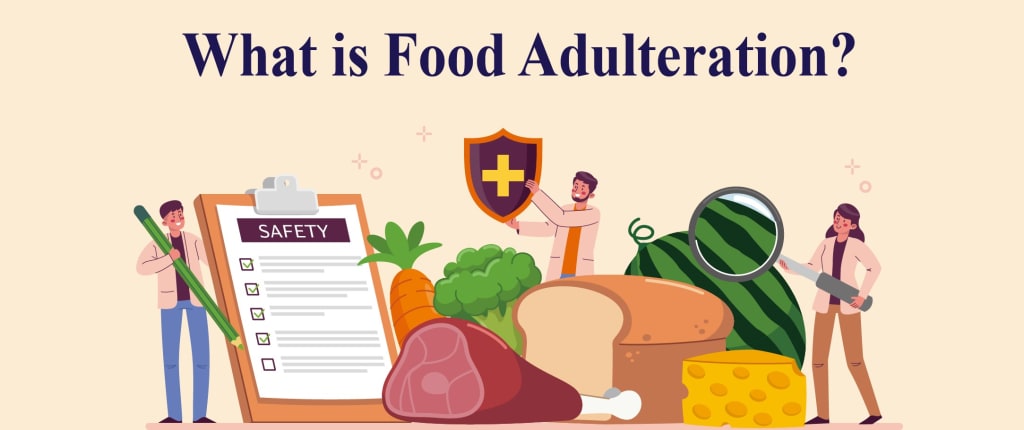
Food Adulteration and why should you be concerned about it?
Food adulteration is the act of intentionally adding or mixing substances to food, or removing or replacing food ingredients, in a way that is fraudulent or deceptive. It is a serious public health concern because it can lead to the consumption of food that is of poor quality, or that is harmful to human health.
There are several reasons why you should be concerned about food adulteration:
1. Health risks: Adulterated food can contain harmful substances that can cause serious health problems or even death. For example, food that has been contaminated with bacteria or toxins can cause food poisoning, while food that has been mixed with harmful additives or preservatives can cause long-term health problems such as cancer or organ damage.
2. Loss of quality: Adulterated food is often of poor quality and does not provide the nutrients that the body needs. This can lead to malnutrition and other health problems.
3. Economic implications: Food adulteration can result in significant economic losses for both producers and consumers. Producers may lose money due to recalls or legal action, while consumers may have to pay higher prices for higher-quality food.
4. Loss of trust: Food adulteration can undermine trust in the food supply chain and the food industry as a whole. This can have negative impacts on businesses and on the overall economy.
It is important for individuals to be aware of the risks associated with food adulteration and to take steps to protect themselves, such as by purchasing food from reputable sources and properly storing and handling food to prevent contamination.
____________________________________________________
Food adulteration is the act of intentionally adding substances to food or removing or replacing essential ingredients in order to deceive consumers or to reduce the food's quality or nutritive value. Food adulteration can occur at any stage of the food production process, from harvesting and processing to packaging and distribution. It can be intentional or accidental, and it can have serious health consequences for consumers. Some common examples of food adulteration include adding water to milk to increase volume, using cheaper or lower-quality ingredients in place of more expensive ones, and adding harmful chemicals or toxins to food.
What does Food Adulteration reports say.
Food adulteration reports typically identify the specific substances that have been added to or removed from food, as well as the effects that these substances may have on the safety and quality of the food. They may also include information about the extent of the adulteration, how it was detected, and any action that has been taken to address the problem. Food adulteration reports can be generated by government agencies, food safety organizations, or private laboratories, and they may be made available to the public through various channels, such as news reports, websites, or social media. Some common types of substances that may be identified in food adulteration reports include water, artificial sweeteners, food additives, and contaminants such as pesticides, heavy metals, and microorganisms.
There are many different types of food adulteration, and they can occur at any stage of the food production process. Some common types of food adulteration include:
1. Dilution: This occurs when a food is intentionally diluted with water or other substances to increase volume or reduce cost. For example, milk may be diluted with water to increase volume and reduce the cost of production.
2. Substitution: This occurs when one ingredient is replaced with a cheaper or lower-quality alternative. For example, olive oil may be replaced with a cheaper vegetable oil.
3. Addition: This occurs when a substance is intentionally added to food to deceive consumers or to improve appearance or taste. For example, food coloring may be added to fruit juice to make it look more appealing.
4. Contamination: This occurs when a food becomes contaminated with harmful substances such as pesticides, heavy metals, or microorganisms. This can occur accidentally, for example through poor hygiene practices or due to contamination during processing or packaging.
5. Misrepresentation: This occurs when a food is falsely labeled or marketed as something it is not. For example, a food product may be labeled as organic when it is not, or a product may be marketed as all-natural when it contains artificial ingredients.
Food adulteration is illegal in many countries, and there are laws in place to protect consumers from harmful or deceptive practices in the food industry. In the United States, for example, food adulteration is regulated by the Food and Drug Administration (FDA) under the Federal Food, Drug, and Cosmetic Act. This law prohibits the sale of adulterated or misbranded food, and it gives the FDA the authority to take legal action against companies or individuals who violate these provisions.
In addition to federal laws, many states also have their own laws regulating food adulteration. These laws may provide additional protections for consumers or establish additional penalties for those who violate food safety regulations.
If you suspect that a food product you have purchased is adulterated or misbranded, you can report it to the FDA or to your state's department of agriculture. These agencies can investigate the complaint and take appropriate action if necessary.
____________________________________________________
Provision of Punishment under the law for food adulteration.
The punishment for food adulteration depends on the severity of the offense and the laws of the jurisdiction in which it occurs. In some cases, food adulteration may be punishable as a criminal offense, while in other cases it may be subject to civil penalties.
In the United States, the punishment for food adulteration can vary depending on the specific provisions of the Federal Food, Drug, and Cosmetic Act and state laws. In general, the FDA can take a number of actions to address food adulteration, including issuing warnings, recalling contaminated products, and imposing fines or other penalties. In some cases, individuals or companies that engage in food adulteration may be subject to criminal prosecution and imprisonment.
In other countries, the punishment for food adulteration may also vary. Some countries may impose fines, prison sentences, or both for individuals or companies found guilty of food adulteration. In some cases, the punishment may depend on the severity of the offense and the harm caused to consumers.
Who regulates food standards in India?
In India, food standards are regulated by the Food Safety and Standards Authority of India (FSSAI), which is an autonomous body established under the Ministry of Health and Family Welfare. The FSSAI is responsible for laying down science-based standards for all food products in India, and it works to ensure that the food available in the country is safe, hygienic, and of good quality.
The FSSAI sets standards for food products based on scientific evidence and international best practices, and it works with other government agencies, industry stakeholders, and consumer groups to ensure that these standards are implemented and enforced. The FSSAI also conducts food safety inspections, investigates foodborne illness outbreaks, and takes action to address food safety violations.
In addition to the FSSAI, the Ministry of Health and Family Welfare, the Ministry of Agriculture, and the Ministry of Commerce and Industry also play a role in regulating food standards in India. These agencies work together to ensure that food products in India meet the necessary standards and are safe for consumers.
Some common examples of Food Adulteration in India.
There are many examples of food adulteration that have been reported in India. Some common examples include:
1. Adulteration of milk: This is a common form of food adulteration in India, and it can involve the addition of water, detergents, or other substances to milk to increase volume or to improve its appearance.
2. Adulteration of spices: Spices are often adulterated with cheaper, lower-quality substitutes, or with substances such as coloring agents or additives to improve their appearance.
3. Adulteration of fruit and vegetable products: Fruits and vegetables can be adulterated with pesticides, wax, or other substances to improve their appearance or to extend their shelf life.
4. Adulteration of oil: Oils can be adulterated with cheaper vegetable oils, or with substances such as animal fat to increase volume.
5. Adulteration of processed foods: Processed foods, such as packaged snacks, may be adulterated with cheaper ingredients or with substances such as artificial flavors and colors.
It is important to note that food adulteration is illegal in India, and there are laws in place to protect consumers from harmful or deceptive practices in the food industry. The Food Safety and Standards Authority of India (FSSAI) is responsible for regulating food standards in India and for taking action to address food safety violations.
Ways to detect adulterated food
There are several ways to detect adulterated food, although it is not always easy to do so. Some common methods for detecting adulterated food include:
1. Physical examination: Adulterated food may have physical characteristics that are different from those of unadulterated food. For example, milk that has been diluted with water may appear thinner or less creamy than pure milk.
2. Chemical analysis: Adulterated food can be detected by analyzing it for the presence of substances that should not be present. For example, milk can be tested for the presence of water or detergents.
3. Microbiological analysis: Food can be tested for the presence of harmful microorganisms, such as bacteria or fungi, which may indicate contamination or poor hygiene practices.
4. Sensory evaluation: Adulterated food may have a different taste, smell, or appearance from unadulterated food. This can be difficult to detect, however, as some forms of adulteration are designed to go unnoticed.
It is worth noting that detecting adulterated food can be challenging, as some forms of adulteration are designed to be difficult to detect. It is always a good idea to purchase food from reputable sources and to be aware of any recalls or alerts issued by food safety agencies.
____________________________________________________
Tips and ways to protect from buying and consuming adulterated food
There are several steps you can take to protect yourself from buying and consuming adulterated food:
1. Buy food from reputable sources: Look for food products that are produced by reputable manufacturers or brands, and try to buy food from sources you trust.
2. Check food labels: Read food labels carefully, and look for any red flags such as unpronounceable ingredients or claims that seem too good to be true.
3. Be aware of recalls and alerts: Keep track of any recalls or alerts issued by food safety agencies, and avoid consuming any food products that have been recalled.
4. Store food properly: Proper storage can help prevent food from becoming adulterated or contaminated. Keep food at the proper temperature, and follow safe handling and storage guidelines.
5. Cook food thoroughly: Proper cooking can help kill any harmful microorganisms that may be present in food, so be sure to cook food to the recommended temperature to reduce the risk of foodborne illness.
6. Practice good hygiene: Wash your hands before handling food, and be sure to keep your kitchen and cooking utensils clean to reduce the risk of food contamination.
By following these tips, you can reduce your risk of buying or consuming adulterated food and help protect yourself and your family from the potential health consequences of food adulteration.
#food #adulterated #organic #risk #milawatfree
____________________________________________________
About the Creator
Keep reading
More stories from madhoo apegoenkar and writers in Families and other communities.
In the End, Family Is Everything
"Family is not always about blood. It is about the people who choose to stand beside you when life becomes difficult." In a world that moves too fast, where everyone is chasing something — success, money, recognition — there is one place where we can still return without needing to prove anything.
By Zakir Ullah5 days ago in Families
Hottest in the Office
Dear Rafi, You’re very distracting to work around. For the first second I saw you the other day, I thought you were some type of executive. It took a moment to realize no, you were just the new guy, dressed up for the job he wants. Be still, my heart.
By Gabriel Shames5 days ago in Pride




Comments
There are no comments for this story
Be the first to respond and start the conversation.