

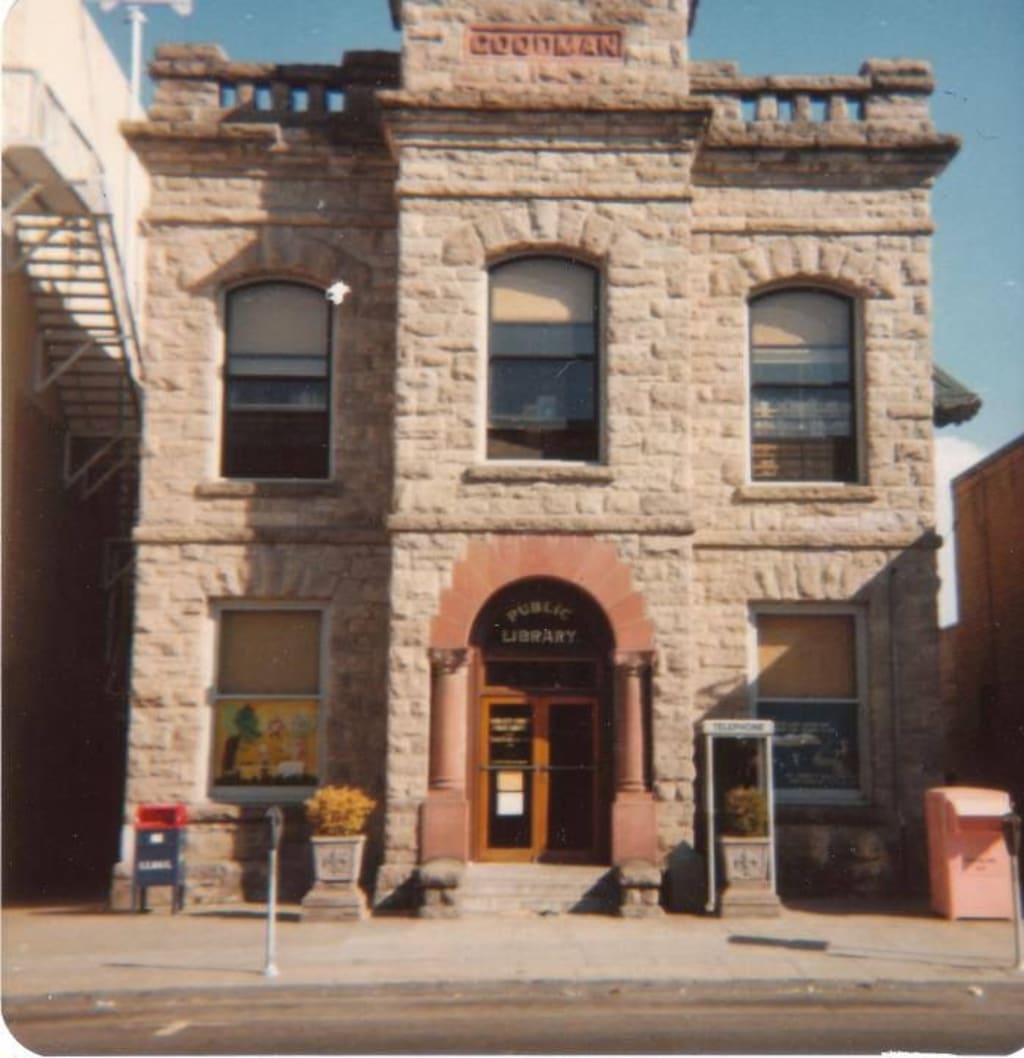
We moved from the Oakland Hills to St. Helena in the Napa Valley shortly before the end of the school year in first grade. Dad's decision to move us at that time led to a crisis between my oldest sister. About to graduate high school from Oakland Tech, a school Winnie loved and felt proud to attend, she felt betrayed and refused to go. She arranged to stay with a friend for those last weeks of school.
Winnie's open defiance infuriated Dad. None of us ever dared to go against his wishes before. I was too young to remember what he said to her, but I was certainly aware of their rift. I felt dismayed at Dad and sad for Winnie.
We did return for Winnie's graduation. The long rows of chairs filled with graduates in their robes and caps and their families set out on the lawn in front of the school impressed me.
Our first house in St. Helena was on Charter Oak Avenue, off Highway 128 south of downtown. Sylvia's new high school sat south of there across the highway. She was excited to start her freshman year.
Charter Oak was surrounded by fields and vineyards. In back of our house was the entrance to the basement. Its slanted wooden door made me think of the children's song called Playmate.
Playmate come out and play with me
And bring your dollies three,
Climb up my apple tree,
Look down my rain barrel,
Slide down my cellar door,
And we'll be jolly friends forever more
She couldn't come out and play,
It was a sunny day
With tearful eye, she breathed a sigh
And I could hear her say,
I'm sorry, playmate,
I cannot play with you
My dollies have the flu,
Ain't got no rain barrel,
Ain't got no cellar door
But we'll be jolly friends, forever more
As Christmas approached, my sisters and mom and I sat in the warm kitchen and crafted paper and ribbon ornaments. We looped construction paper strips and joined them together to make chains. We cut out pictures from magazines and wrapping paper and glued them on to shapes of cardboard and construction paper. We strung popcorn.
A Mexican family lived across the street in a big, ramshackle, rundown Victorian. We made friends with the teenage daughter, who spoke English, then with the rest of the family, who did not. I yearned for those days when I went over and was given freshly-made tortillas. Their smell was lovely, and they tasted so very good!
At the end of a vineyard across the street stood a rusted and holey trash can. In the fall the vintner had his workers burn leaves in the can. Oh, boy, did those smell wonderful!
My family took walks up the highway and over the bridge at Sulphur Creek and into downtown St. Helena. We all loved the old stone and brick buildings that line Main Street, and enjoyed looking in the shop windows, and exploring the adjacent neighborhoods.
St. Helena is picturesque. It was first settled in 1834 as part of the Vallejo Land Grant and founded in 1853, Later, it was incorporated. Sometime in the late nineteenth century saw the erection of the stone buildings that give Main Street a substantial air.
Before school started we moved to a house on Main Street. This was unfortunate for Sylvia because the house was at the other end of town from the high school and made for a very long walk. It was too far for me to walk to my elementary school near downtown, so Mom drove me.
Behind the houses on that side of Main Street a slope led to vineyards. Sometimes I was left home alone, and I felt terrified that a hobo would come up the back stairs and into the house.
The neighbors on one side slaughtered chickens and hung them upside down on the clothesline. The sight of the poor chickens' twitches while they hung by their feet and squawked until they died repulsed me.
We adopted a mutt. He was spotted and small, not too attractive, but I loved him. One day we heard a screeching of tires and a yelp and ran out to see what happened. It was Spot. Dad carried him to the car and rushed him to the vet. When he came home, Spot had casts on his right front leg and his left back leg. It's hard to imagine how that happened.
Spot was a trooper. He limped around and maneuvered those long splints so well he could run. He looked funny, but we admired him for his courage.
For Christmas I received a new bike, a beautiful blue one, like a grown up's bike. My feet barely reached the pedals. One day when I rode bikes with my playmates, we ventured down a steep hill that ended in a cul-de-sac. It wasn't fully paved, and there was only dirt and gravel at the bottom.
When I reached the bottom and started making the turn, my tires slipped and I fell off my bike. This resulted in a large and gushing would on my left knee.
My friends ran and got my mom, who carried me all the way up the hill and down the street to our house. When we got there, we saw that the workmen digging a wide trench had just opened it up in front of our driveway!
Mom didn't even have to say anything. By the time we came to the top of the driveway, the workmen had filled in the trench and laid plywood across it.
The doctor practiced downtown in one of the old stone buildings. He had to dig out gravel, some of which was embedded in my bone. I like to think I handled that bravely. To my later dismay, the doctor was wrong when he told me not to worry about my scar, that it would turn white and go away. Not so. I still have a large, ugly scar on my knee.
Next, I got an abscess in my molar. That also hurt a lot. I can still remember the strange-tasting fluid that spread out in my mouth when the dentist popped it.
In second grade I still felt shy as I had in Kindergarten and first grade. Learning to write seemed too difficult at first, but by third grade I could write in cursive.
Socially, I started to branch out. They playground was huge. A row of redwood trees grew along one side of the fence near the swings. Feeling their strength and mass and rough, hairy bark comforted me. As I watched the other children I grew bolder, and soon made friends.
My "boyfriend" was a small, red-headed boy named Peter. He seemed nicer than the other boys, more gentle. One day I walked home with him after school. Only, instead of going to his house, we stole into a neighbor's house and looked around. It was a big, beautiful house filled with china, vases, and knickknacks. Peter said he'd been in there millions of times before. This, however, did not reassure me and I felt extremely relieved when we left undetected.
One of the girls in our class was a wealthy girl from San Francisco. Her parents bought an old estate in the middle of the valley. She invited the whole class to her birthday party. We boarded a school bus. I sat next to Peter. Everyone talked and sang on the way. When we arrived at the estate we encountered a site most of us never saw before or again -- a vast lawn with table covered in cloths arranged with decorations and treats. A mass of balloons bobbed nearby.
Stella took me in to show me her room. It was like entering a dream, a princess's room in a castle. She led me up a stone staircase to her room filled with expensive toys. A music box intrigued me, as did her Madame Alexander dolls and frilly bedspread and pillow shams.
Despite her wealth and privilege, Stella was a modest girl. She never flaunted her lifestyle. Even when she showed me her room, she was matter-of-fact, just wanting to share it, not show off.
Stella would go on to be a debutante in San Francisco. I have no idea what happened in her life, nor she in mine.
Before third grade we moved to another house on Main Street, this one on the north end of downtown, and near my school. Many good things happened to me in that large, brown, shingled house. The best one was when I was introduced to Sylvia's boyfriend's little sister, Beverly.
Bevy was a year older than me, nine to my eight. She and I became fast friends, the first best friend, really my first true friend in my life. What a difference she made! We spent so much time together we pretended to be twins and took the names Jenny and Penny. I was Penny.
By coincidence, we both had almost life-size dolls. Mine was a boy named Peter. Hers, a girl named Mary. We made them twins, too, and spent many hours happily playing with them.
Bevy met me as she walked to school. She had a long walk. Her grandmother's house was almost as far up Main Street as our old house was. One day as we stood on a corner, she asked me how to spell "their." I told her to remember it starts like "the." I felt proud of myself for knowing how to teach her that trick.
At home I spent many hours on my own, as I would throughout my childhood. Mom almost always had a job at a hospital and worked the evening shift. This meant Dad cooked dinner, which meant steak, canned potatoes, and another canned vegetable.
Dad liked to save on pans, so instead of emptying out the contents of a can he put it in boiling water. I did that, too, until the advent of the microwave.
Sylvia used to say, "Dad's torturing us. He cooks those onions so slowly, he makes us wait for dinner." Well, I never bought that, but it was hard to wait when the onions smelled so good.
After dinner, Sylvia usually went off to her friends' houses or to evening activities at school. Dad sat on a folding chair in the dining room and I sat on the floor next to him. We watched good old shows together. Clem Kadiddlehopper was my favorite. Father Knows Best made me yearn for a family as warm and a father as involved as he was. The Honeymooners gave me some anxiety. The way the Kramdens lived in that tiny, dingy apartment made me nervous. I never wanted to live that way.
I developed a crush on Little Joe on Bonanza, as so many girls did. I loved Hoss for his sweet, almost bumbling personality. I didn't like Adam. He seemed too smooth to me.
Some shows were downright scary. Twilight Zone, of course. One episode in particular stayed with me as a nightmare scenario for years. Barbara Bel Geddes' character got lost in a rowboat in foggy weather. It terrified me to think of what that would be like.
Gunsmoke was not too scary. Mostly I got scared when James Arness had to face a gunfighter. I loved that Matt Dillon! Chester, too, I enjoyed. He was so lovable, with his loyalty and limp, and almost childlike simplicity.
Have Gun Will Travel was scarier. Any time Palladin met some scoundrel out in a desolate spot it made me very nervous.
Dad let me stay up pretty late. As he drank his red wine, he enjoyed my company, a service I was glad to provide. At nine o'clock he took me upstairs to my room, said goodnight, but never tucked me in like my mommy did.
My room was at the front of the house. A huge magnolia tree, with its large white, fragrant flowers stood outside. Sometimes when the wind blew, branches scratched at my window. I stared at my pink wallpaper. In the delicate roses I saw a lady's face. She frightened me.
One night my dream involved being a grown woman dressed in a ball gown. A sinister little man chased me up and down a wide marble staircase. I woke up in as much of a sweat as a young child can. I did not feel free to go to Dad, so I processed my fear on my own and finally fell back to sleep.
I had to process many things on my own during my childhood. The many intense experiences I had and my being on my own a lot forced me to find ways to cope and figure things out without too much help from grown ups. Moving so much challenged me to tolerate loneliness. Over time I found it so familiar it became a part of my identity in some ways.
It's not that I didn't yearn for companionship and guidance. It's not that I made no friends. It's not that I didn't learn how to relate to people. It's that being the new kid so much, learning about differences in expectations, habits, and lifestyles in the plethora of places we lived, having to leave people and places behind, constantly adjusting and adapting, left deep imprints on me.
The most painful aspect of growing up the way I did was that sense of not belonging anywhere, of being adrift, of being a stranger over and over again.
I imagine that those of you who experienced too much moving experienced some of the same things. For me I simply got tired. Adolescence was especially difficult. Pried away from my friends so often was so painful I once moved away without telling anyone I was leaving! The girl who became my oldest friend, whom I have known for fifty-five years, tracked me down, somehow. Another friend I lost touch with in sixth grade I met again in a different school in tenth grade. Some friends tracked me down or I tracked them down through Facebook years later.
About the Creator
Caroni Lombard
As a child my family moved often. In my story, I share that experience; what it was like and how we coped.
But my story is not just for those who share my experience of growing up in a highly mobile family. It's for anyone who's human.
Keep reading
More stories from Caroni Lombard and writers in Families and other communities.
Following My Father
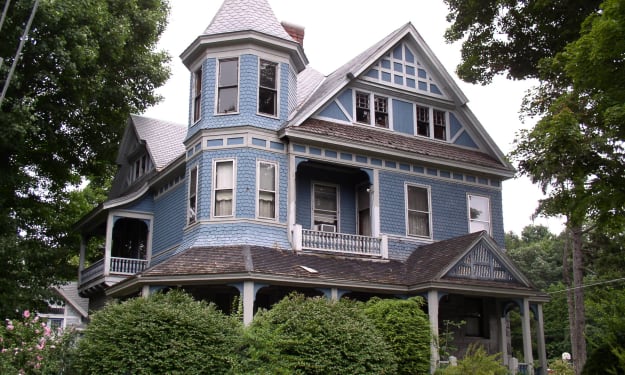
The old brown-shingled house on Main Street had some fascinating features. The dingy laundry room at the back held a wringer washing machine. I loved to watch the sudsy water swish the clothes around. When the clothes were clean and rinsed, I pushed them through the wringer, then pulled them out the other side. Mom and I shook them out and loaded them into a basket to take outside.
By Caroni Lombard5 years ago in Families
Wise~Guys
— Look Behind what's in Front of You ~ Make Good Choices — Hey, So how you Doin'..! Made~Men — Mobster Movies romanticise a distinctive, elegant appearance, impeccable attire style, along with the 'Families' expressive lingo. Making their 'Bones' gave them Panache — with vintage fedoras, tailored pin-striped suits, mirror-polished wing-tip shoes adorned with tassels; with their 'Gun Moll' gorgeous dates on their arms.
By Jay Kantor17 days ago in Families
A Dart at Dusk
Seconds ago, the sullen sun set on the two of us… my exuberant furry companion and me. A fresh breeze embraces us, delivering welcome relief from the day’s oppressive heat. His typical stumbling and staggering along — apace with a sloth — has turned into trip-trapping, high-stepping, almost skipping along.
By Angie the Archivist 📚🪶4 days ago in Petlife



Comments
There are no comments for this story
Be the first to respond and start the conversation.