
Following My Father
A memoir of a child who lived many places

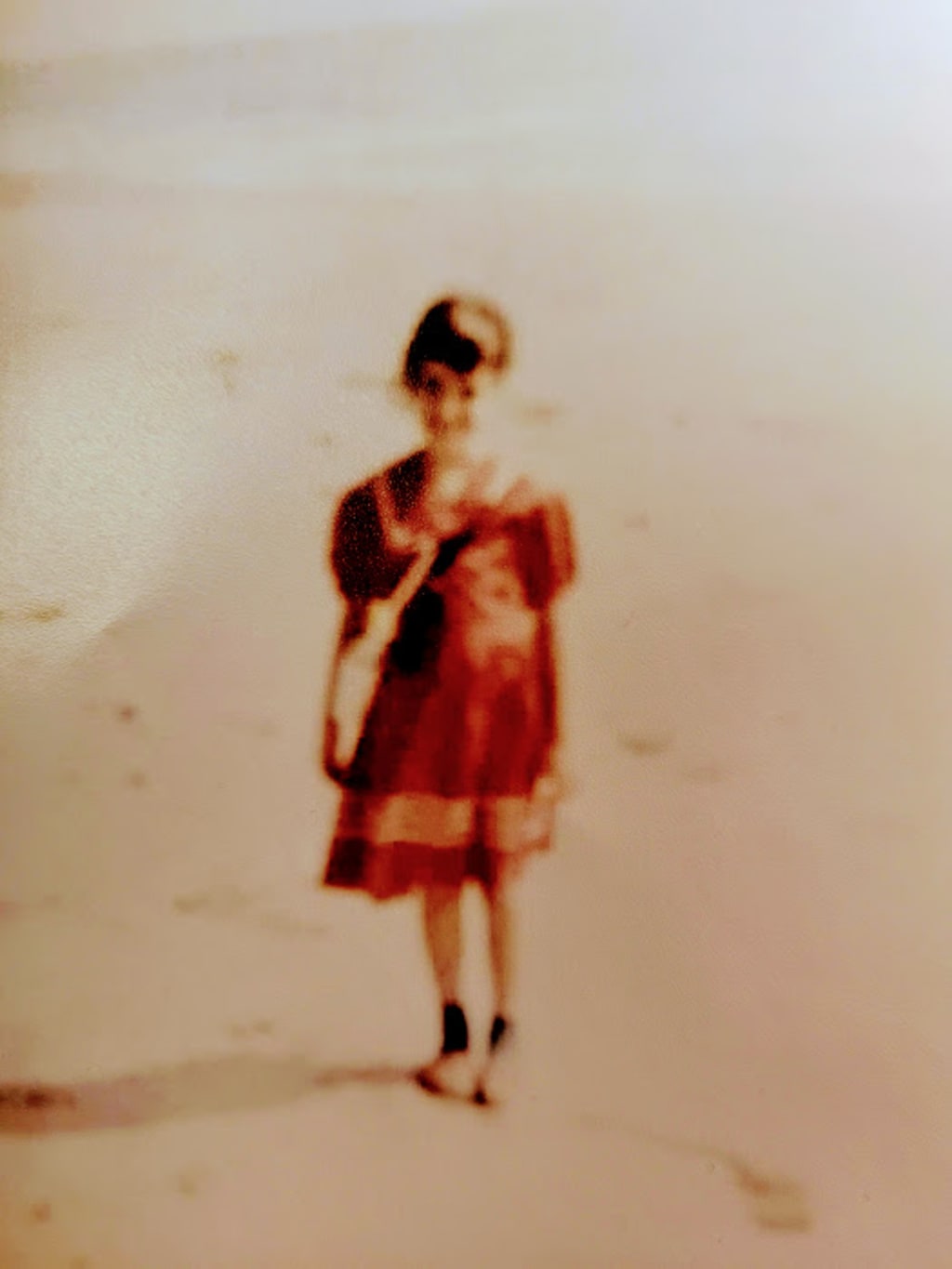
"We are moving in two weeks. Start packing."
"Where are we going this time, Mom?"
"Back to California. Daddy starts a new job out there in three weeks."
This exchange happened many times before I was born and before I can remember. My two older sisters lived in even more places than I did and once left their new school in Santa Barbara, started another in Solvang, and returned to the first school after two weeks. I never had it that bad. The shortest time I was in new schools was six weeks.
Mom might have said, "Start packing and cleaning," so I learned when I was old enough to remember. We never lived in as clean a place as it was when we left it. After my sisters left home Mom and I scrubbed fastidiously every surface, using a toothbrush and scouring powder in crevasses.
In my first memory I lay in a large bouncy black stroller by a hedge. Ladies peered down and told Mom what a beautiful baby I was. Years later my therapist told me it was impossible, that babies don't remember that young. I beg to differ.
He really bristled when I said I remembered leaving my home with the other angels to find myself a mortal baby in Toronto. Ha!
As a small child I remembered it, though. My family was by no means religious enough to provide me with an image of angels.
Mom was a frustrated Protestant, though. She taught me that gruesome prayer "Now I lay me down to sleep. I pray the Lord my soul to keep. If I should die before I wake, I pray the Lord my soul to keep."
Despite Dad's atheism, he consented to try various churches, and I attended Sunday school for short periods. Our bouts of attendance never lasted long , so I was spared those confusing classes looking at Bible story books and not knowing what the teacher was talking about.
The first church I remember was a large Spanish-style one in Santa Barbara where we went to the Christmas Eve service. I was three and we had just moved there from Hastings-on-Hudson. Rarely, if ever, in a large church before, I felt awed and somewhat intimidated by all the people dressed in fine clothing. "You have to sit still and be very quiet," I was told.
Our first Christmas in St. Helena we ventured to the Episcopal church and enjoyed a candlelight service in that gorgeous old stone building. For a while we attended the First Presbyterian, a classic white clapboard building with a steeple. I was seven by then and truly bristled at having to look at those big Bible story books as I sat among four and five year old's.
We attended churches of various denominations after that. Next. we went to a small Presbyterian one at the top of a hill in Marin County. We all liked the minister, who left the church in St. Helena for that one. A year or two later he killed himself, leaving behind a wife and young children. The shock and dismay was enough to put my parents off churches for several years after that.
Mostly, we listened to concerts in the lovely old churches or the Jewish Synagogue in San Francisco when we lived there. In later years, my parents found a compatible congregation in the Unitarian Church in Palo Alto. My mother was able to worship and the intellectualism of the services appealed to Dad.
Ironically, in sixth grade in Palo Alto I envied my friends for their religious beliefs. My friend Heidi attended the Easter service at the Episcopal church. We got all dressed up, and I went with her. Mystified by the service, I enjoyed it, anyway.
But, I didn't set out to talk about religion or the churches we attended. Writing a memoir tends to cause me to free associate, so one thing leads to another, one memory to others.
I told you that my sisters lived in more places than I did. I'm actually not so sure about that. After they left home my parents did not exactly slow down. We did, though, live in two places for two years after Winnie and Sylvia left when I was nine. That only happened twice for Sylvia and once for Winnie.
To give you the flavor of where my sisters lived before I was born and before I remember, I will run it down for you. Winnie was born in Berkeley, California. From there the young family moved to New Mexico, where they lived in a quonset hut on a dusty lot in the desert. Dad taught engineering at the New Mexico School of Mines, where he served as a civilian employee instead of fighting in World War II.
Back in California when Winnie was seven, they moved to Palo Alto where Sylvia was born. My parents bought the only house they ever owned, a lovely brick and wood split-level in an old neighborhood near downtown. We drove by when my parents and I lived in Palo Alto later on.
From there they returned to where my parents hailed from, the upper Midwest and the east coast. Dad grew up in Chicago during the era of prohibition and Al Capone. Mom grew up in a picturesque converted dairy in a small town in New Jersey called New Milford. She lived in the same house all her life until she went off to nursing school in New York.
Mom never returned to live in New Milford, instead she sailed through the Panama Canal on a steamer by herself. On she ventured to visit Pasadena to visit her aunt. There she met my father while visiting his aunt. He was just finishing up his master's degree in engineering at the California School of Technology. My parents married shortly after, to the dismay of his parents.
In those days, nurses were considered the equivalent of maids, too low a class for Dad, they felt. Dad defended Mom valiantly.
Mom's taste for adventure must have been somewhat satisfied by my parents' nomadic lifestyle. We certainly had our adventures.
I don't know all the places my sisters lived before Dad got a job in New York City. A portrait of Mom and my sisters shows Winnie with her hair in braids that curl up to make loops at the sides of her head. Sweet.
Dad's firm sent him to Venezuela to work with other engineers on a dam at the confluence of the Orinoco and Caroni Rivers. They lived in a camp, very rustic. He did not intend to have Mom and my sisters join him, but join him they did.
My sisters loved it. Winnie told stories of exploring the jungle near the camp and finding humongous butterflies and other insects. She became an amateur scientist during her childhood and teen years. Sylvia, too enjoyed the camp. As a tomboy and loved the freedom of running around.
Their stay came to an abrupt and tragic halt. One day Mom rang the dinner gong, a large iron pipe suspended from a beam on the porch of the dining hall. Sylvia inadvertently distracted her and as Mom looked down the pipe hit her on the forehead. After that she exhibited bizarre behavior, such as taking her clothes off and doing cartwheels on the grounds. Dad rushed her to a sanitarium in Caracas, and found an apartment nearby where he and my sisters lived for the next two years while Mom recovered.
Winnie was almost nine and Sylvia almost five when they arrived in Venezuela. In Caracas Dad enrolled them in the British school. The curriculum was taught in both Spanish and English, so they learned some Spanish there. They picked up more from their friends.
Dad and my sisters lived in an apartment on a hill overlooking the city. Dad hired a housekeeper to take care of Sylvia and Winnie and to clean and cook their meals. Her name was Tianita. Dad used to talk about her being a character, a hot-blooded, emotional type. One might speculate the relationship between Dad and Tianita. Naturally, he never talked about that!
Caracas's warring factions meant that gunfire resounded not infrequently nearby. Tianita would shriek and dive under a bed. My sisters followed.
Dad took Winnie and Sylvia hiking often. One day they came upon a small town in the middle of the jungle. It was an enclave of Germans, Nazis who escaped persecution at the end of the war.
Mom's amnesia prevented her from recognizing Dad for most of the two years she was in the sanitarium. When he visited, a nurse brought Mom out to a bench in the grounds. Mom asked always, "Who is that man?" It must have been frightening for her and sad for Dad.
In the sanitarium Mom started chain smoking and became so depressed that she was given shock treatments. Those, and her treatment with a psychiatrist, pulled her through. She never exhibited depression after that. She never smoked after that. She was a woman of good spirits, goodwill, and stamina.
After Mom's release from the sanitarium she joined the family at the apartment. She became pregnant with me and they decided to return to North America. Dad got a job in Toronto, Canada, where I was born.
The family's adventures in Venezuela were not over. Dad sent Mom and my sisters ahead while he figured out how to get out of the country. He owed the sanitarium lots of money and was prevented from leaving because of it. His solution was to engage in a suspenseful act of intrigue.
He snuck into the relevant office and forged the necessary papers. If you knew my Dad, you would never believe he did that. Dad was law-abiding, honest, quiet, and not a risk-taker in general.
He made it to Toronto in time for my birth, but my parents' suspense was not over yet. At two months old I nearly died from a sinus infection, of all things. It must have gone septic. In the emergency room as Mom sat there with me a doctor happened to pass through and came over to check me. He rushed me into a room. My heartbeat was dangerously fast.
Placed in an incubator, I was in the hospital for two months. Imagine the anguish of parents unable to see their very sick baby except through a window into pediatric intensive care.
Sylvia always maintained -- one of her many grievances -- that when they brought me home they gave her a doll and effectively said, "This baby is ours, the doll is yours. Let's keep it that way."
It does not sound like my parents. Even though they neglected many of our needs and Mom was sometimes less than sensitive, they were kind people who loved us. But Sylvia always maintained that her life was difficult because she was the middle child, and that she was ignored a lot. Maybe so. I don't really know. Given her criticalness and quickness to take offense, maybe not.
For example, she used to point to a picture of herself in Caracas. "Look how mussed up my hair was. Look at my shabby dress." Well, if she were the tomboy she claimed to be, it seems to me it would be difficult for her not to look that way.
Throughout my childhood and teen years Sylvia often expressed disapproval of the way my parents brought me up. "You don't discipline her enough. She needs structure and chores. You are spoiling her," was her refrain. This she said only to Mom for fear of calling forth Dad's wrath, and she would have.
Poor Sylvia. My Dad did criticize her quite mercilessly. Not directly to her, but to the rest of us when she was not around. "That Sylvia is a mercenary," he would say. I was too young to know why he said that. Maybe she asked for money. Maybe she said things like, "I'll do it, but only if you pay me."
That's the one thing I did not like about my dad. I hated when he talked about people behind their backs. It made me wonder if he said bad things about me behind mine. He criticized Sylvia in that manner so much that I became afraid he would reject me should I do something he did not like.
It got so bad that when I was ten and given a transistor radio I was afraid to listen to rock and roll instead of classical music for fear Dad would reject me.
Dad was, in fact, extremely accepting of me. My parents treated me differently from my sisters. When Winnie and Sylvia were young my parents demanded behaviors I was never asked to do. I suppose that included keeping their rooms clean, doing well in school... I don't know what all else.
With me my parents were lenient, maybe too lenient. My rooms were always messy because I would look at the mess and have no clue as to how to clean it. As a teenager I was allowed to get away with things my sisters wouldn't have dreamed of.
For example, at fourteen my sixteen-year-old boyfriend and I were allowed to take the bus to San Francisco to watch the Chinese New Year parade. Afterwards, we spent the night alone at the hippie pad of his parents' friends. There was no sex involved. I was too young and the idea scared me. But John and I slept on a mattress on the floor in an alcove formed by long curtains made from cotton Indian bedspreads.
There was one time when I was ten that my parents didn't so much allow me to do something most parents wouldn't, but made me do it. Mom dropped my friend and me off at the Cliff House in San Francisco to go ice skating. Afterwards, we wanted to take the bus home, but found we had too little money left.
There were miles to walk back to Pacific Heights. Halfway there we were so tired we stopped at a corner store to ask if we could use the phone. My parents refused to pick us up, and impatiently told us to walk the rest of the way.
This angered me, but my parents did not allow my sisters and me to openly express our anger. As I did throughout my childhood, I internalized it, and suffered from depression as a result.
The first time I expressed anger at my parents was when I was thirteen. My parents and I lived in Los Angeles at the time. My bedroom was at the side of the house with windows facing the driveway. A door led to a hallway with a door to outside.
My parents blocked the hallway with boxes so I couldn't get out that way. They acted like they didn't trust me, which both angered me and hurt my feelings.
My anger so scared my mother that she decided I was mentally ill and needed counseling. When the counseling center called and asked for me I told the woman I wasn't home.
When we lived there my mother got angry at other things I did, the first time she ever did. In my bedroom one day my mother followed me in and seemed about to hit me. In response I kicked at her. She never approached me in anger again.
That was the only time my parents ever tried to hurt any of us physically. My parents had loud arguments at times, but they never got physical. Only twice did Dad become so angry at Mom that he threatened violence. The first time was in San Francisco. I heard them from the kitchen. Mom said, "Albert, put that knife down!"
Needless to say, this scared me to death. I was effectively an only child by then. Winnie worked in downtown San Francisco, and Sylvia was married with a baby at sixteen. So, I was alone on the other end of the apartment, with no one to intervene or reassure me.
The next time my parents and I lived in a tiny apartment at the back of a building on Sutter Street. I was fifteen. Dad went into the tiny foyer, picked up a small table, and threw it on the floor.
When I was too small to remember my family lived in several towns and cities in the upper Midwest. The ones they talked about were Evanston, Illinois, and somewhere in Wisconsin.
I was two when we moved to Hastings-on-Hudson, not far from New York City. Our apartment on a high floor looked out on the river. Dad left for Argentina not long after.
His firm sent him there to work on a project. He loved Buenos Aires, the city of good air. He wrote many letters about it.
When he was away, my nine-year-old sister Sylvia and I danced around the living room in our apartment high above Hastings-on-Hudson in the evenings. After he returned, we added castanets, a skinny pipe with rounded bowl, and a flouncy red and white polka dot dress to our repertoire. Sylvia moved his llama-hair poncho from the couch for our performances. Dad said it kept him warm as he and the other engineers rode their horses up the Andes Mountains to measure seismic activity. We didn’t want to muss it up when we jumped over the back of the couch.
Melodies from Carousel, Swan Lake, and Porgy and Bess accompanied our leaps and twirls, pretty sophisticated taste for a two-year-old, but I loved that music. Our parents played musicals and classical music exclusively – no kiddie ditties for me.
Winnie spent evenings in her room where she studied, admired her new microscope, read, did homework, or fastidiously arranged the delicate china figurines I was forbidden to touch. Once in a while one of us ventured to the kitchen to ask Mom what was for dinner. Whatever time we finally ate dinner in our house, it always felt too late for young children.
It wasn’t easy for Mom to put in her shifts at the hospital, care for me, make sure my sisters made it to school on time, do the shopping, housework, and all the other Mom things she did; but it was a bit easier when Dad was away because she didn’t need to spend time paying attention to him. Not that she minded. She missed Dad, but his trips meant she had a little more time to spread out her activities.
“A letter came from Daddy!”
“What does it say?” we chorused.
“Sit down, I’ll read it to you.”
“Dear Jeannie,
The expedition is going well. Soon we will begin the climb back down the mountain. It is just beautiful here! The snow-packed mountains in the distance sparkle, the air is thin and fresh. Our horses are well-behaved, trained by the gauchos, some of whom accompany us. At night the men sing for us around the campfire while the cook prepares the delicious food we are hungry for by then, I can tell you that. We eat under a dark, dark sky that soars overhead. Never have I seen stars so thick. I wish you were here to share the sight with me.
Llama wool is wonderfully warm. The poncho keeps my body heat in as a layer of insulation from the cold. And it is cold up here! But the weather has been calm and dry, although windy here on the slopes.
Buenos Aires is quite a city, with its many parks, wide boulevards, fountains, and beautiful architecture. When we return, some of us plan to go to the opera at Teatro Colon. Quite a sophisticated aim for this bunch of adventurers!
My Spanish is much improved from talking to the men. They are pleased to teach me words I don’t know, which are many, and just listening to them helps with my pronunciation.
Say hello to the girls for me. I miss you all and will be back in New York in three weeks time.
Your loving husband,
Albert
I will end this chapter of our story here. In my next post I will talk about moving to California and the many places we lived there. I hope you have enjoyed my story so far, and that those of you who also moved a lot are comforted to see that you were not alone in that.
Until next time,
Caroni
About the Creator
Caroni Lombard
As a child my family moved often. In my story, I share that experience; what it was like and how we coped.
But my story is not just for those who share my experience of growing up in a highly mobile family. It's for anyone who's human.
Keep reading
More stories from Caroni Lombard and writers in Families and other communities.
Wise~Guys
— Look Behind what's in Front of You ~ Make Good Choices — Hey, So how you Doin'..! Made~Men — Mobster Movies romanticise a distinctive, elegant appearance, impeccable attire style, along with the 'Families' expressive lingo. Making their 'Bones' gave them Panache — with vintage fedoras, tailored pin-striped suits, mirror-polished wing-tip shoes adorned with tassels; with their 'Gun Moll' gorgeous dates on their arms.
By Jay Kantor16 days ago in Families



Comments
There are no comments for this story
Be the first to respond and start the conversation.