
Find the Poison
How to recognize the toxic people in our lives - Part one: Family
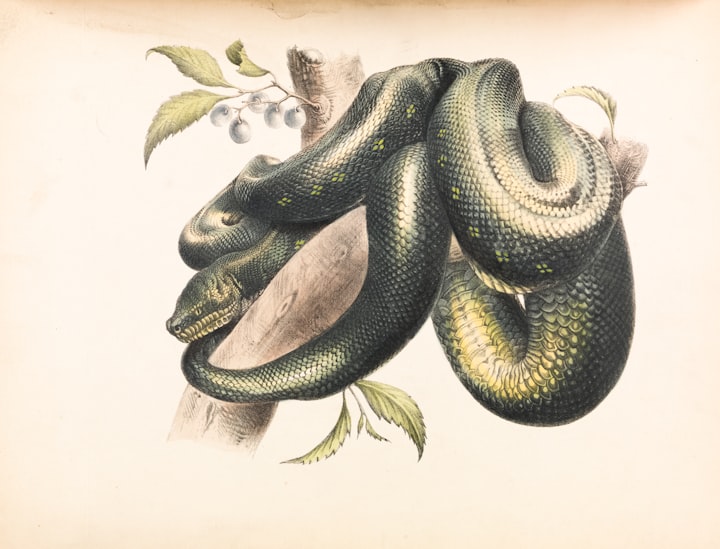
If you were bitten by a snake, what would be the first reaction? Rush to A&E and hope the doctors and nurses know exactly which snake bit you and exactly which anti-venom to use.
What if you knew the snake, knew its shape, colour, and breed?
What if the snake was a pet, a cherished companion that turned on you?
You could tell the doctors straight away - or even better - perform a Hollywood stunt and suck that poison out right from your wound and bloodstream? Life saved, yes? (even though it only works in films)
This is what it is like to have a toxic person in your life. They may mean no harm, but something scares them and they bite. They might bite several times and slowly poison you, or they could just give one final bite which leaves a nasty scar that never tans. Or indeed, it can kill.
The purpose of this article is to help identify these people and avoid the bites altogether.
But why read this advice from me? I am not a Doctor or a Psychiatrist, I am simply someone who survived the poison.
I will discuss some of the main toxic elements in our lives:
- Toxic Family
- Toxic Partners
- Toxic Work
- Toxic Friends
Luckily, the rule of thumb that applies to all is very simple: If any of these elements undermine your self-worth - They. Are. Toxic.
Let's look at Family - something that we cannot choose, and simply have to endure until we leave or forgive. In an ideal world, your family is there to protect you, to guide you. To give you the foundations of love and ethics. To serve as the example of how to lead in this society. Unfortunately, sometimes our dearest and nearest have their own trauma that simply distorts their perspective of right and wrong.
In no circumstances, it is acceptable or normal for a parent to beat their child. To call them names. To abandon them. To emotionally blackmail them. To force them to parent any siblings. To prevent them from having an education. No parent should ever give their child the responsibilities of an adult. This robs them of their childhood, of those important years of freedom and joy that are key to being a mentally healthy adult.

Although it may sound obvious, somewhere in the world, someone needs to hear this.
I was 15 when I found out that not everyone gets beaten up. I found out that not everyone with divorced parents has one of their guardians shouting and emotionally blackmail them into not doing normal childhood activities. In my world that was normal. "you can't go to the birthday party, it's my weekend". "You can't join the scouts, it's my weekend" "You can't join the volleyball club, it's my weekend". And possibly the worst "you have to choose, stay on our holiday or go and see your newborn sister and don't bother coming back (was only 2h away by car)" I was nine, how could I ever make that decision? Now it's something I regret. And to make things worse, not only were they restricting my life, but when I was over at their house, there was no actual socializing together, no actual time with my parent, too focused on playing games or watching TV - I was just given chores and forced to parent my younger sibling. I was a free nanny/maid for the weekend, nothing more.
Eventually, you stop getting invited to birthday parties or weekend activities. You become more isolated from your peers. All of these toxic bites you are receiving behind closed doors, which you feel you can't speak of, along with the normal puberty woes really affect your self-confidence and idea of self-worth.
Another element of abuse is having your parent criticize your looks, your weight. I was forced into extreme exercise and strict diets from the age of 10. In my parent's eyes, I was fat. Never once did I hear him call me pretty or beautiful. I would hear him say those things to other family members but not his own child. I grew up believing I was fat and ugly, and this severely impacted my love life, even as an adult. Although I have come far, when I am in a vulnerable position, those insecurities still show their ugly heads once in a while. And then I remember looking back on photos and seeing that I was a bit plump, like most children, but not fat. And remind myself: This, on this photo, is a FACT. I was a normal child. Their twisted perspective made them see me as fat. The flaw is in THEM. That negative thought is in their mind, not mine. Even if I was fat, so what? As long as I was happy and healthy, why did they care?
And this was only the verbal abuse.

Physical abuse is definitely something that you are terrified of even mentioning. Some part of your brain is telling you that there will be retribution if you say a word to anyone. And the common trait of narcissistic abusers is that the reason for the attack is always something stupid.
I was a model child, good grades, didn't misbehave. Once got beaten up because I tidied my sister's room. One time it was because my sibling fell down 3 steps whilst on holiday - my other sibling and I were told to tidy up the holiday home, do the dishes and babysit our sister whilst the adults went out for drinks. For two seconds we looked away and she fell 3 steps (yes, three steps, not 3 stairs) from the porch to the sand. There were a lot of tears, but no blood or bruises, a bump on her head was the most. Yes it was scary and she was taken to the hospital for extra checks - but not before my sibling and I were beaten up. I was 11.
And sometimes it's not even the trauma of receiving the beating, sometimes watching it is enough to scar you. You feel that you should help the others, but the fear is too great, so you freeze - and then the guilt destroys you after.
You grow up believing you are not enough, that it's impossible for someone to love you.
So how do we deal with this? My main advice is: Talk.
Talk with friends, with a teacher, with a psychiatrist. Talk with someone who you think will listen. It sounds scary, and in certain scenarios, it can lead to some very drastic results (for example, a parent could lose the right to see you). But if they treat you in such a way, they are not fit for parenting. They are the adult, you are the child. It is their responsibility to behave as one, whether they have trauma in their own childhood or not, blaming one's cruelty on a bad childhood is a poor excuse.
Talking will reinforce the truth that this is NOT normal. Even if you speak with just a close friend, who might not be able to help directly, hearing those words will confirm - you are right to stand up against this treatment. You are right to be angry at these circumstances. And slowly your perspective of life and the world will tune in with most people's ideals - this is not normal, I need to do something about it. And then you might have the strength to talk to a teacher or your friend's parents. Just keep talking and things will get better.
Growing up I was also told "they love you in their own way" If that is their version of love, then I don't want it. And neither should you.
So let's say you are actually 30, like me, and not a teenager? What if all of this is in your past? Then Talk.

It's the same solution - talk to friends, loved ones. Having that confirmation "what you endured isn't normal, you deserved so much more. You are brave, you are kind, and you are so much better than those who hurt you." Seek help, especially through therapy. It works wonders, and you will feel a weight come off your shoulders.
Another option is to confront your problematic parent. Maybe they changed, maybe they haven't. Maybe they already regret their actions and want to discuss the matter and possibly reconcile. Maybe they are too narcissistic to recognize their wrongdoings.
My problem parent is unable to see their wrongdoings. And he kept insisting, asking why I was so detached, why I didn't bother to keep in touch, why had never grown a relationship with them. They insisted on asking me these questions in a true narcissistic fashion, in an accusatory way, as if I the bad guy. Until one day I couldn't take it anymore and let it all out. I said absolutely everything that made me suffer. I brought up all of the examples of things he did. Half of them he didn't remember, the other half he tried to justify with his own childhood traumas. And I said exactly what I state in this article. YOU were the adult - I was the child. It was your job to be a good parent.
Eventually, he cried and gave half-assed apologies. In the end, all that pent-up anger fizzled into pity. I saw an old man, unable to see his ways, no matter how much you point them, and suffering from the consequences. I did not forgive him. Maybe you can forgive your problem parent, I couldn't find it in me to do it. He asked if we could start anew and I agreed - His efforts only lasted a couple of months and our relationship remained as estranged as always.
So if you face your problem parent, just remember - some people won't change - and this step is not necessarily to get an apology or make them change, to bring you inner peace. Face the bully of your childhood and see them for what they is - a ball of fear and sadness, unable to deal with being confronted.
On the other hand, if you are not ready to talk, to friends, other family members, etc, then don't despair - we all take time to be ready. Read a lot, watch a lot of videos. Listen to stories of those who went through the same, and how they overcame this poison. These testimonials are key - there is light at the end of a very scary tunnel.
And I have only mentioned a few examples of toxicity. Some may present themselves as:
- Emotional Blackmail;
- Name Calling;
- Physical Abuse;
- Forcing Adult Responsibilities onto a Child;
- Overbearing and over-controlling;
- Prejudice against gender or sexual preferences;
- Excessive Criticism;
- Abandonment;
And these may even still occur even after we become adults.
Anything that undermines your self-worth - anything that makes you think "I am less than, I am not worthy, I don't deserve happiness" is Poison. Suck it out.
My solution is TALK - reach for help and help will come. Even from unexpected places. Believe me, you are not alone in this. All of the poison survivers stand with you.

About the Creator
Keep reading
More stories from C. S. Vinson and writers in Families and other communities.
Find the Poison
Welcome back to part two of finding the Poison in our lives and how to get rid of it. I hope part one wasn't too gloomy - Unfortunately, these are dark themes and can be a bit heavy. By digging deep into these issues we will be able to recognize the problem, expel it and enhance our lives. After all, we are only here once (or more, according to some).
By C. S. Vinson5 years ago in Humans



Comments
There are no comments for this story
Be the first to respond and start the conversation.