
Family Is Complicated
Love, Silence, and the People Who Know Us Before We Know Ourselves

No one tells you that family is the first place you learn contradiction.
They tell you family is love. Blood. Home. They don’t tell you it is also silence that stretches for years, arguments that begin over nothing and end with everything, and love that sometimes arrives disguised as disappointment.
I learned early that family is complicated the way weather is complicated—unpredictable, powerful, capable of both shelter and storm.
In our house, affection was quiet. It lived in practical things. A plate pushed toward you without asking. A light left on at night. A door that stayed unlocked even after trust had been tested too many times. We didn’t say “I love you” often. We said, “Did you eat?” or “Be careful.” We said, “Call when you get there.” That was our language.
But love spoken in code is easy to misread.
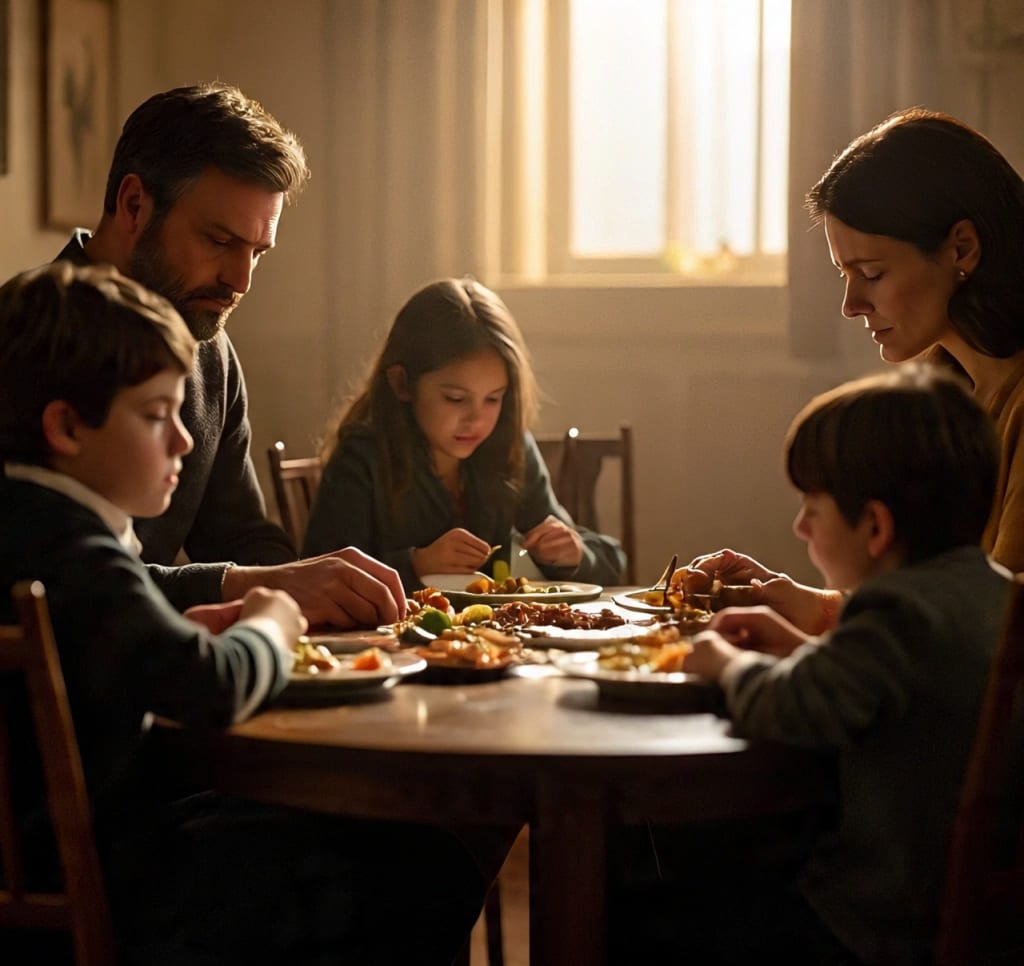
I remember one dinner where everyone was present but no one was together. My father stared at the television, my mother counted salt with shaking fingers, my sibling scrolled through a phone like it was a life raft. I spoke about my day, my dreams, my plans—words spilling out, hopeful, unguarded. No one interrupted me. No one responded either. Silence swallowed my courage whole.
Later that night, I wondered if I was invisible or simply misunderstood.
That’s the thing about family: they know the worst versions of you before you’ve learned how to hide them. They remember your failures in high definition. They don’t forget who you were when you were still becoming. Sometimes they trap you there without meaning to.
We hurt each other most easily because we expect the most. We forgive strangers faster than siblings. We choose politeness over honesty with coworkers but offer raw, unfiltered truth to the people who can wound us deepest.
There were seasons when we were close—laughter spilling across rooms, inside jokes passed like heirlooms. And seasons when distance grew in inches until it became miles. We learned how to coexist without understanding, how to speak without listening, how to love without agreeing.
I used to think something was wrong with us.
Then I grew older and started listening to other people’s stories. Different countries. Different cultures. Same pauses. Same unfinished sentences. Same soft confessions spoken only after midnight.
“My parents don’t understand me.” “My sibling hasn’t spoken to me in years.” “We love each other, but we don’t know how to be kind.”
Across oceans, family carried the same weight.
What surprised me most was realizing how often conflict came from fear. Fear of losing control. Fear of being irrelevant. Fear of admitting mistakes. Fear dressed up as anger. Fear that said, If I don’t hold on tightly, everything will fall apart.
I saw it in my father’s silence—it was never indifference, it was exhaustion. In my mother’s criticism—it was worry sharpened by love. In my sibling’s distance—it was self-protection, not rejection.
Understanding didn’t fix everything, but it softened the edges.
One day, years later, we sat together again—older, quieter, a little worn. No dramatic apology, no cinematic reconciliation. Just a conversation that moved carefully, like walking on thin ice. We spoke about small things at first. The weather. Work. A neighbor’s dog.
Then someone laughed. It surprised us all.
That laugh didn’t erase the past. It didn’t undo the hurt or rewrite history. But it reminded us that connection doesn’t require perfection—only presence.
Family isn’t a straight line. It’s a loop. You leave, you return. You break, you mend. Sometimes you stand too close and sometimes too far. And sometimes the bravest thing you do is stay in the room even when it’s uncomfortable.
I no longer expect my family to be my everything. That expectation was too heavy for all of us. Instead, I allow them to be human—flawed, loving, contradictory. Just like me.
Family is complicated because love is complicated. Because people are complicated. Because history doesn’t disappear just because we want peace.
But complicated doesn’t mean broken.
It means layered. It means unfinished. It means there is always another conversation waiting, another chance to understand, another moment where silence can turn into something softer.
Family is complicated—and still, somehow, it is where we learn how to belong.
About the Creator
Jhon smith
Welcome to my little corner of the internet, where words come alive
Keep reading
More stories from Jhon smith and writers in Families and other communities.
Our Old Blue Blanket
The blanket wasn’t much to look at. It was the kind of faded blue that came from years of sun, washing machines, and being dragged around by small hands that didn’t yet know what “delicate” meant. Its edges were frayed. The fabric had thinned in the middle, worn down from the hundreds of nights somebody pulled it close. But in our family, that old blue blanket held a place no expensive quilt or store-bought comforter ever could.
By Jhon smith4 months ago in Families
How Much Does Memory Care Cost in the U.S.? Average Monthly Prices Explained
With the onset of memory loss in a loved one as a result of some conditions such as dementia or Alzheimer disease, families tend to start to seek specialized care services. The first question that one would want to have answered when undergoing this process is very basic, yet significant, and that is how much is the cost of memory care?
By Patrica Overton6 days ago in Families
Should Children ALWAYS listen to Adults?
Many people believe children should always listen to adults because adults have more experience and knowledge about life. Adults have faced many situations and learned from their mistakes over time. Because of this, they often try to guide children and help them avoid problems. However, others argue that adults are not always right and that children should also learn to think for themselves. Children are individuals with their own thoughts and ideas, and sometimes they may see things differently from adults. This text will explore both sides of the argument to understand whether children should always listen to adults.
By *+*+*~Teja~*+*+*4 days ago in Families


Comments
There are no comments for this story
Be the first to respond and start the conversation.