
Exploring the Spectrum of Parenting Styles
Nurturing Healthy Development in Children
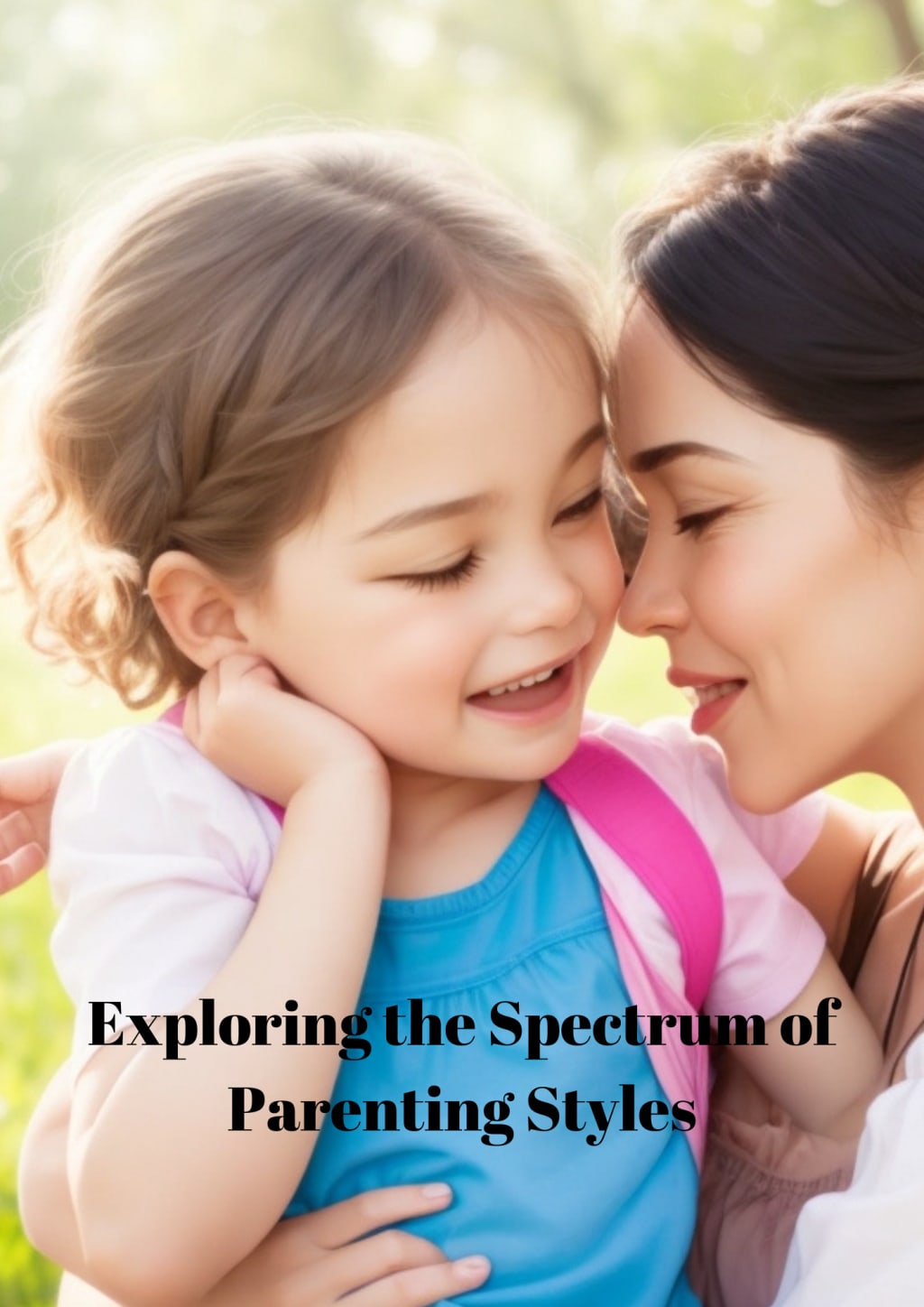
Parenting is an intricate journey that shapes the lives of our children, impacting their personalities, behaviors, and overall well-being. Theories of parenting have identified four main styles: Authoritarian, Permissive, Authoritative, and Neglectful. Each style encompasses different levels of control, responsiveness, and emotional warmth. To better understand the outcomes of growing up with parents from different ends of the parenting spectrum, let's delve into the lives of four hypothetical children.
1. The Authoritarian Parenting Style
While they love their child deeply, they believe that strict rules and obedience are essential for her to become well-behaved and fit into society. In this environment, the child learns to suppress her emotions and dutifully follow his parents' commands to gain their love and approval.
However, this rigid upbringing deprives him of the opportunity to explore her own interests and desires.
As he grows into adulthood, The child struggles to identify his true aspirations, potentially leading to inner dissatisfaction despite seeming perfection to others.
2. The Permissive Parenting Style
When the parents practice permissive parenting, showering the child with love and granting him complete freedom without setting any boundaries or rules.
As a result, the child grows up feeling entitled and accustomed to getting everything he desires. His parents' lack of control and discipline prevents him from learning conflict resolution and emotional regulation skills.
Consequently, he becomes inconsiderate and unable to handle failures gracefully, often pushing the boundaries without understanding limits.
3. The Authoritative Parenting Style
When parents adopt an authoritative parenting style. They respect his needs and encourage independence while providing certain limits to guide his behavior.
The child is allowed to freely express himself and engage in activities, but he is also taught responsibility and the importance of following rules.
The support and guidance from his parents help him develop the resilience to overcome challenges and the confidence to express his opinions constructively.
4. The Neglectful Parenting Style
When parents are neglectful and uninvolved in the child's life, leaving him feeling isolated and alone. He experiences the freedom to do as she pleases, but the lack of affection, attention, and feedback leads to deep insecurities and a negative self-image.
As the child grows older, his difficulty forming healthy relationships and trusting others becomes evident, and he attempts to shield himself from feeling unworthy of love.
5. Over-Involved Parenting
In recent years, a fifth parenting style has emerged, known as over-involved parenting. These parents are often referred to as "snow plows" or "helicopter" parents, as they remove obstacles from their children's paths and micro-manage every aspect of their lives.
Their excessive involvement prevents children from learning to overcome challenges on their own, hindering the development of problem-solving skills and perseverance.
Research suggests that these children may struggle with solving complex problems and may procrastinate when faced with tasks requiring significant effort.
The Parenting Styles in Perspective
It is important to note that parenting styles can have varying effects on children depending on cultural, societal, and individual factors. While the four traditional parenting styles serve as useful frameworks, it is crucial to consider each child's unique needs and personality when shaping their upbringing.
Conclusion
Parenting is a dynamic and evolving process that requires continuous learning and adaptation.
Each parenting style has its place and merits, but a balanced approach that encourages independence, resilience, and problem-solving skills is essential for nurturing well-rounded, self-reliant, and emotionally healthy children.
Understanding the impact of different parenting styles empowers us to make conscious choices that will positively shape our children's lives and equip them with the tools they need to thrive in an ever-changing world.
About the Creator
Keep reading
More stories from Lilah Turgeman Gilad and writers in Families and other communities.
5 Parenting Strategies for Raising Happy, Resilient and Self-Reliant Kids
As parents, we all desire to raise self-reliant children who possess initiative, resilience, and problem-solving abilities. We want them to be confident enough to step outside their comfort zones and seize the opportunities life presents. However, in our quest to protect them from hurt and disappointment, we may inadvertently hinder their growth and development.
By Lilah Turgeman Gilad2 years ago in Families
Wise~Guys
— Look Behind what's in Front of You ~ Make Good Choices — Hey, So how you Doin'..! Made~Men — Mobster Movies romanticise a distinctive, elegant appearance, impeccable attire style, along with the 'Families' expressive lingo. Making their 'Bones' gave them Panache — with vintage fedoras, tailored pin-striped suits, mirror-polished wing-tip shoes adorned with tassels; with their 'Gun Moll' gorgeous dates on their arms.
By Jay Kantor18 days ago in Families
Raising Children Alone: Choice, Circumstance, and the Emotional Consequences We Rarely Talk About
In recent years, more people are raising children alone. Sometimes it is a deliberate choice. Other times it is the result of loss, separation, abandonment, or the need to leave an unsafe situation. Society often debates the decision itself, asking whether it was chosen or forced, as if that distinction determines whether the emotional weight is valid.
By Eunice Kamau12 minutes ago in Families
Rachel Reviews: The Spiral Archive by Pieter Hendrik
It's difficult for me to know where to start with a review of this book as it was, for me, an entirely unique experience and one that I'll probably never have again. I don't want that to be interpreted as unenjoyable but it has left me scratching my head a little and ruminating on its content, its themes and its characters.
By Rachel Deeminga day ago in BookClub




Comments
There are no comments for this story
Be the first to respond and start the conversation.