
Equitable Distribution in Florida: How Courts Divide Marital Property
Grant J Gisondo P.A.
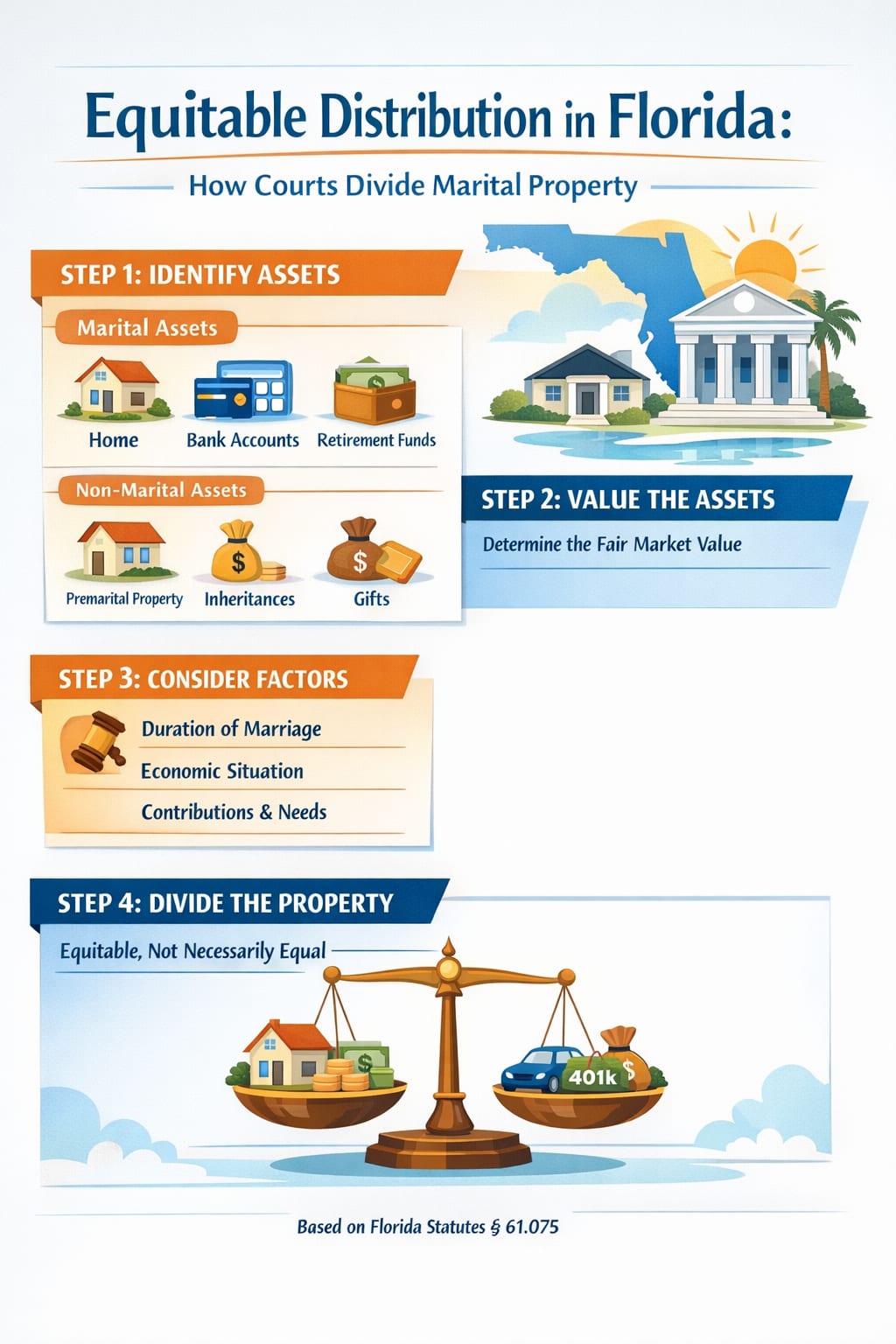
What Equitable Distribution Means
Florida follows the principle of equitable distribution when dividing marital assets and debts during a divorce. Unlike community property states that split assets 50/50 by default, Florida divides property based on what is fair, which is not always equal. The goal is to reach an outcome that reflects each spouse’s financial circumstances, contributions to the marriage, and future needs. Understanding how equitable distribution works helps spouses prepare for the financial aspects of divorce.
Identifying Marital vs. Non-Marital Assets
Before anything can be divided, the court must categorize each asset and debt. Florida law recognizes two types of property: marital and non-marital.
Marital Property
Marital assets generally include property acquired during the marriage, regardless of which spouse’s name is on the title. Common examples include:
Income earned by either spouse
Homes or real estate purchased during the marriage
Retirement accounts accumulated during the marriage
Vehicles, furniture, and personal property
Bank accounts and investments
Businesses started or expanded during the marriage
Marital debts—such as credit card balances, loans, and mortgages—are also part of the distribution process.
Non-Marital Property
Non-marital property belongs to one spouse individually. These assets are not subject to division unless they become mixed with marital property. Non-marital assets may include:
Property owned before the marriage
Inheritances left to one spouse
Gifts received individually
Certain personal injury settlements
Disputes often arise when non-marital assets become commingled with marital funds or when appreciation occurs during the marriage.
How Courts Determine Fair Distribution
While Florida courts often start with the idea that a 50/50 split is fair, they may adjust the division if equal distribution would be unreasonable. Judges review numerous factors under Florida Statute § 61.075 to determine what is equitable. These factors help ensure the outcome reflects both spouses’ circumstances during and after the marriage.
Key Factors That Influence Distribution
Length of the marriage
Economic circumstances of each spouse
Contributions to the marriage, including caregiving or homemaking
Career sacrifices one spouse made to support the other
Intentional depletion of marital assets
Desirability of keeping certain assets (such as a business or home)
Liability for debts incurred during the marriage
Courts also consider whether either spouse wasted marital assets, such as through excessive spending, gambling, or supporting a separate relationship.
Valuing Assets Before Distribution
Accurate valuation is essential in an equitable distribution case. Assets may be valued through appraisals, financial records, or expert testimony. Real estate, savings accounts, businesses, retirement funds, and investment portfolios all require clear and current valuation. Because market conditions can change, courts often use the value closest to the trial date or settlement agreement.
Handling Retirement and Investment Accounts
Retirement accounts earned during the marriage are generally marital, even if held in one spouse’s name. Pensions, 401(k)s, IRAs, and similar accounts may be divided using a Qualified Domestic Relations Order (QDRO) or a similar legal tool. Investment accounts and stock portfolios follow the same marital vs. non-marital rules.
Special Considerations for the Marital Home
The marital home often represents the most significant asset. Courts consider factors such as:
Whether children should remain in the home temporarily
Each spouse’s ability to maintain the property
Financial feasibility of refinancing or selling
Emotional and practical considerations
A spouse may receive temporary exclusive use of the home, with final division occurring later through sale or buyout.
Debts Are Divided Too
Equitable distribution applies to debts as well as assets. Credit cards, medical bills, business loans, and mortgages accumulated during the marriage are typically divided between spouses. Courts review who incurred the debt, why it was incurred, and who benefited from the expenditure.
Why Understanding Distribution Matters
Equitable distribution influences a spouse’s financial future long after the divorce is finalized. Knowing how assets and debts are categorized, valued, and divided helps individuals prepare for negotiations and avoid unexpected outcomes. Understanding the process also helps spouses make informed decisions about settlement proposals and long-term financial planning.
About the Creator
Keep reading
More stories from Grant Gisondo and writers in Families and other communities.
Understanding Paternity Fraud and Your Rights in Florida
Understanding paternity fraud in Florida is not just a matter of knowledge; it's a powerful tool that can protect your legal rights and those of your children. This deceptive practice can have far-reaching consequences for fathers, children, and families. As a resident of the Sunshine State, it's crucial to understand your legal rights and options if you suspect paternity fraud. Florida law provides several avenues for challenging paternity and seeking justice, but navigating the complex legal system can be daunting. In this article, we'll explore the definition of paternity fraud, outline your legal recourse, and guide you through disputing paternity in court. You'll also learn about state-specific laws and the role of DNA testing in resolving paternity fraud cases.
By Grant Gisondoabout a year ago in Families
Wise~Guys
— Look Behind what's in Front of You ~ Make Good Choices — Hey, So how you Doin'..! Made~Men — Mobster Movies romanticise a distinctive, elegant appearance, impeccable attire style, along with the 'Families' expressive lingo. Making their 'Bones' gave them Panache — with vintage fedoras, tailored pin-striped suits, mirror-polished wing-tip shoes adorned with tassels; with their 'Gun Moll' gorgeous dates on their arms.
By Jay Kantor27 days ago in Families




Comments
There are no comments for this story
Be the first to respond and start the conversation.