
"Eid ul-Adha: More Than Sacrifice – The Deeper Meaning We Often Overlook"
"From Prophet Ibrahim to Modern Times: What Are We Really Sacrificing?"

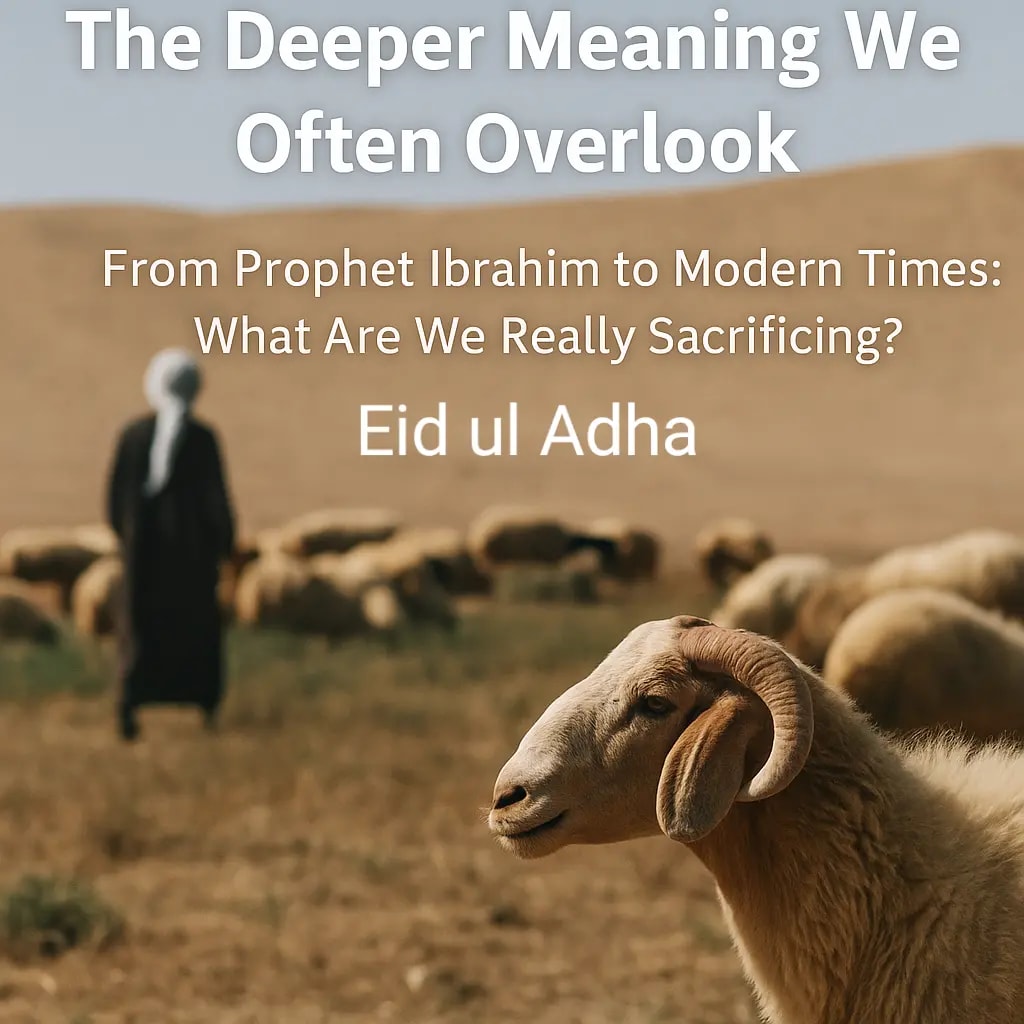
Eid ul-Adha: More Than Sacrifice – The Deeper Meaning We Often Overlook
From Prophet Ibrahim to Modern Times: What Are We Really Sacrificing?
Every year, millions of Muslims around the world gather in mosques, homes, and open fields to celebrate Eid ul-Adha, the "Festival of Sacrifice." At its core, this holy day honors the unwavering faith and obedience of Prophet Ibrahim (Abraham), who was willing to sacrifice his beloved son, Ismail, in submission to God's command. It’s a story known by heart, but too often, its essence gets lost in rituals, routines, and modern-day distractions.
As we reflect on the purpose of Eid ul-Adha today, we must ask ourselves a profound question:
What are we really sacrificing?
The Origin: A Test of Faith and Devotion
The story of Eid ul-Adha begins with a divine test. Prophet Ibrahim, known for his deep piety, received a vision in which God commanded him to sacrifice his son. Without hesitation and with complete trust in his Creator, Ibrahim prepared to fulfill this command. At the last moment, God replaced Ismail with a ram, affirming that Ibrahim’s intention and faith were enough.
This was never about the act of killing—it was about surrendering the dearest part of oneself to fulfill a higher purpose. It was a symbol of deep obedience, spiritual submission, and trust in divine wisdom.
The Ritual Today: A Reflection or a Routine?
In modern times, Eid ul-Adha is marked by the Qurbani (sacrifice) of animals—typically goats, cows, or sheep. The meat is distributed among family, friends, and the poor, reinforcing the values of charity, community, and compassion. It's a beautiful practice that brings people together and ensures that even the most vulnerable have a share in the celebration.
However, in some places, the focus has shifted from spirituality to showmanship. The size of the animal, the price paid, the photos shared online—these have become unspoken competitions. The ritual continues, but the spirit fades. The question is no longer “What can I give up for God?” but “How impressive will my sacrifice look to others?”
The Forgotten Sacrifices
Sacrifice isn’t just about animals. It’s about giving up anything that comes between us and our purpose, our Creator, and our humanity. That might mean sacrificing:
Pride that keeps us from apologizing.
Greed that blinds us to the needs of others.
Anger that destroys relationships.
Ego that stops us from growing.
Time and wealth for the sake of helping others.
Eid ul-Adha invites us to reflect on what internal sacrifices we must make to become better versions of ourselves. It challenges us to think: Are we living with the same humility and submission that Prophet Ibrahim demonstrated?
Bringing Meaning Back to Eid
So how do we reconnect with the deeper meaning of this sacred day?
1. Reflect before you sacrifice: Ask yourself what you're willing to change or let go of to improve your relationship with God, family, and community.
2. Give more than meat: Share kindness, time, and attention—especially with those who feel forgotten during holidays.
3. Teach the next generation: Don’t just teach children the story; explain the lesson. Help them see Eid ul-Adha as a day of spiritual significance, not just celebration.
A Timeless Message
Eid ul-Adha is not just about remembering a story from the past—it’s about applying its message to our present. Prophet Ibrahim’s legacy is one of pure intention, deep trust, and complete surrender to a higher calling.
In a time when faith is often treated as a performance, this Eid offers a moment to step back from the noise and ask ourselves:
What would I be willing to sacrifice if God asked me today?
Perhaps it's time we stop measuring Eid ul-Adha by how much meat we distribute, and start measuring it by how much spiritual weight we shed.
About the Creator
Abid khan
"Writer, dreamer, and lifelong learner. Sharing stories, insights, and ideas to spark connection."
Wise~Guys
— Look Behind what's in Front of You ~ Make Good Choices — Hey, So how you Doin'..! Made~Men — Mobster Movies romanticise a distinctive, elegant appearance, impeccable attire style, along with the 'Families' expressive lingo. Making their 'Bones' gave them Panache — with vintage fedoras, tailored pin-striped suits, mirror-polished wing-tip shoes adorned with tassels; with their 'Gun Moll' gorgeous dates on their arms.
By Jay Kantor17 days ago in Families
My New Book is Finally Here
My poetry collection Beautiful and Brutal Things is done. It's actually done and finally published over 270 pages. Over a year of my life went into this book. More than a year, really. Long days at my computer, sometimes seven days a week because I couldn't stop even when I probably should have. Then two months of editing that felt harder than the writing itself. But it's finished, and I'm still standing, and the book is real.
By Tim Carmichaela day ago in BookClub



Comments (1)
Hello, just wanna let you know that according to Vocal's Community Guidelines, we have to choose the AI-Generated tag before publishing when we use AI 😊