
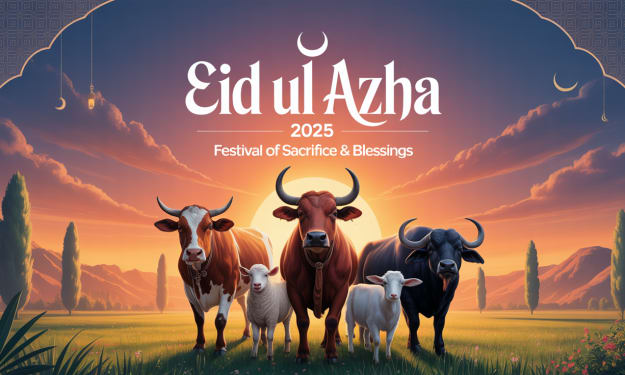
Eid Mubarak! Celebrating Eid ul Azha 2025
A Deep Dive into the Festival of Sacrifice, Its Meaning, and Its Modern Relevance

Introduction
Eid ul Azha, also known as Eid al-Adha, Bakra Eid, or the Festival of Sacrifice, stands as one of the most significant and spiritually profound celebrations in the Islamic calendar. Marked by devotion, selflessness, and community, Eid ul Azha commemorates the unwavering faith of Prophet Ibrahim (Abraham) and his willingness to submit to the will of Allah. In 2025, Muslims around the world will gather on June 6th or 7th (depending on the lunar calendar and regional moon sighting) to honor this sacred tradition.
This article explores the rich history, rituals, and modern-day significance of Eid ul Azha, providing a comprehensive guide for readers of News Plus Globe to understand, appreciate, and celebrate this important occasion.
The Historical and Religious Roots of Eid ul Azha

The Story of Prophet Ibrahim and Ismail
At the heart of Eid ul Azha lies the story of Prophet Ibrahim (Abraham) and his son Ismail (Ishmael). According to Islamic tradition, Prophet Ibrahim received a divine command in a dream, instructing him to sacrifice his beloved son as a test of faith and obedience to Allah. Despite the emotional turmoil, Ibrahim prepared to fulfill the command, demonstrating complete submission to the will of God.
As Ibrahim was about to carry out the sacrifice, Allah, in His infinite mercy, intervened and replaced Ismail with a ram. This act of divine intervention not only spared Ismail’s life but also established the principle that true sacrifice lies in one’s intentions and willingness to submit to God.
Significance in Islam
The story of Ibrahim and Ismail is mentioned in the Quran (Surah As-Saffat 37:99-113) and is revered in all Abrahamic faiths. For Muslims, Eid ul Azha is a time to remember the virtues of faith, obedience, and selflessness. The festival serves as a reminder that spiritual devotion and the willingness to give up what is most dear are central to the Islamic way of life.
When is Eid ul Azha 2025?

Eid ul Azha is observed on the 10th day of Dhul Hijjah, the twelfth and final month of the Islamic lunar calendar. In 2025, the festival is expected to begin on the evening of June 6th, with the main day of celebration on June 7th in most countries. However, due to differences in moon sighting and time zones, some regions may celebrate a day earlier or later.
The festival lasts for three days (sometimes four in certain cultures), during which the rituals of prayer, sacrifice, and charity are observed.
The Connection with Hajj
Eid ul Azha coincides with the completion of the Hajj pilgrimage in Makkah, Saudi Arabia. Hajj is one of the five pillars of Islam and is obligatory for every financially and physically able Muslim to perform at least once in their lifetime.
The day before Eid, known as the Day of Arafat, is the pinnacle of Hajj. Pilgrims gather on the plain of Arafat to seek forgiveness and pray for themselves and the entire Muslim ummah (community). Eid ul Azha marks the joyous conclusion of this spiritual journey, with pilgrims and Muslims worldwide united in celebration and worship.
Rituals and Practices of Eid ul Azha

1. The Eid Prayer
The celebration of Eid ul Azha begins with a special congregational prayer known as Salat al-Eid. This prayer is performed in mosques, open fields (Eidgahs), and community centers. It consists of two rakats (units of prayer) and is followed by a sermon (khutbah) that highlights the significance of the festival, the story of Ibrahim, and the importance of sacrifice and charity.
In many cities, including Lahore, Karachi, Istanbul, Cairo, London, and New York, thousands of worshippers gather in the early hours of the morning to perform the Eid prayer. The sense of unity and communal spirit is palpable as people from all walks of life come together in devotion.
2. The Takbir
From the dawn of the 9th day of Dhul Hijjah (the Day of Arafat) until the last day of Eid, Muslims recite the Takbir:
“Allahu Akbar, Allahu Akbar, La ilaha illallah, Allahu Akbar, Allahu Akbar, wa lillahil hamd.”
(God is Greatest, God is Greatest, there is no deity but God, God is Greatest, God is Greatest, and to God belongs all praise.)
The Takbir is recited in homes, mosques, and marketplaces, filling the air with the spirit of praise and gratitude.
3. Qurbani (The Sacrifice)
The central ritual of Eid ul Azha is the Qurbani—the sacrifice of a permissible animal such as a sheep, goat, cow, or camel. This act commemorates Ibrahim’s willingness to sacrifice his son and serves as a demonstration of submission to Allah.
Rules and Ethics of Qurbani

Eligibility: The animal must be healthy, free of defects, and of a certain age (e.g., sheep and goats at least one year old, cows at least two years, camels at least five years).
Division of Meat: The meat is divided into three equal parts: one for the family, one for relatives and friends, and one for the poor and needy.
Timing: The sacrifice is performed after the Eid prayer and continues until the sunset of the third day of Eid.
Intention: The act must be done with the sincere intention of fulfilling a religious duty, not for showing off or competition.
Modern Qurbani
In many urban centers, Qurbani is facilitated by charitable organizations and online services, allowing people to sponsor sacrifices in their name and distribute meat to those in need locally and globally.
Charity and Social Impact
Eid ul Azha is not just a festival of ritual; it is a time for profound social responsibility. The distribution of Qurbani meat ensures that even the most vulnerable members of society can partake in the festival’s blessings. In addition to Qurbani, Muslims are encouraged to give Sadaqah (voluntary charity) and Zakat (obligatory alms) to support the less fortunate.
Charitable organizations around the world launch special Eid campaigns, providing food, clothing, and financial assistance to orphans, refugees, and impoverished families. The spirit of giving and compassion is at the heart of Eid ul Azha.
Family, Food, and Festivities
Eid ul Azha is a time of joy, reunion, and celebration. Families dress in their finest clothes, decorate their homes, and prepare elaborate feasts. Traditional dishes vary by region but often include biryani, kebabs, curries, and sweet treats like sheer khurma and baklava.
Visiting relatives, exchanging gifts, and sharing meals are integral parts of the celebration. Many also take the opportunity to visit the graves of loved ones, offering prayers and remembering those who have passed away.
Eid ul Azha Around the World
South Asia (Pakistan, India, Bangladesh)
In South Asia, Eid ul Azha is marked by large-scale Qurbani, vibrant bazaars, and communal prayers. Cities like Lahore, Karachi, and Dhaka come alive with the sounds of Takbir, the aroma of festive foods, and the sight of families gathering for prayers and feasts.
Middle East (Saudi Arabia, UAE, Egypt)
In Saudi Arabia, Eid ul Azha follows immediately after Arafat Day. The holy cities of Makkah and Madinah host millions of pilgrims and worshippers. The UAE, Egypt, and other Middle Eastern countries celebrate with grand prayers, public holidays, and acts of charity.
Africa
In countries like Nigeria, Sudan, and Morocco, Eid ul Azha is celebrated with traditional music, communal prayers, and large feasts. The festival fosters unity and strengthens community bonds.
Europe and North America
Muslim communities in the UK, USA, Canada, and Australia gather in mosques and community centers for Eid prayers. Many organize interfaith events, open houses, and charitable drives to share the spirit of Eid with neighbors and friends.
Modern Perspectives and Challenges
Urbanization and Changing Traditions
With increasing urbanization, the way Eid ul Azha is celebrated has evolved. Many city dwellers now rely on professional butchers or charitable organizations to perform Qurbani. Online platforms allow Muslims to sponsor sacrifices in distant countries, ensuring the meat reaches those most in need.
Environmental Concerns
The large-scale slaughter of animals during Eid ul Azha has raised concerns about hygiene, waste management, and animal welfare. Many cities have implemented strict regulations to ensure cleanliness and humane treatment of animals.
Interfaith Understanding
Eid ul Azha offers an opportunity for interfaith dialogue and understanding. By sharing the story of Ibrahim and the values of sacrifice and compassion, Muslims can build bridges with people of other faiths and backgrounds.
The Spiritual Message of Eid ul Azha
At its core, Eid ul Azha is a celebration of faith, obedience, and compassion. It calls on Muslims to reflect on their relationship with Allah, their responsibilities to others, and the importance of selflessness.
The festival reminds believers that true sacrifice is not measured by the act itself, but by the intention and willingness to submit to God’s will. It is a time to renew one’s faith, seek forgiveness, and strive for a life of humility and generosity.
Eid Mubarak: Wishes and Greetings
Here are some heartfelt wishes to share with your loved ones this Eid ul Azha:
Eid Mubarak! May your sacrifice be accepted and your prayers answered.
Wishing you a blessed Eid filled with joy, peace, and prosperity.
May the spirit of Eid bring happiness and unity to your home.
Eid ul Azha Mubarak! May Allah shower you with His countless blessings.
May your heart be filled with gratitude and your life with barakah.
Conclusion
Eid ul Azha 2025 is more than a festival; it is a profound reminder of the values that define the Islamic faith—devotion, sacrifice, compassion, and community. As Muslims around the world gather to pray, sacrifice, and celebrate, they renew their commitment to these timeless principles.
Let us honor the spirit of Eid ul Azha by reaching out to those in need, strengthening our bonds with family and friends, and striving to live lives of purpose and generosity.
Eid Mubarak to you and your loved ones from the entire team at News Plus Globe! May this Festival of Sacrifice bring you peace, happiness, and countless blessings.
About the Creator
Keep reading
More stories from M Irfan Zafar and writers in Families and other communities.
Eid ul Azha 2025
Eid ul Azha 2025: A Comprehensive Guide to the Festival of Sacrifice Introduction Eid ul Azha, also known as Eid al-Adha, Bakra Eid, or the Festival of Sacrifice, is one of the most significant and widely celebrated Islamic festivals worldwide. In 2025, Eid ul Azha is expected to begin on the evening of June 6th and conclude on the evening of June 10th, though exact dates may vary based on local moon sightings. This festival commemorates the unwavering faith and devotion of Prophet Ibrahim (Abraham) and serves as a powerful reminder of obedience, sacrifice, and compassion.
By M Irfan Zafar9 months ago in Journal
The Silence at the Dinner Table
The Silence at the Dinner Table When Silence Speaks Louder Than Words The house was never truly quiet. The television hummed in the living room. The refrigerator rattled every few minutes. Cars passed outside, their headlights brushing across the curtains like wandering ghosts. But at 8:00 p.m. every evening, when the family gathered around the wooden dinner table, a different kind of silence filled the room — one that felt heavy enough to press against the chest.
By Truth words 7 days ago in Families
The Last Letter From My Mother
Life moves very fast. Sometimes we are so busy chasing our dreams that we forget the people who love us the most. A few years ago, I was living in another city because of my job. My life was busy. Every day, I worked long hours, met new people, and tried to build a better future. I thought success and money were the most important things in life. I had little time for anything else, and I often ignored the small things that truly mattered.
By Muhammad Tanveer5 days ago in Families



Comments
There are no comments for this story
Be the first to respond and start the conversation.