
Efficient Learning Method: The Two 5-Hour Rules
The "5-hour rules", which stem from an analysis of the learning habits of successful people, provide a method for efficient learning.


In the intertwined life, study, and work that changes rapidly day by day, being in a mess, being disoriented, lacking time, and having insignificant results are the reasons why the general public cannot advance. How to use time efficiently and improve learning efficiency has become the focus of many people's attention. There are two crucial "5-hour rules." These two rules not only stem from an in-depth analysis of the learning habits of successful people but are also highly efficient learning strategies verified through practice. By following these rules, we can improve learning efficiency and achieve more excellent results in academic and career life.
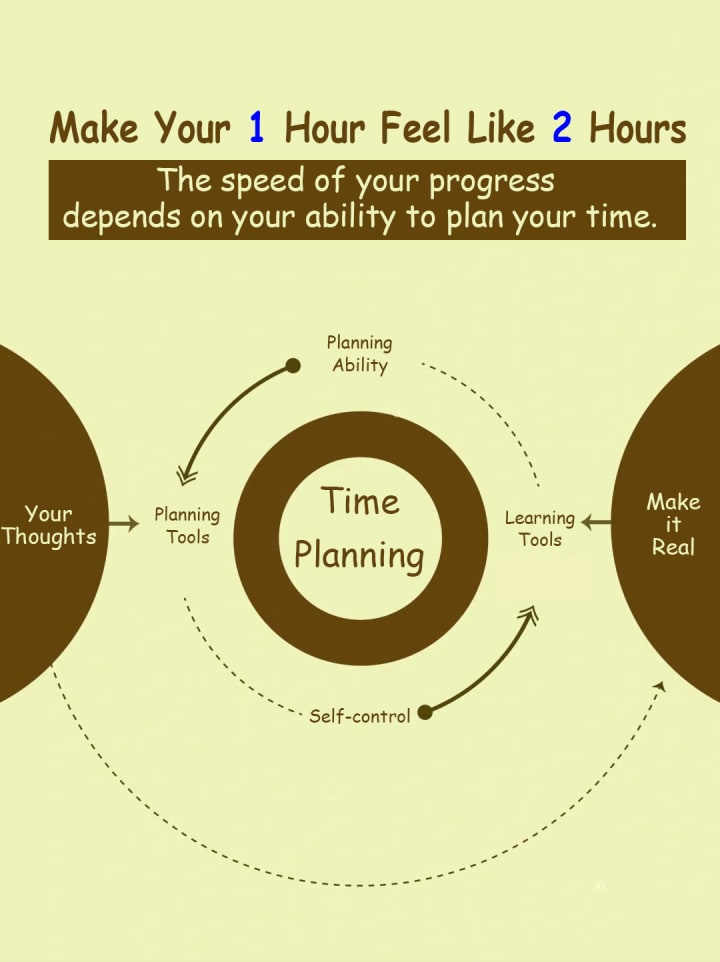
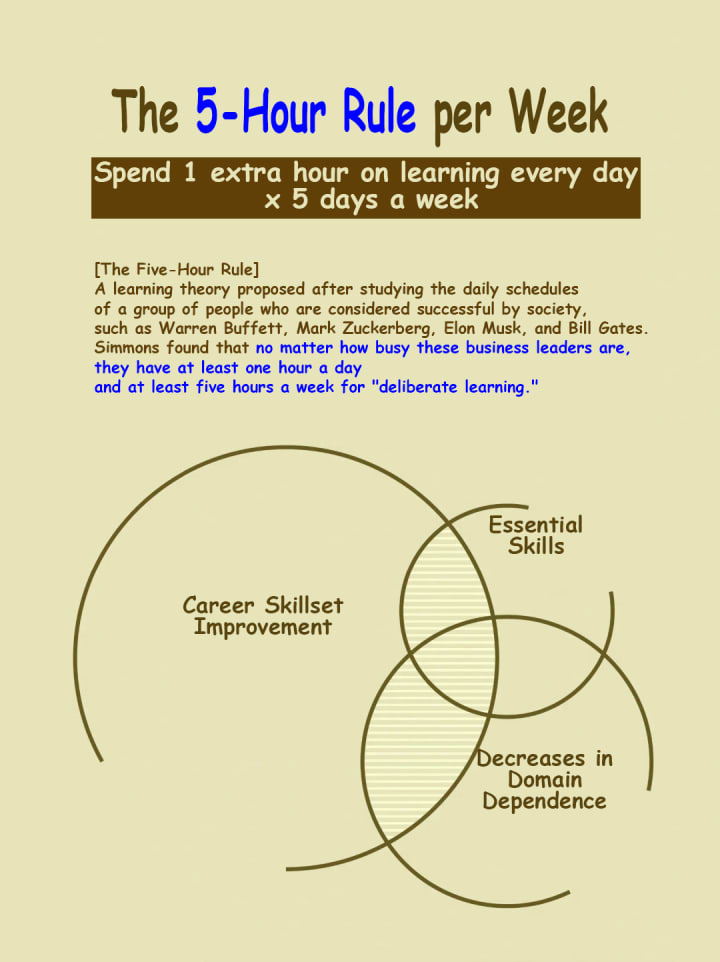
I. The 5-Hour Rule per Week: Continuous Improvement to Build Multidimensional Competence
Core concept: The 5-hour rule per week emphasizes investing at least 5 hours per week in "deliberate learning." This kind of learning is not just superficial talk but rather planned and in-depth learning targeted at key skills required for personal growth and career development. Through continuous improvement, we can build our core competitiveness in multiple fields.
Practical strategies:
- Define learning goals: First, we need to clearly define in which fields or skills we hope to make progress. These fields can be key skills in current work, personal interests, or essential abilities for future career development.
- Classify learning time: Allocate 5 hours per week and at least 1 hour per day to focus on learning three types of skills: First, unfamiliar but necessary professional skills (such as new software and new technologies); second, knowledge in other fields that have commonalities with the current field (such as management and psychology) to broaden our horizons; third, basic skills not yet mastered in life (such as time management and communication expression) to improve personal comprehensive qualities.
- Deliberate practice and feedback: During the learning process, focus on "deliberate practice," that is, choose challenging tasks and constantly surpass ourselves. At the same time, obtain feedback in time and adjust learning strategies to ensure the maximization of learning effects.
- Review and adjustment: At the end of each week, conduct a review and summary, looking back at the learning achievements and shortcomings of this week. According to the review results, adjust the learning plan for next week in time to ensure the continuity and effectiveness of learning goals.
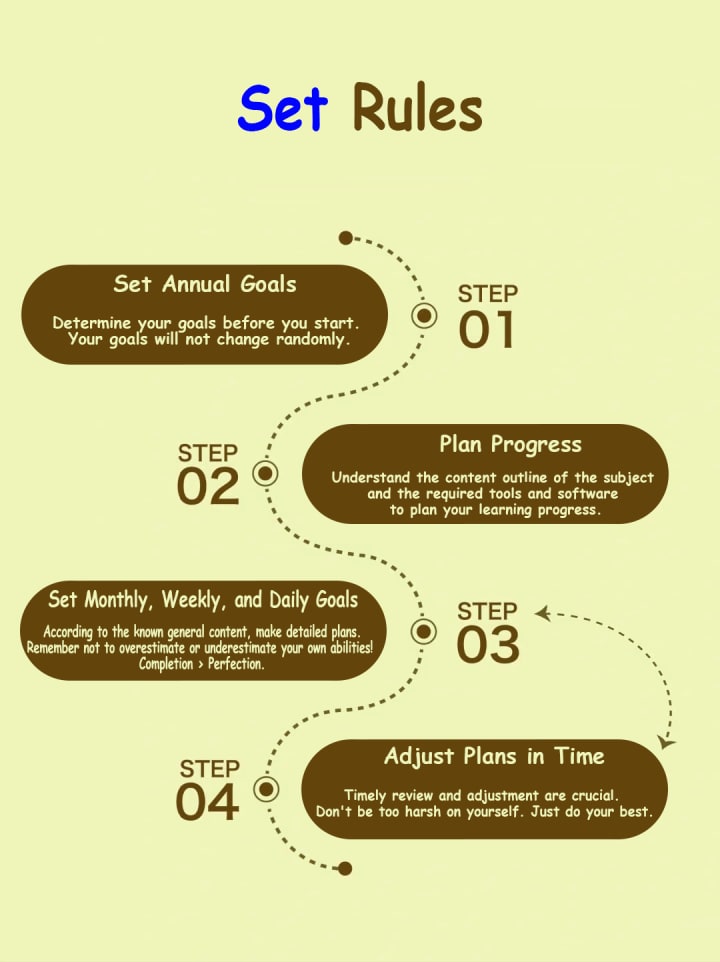
I. The 5-Hour Rule per Day: Efficient Management to Ensure Learning Quality
Core concept: The 5-hour rule per day requires us to ensure 5 hours of efficient learning time every day in daily life. These 5 hours not only include learning specific knowledge but also include time planning, self-adjustment, and rest and relaxation to ensure learning quality and efficiency.
Practical steps:
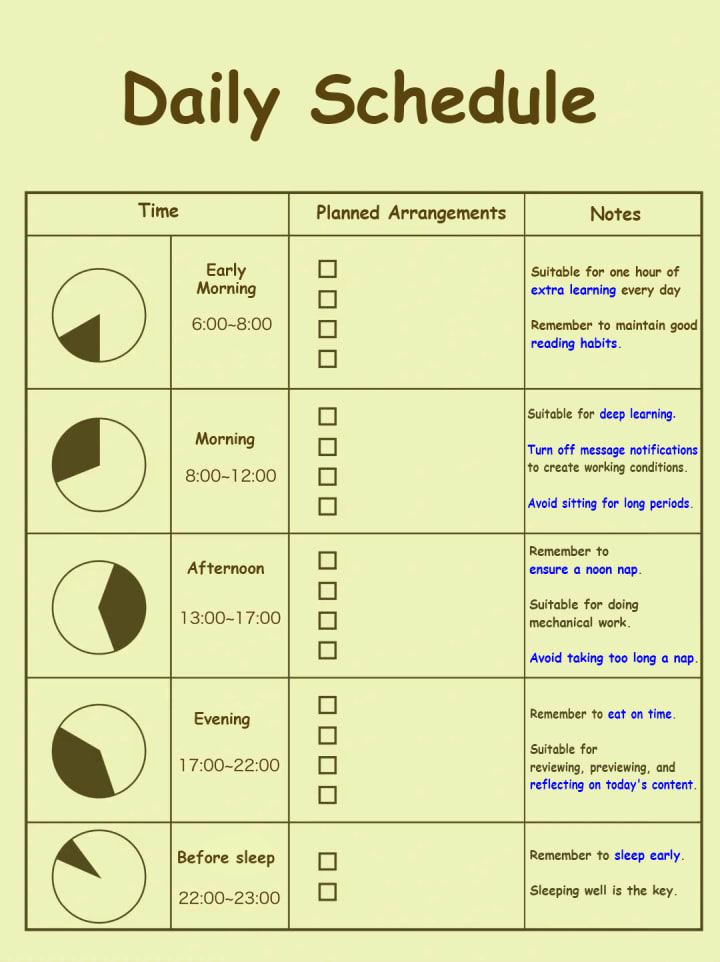
- Time planning: Before starting each day, make a detailed learning plan and clearly define the learning tasks and goals for each time period. Use time management tools such as the Pomodoro Technique and time blocking to help yourself stay focused and efficient.
- Deep learning: During the 5-hour learning time, ensure at least 2 hours are used for deep learning. Deep learning refers to in-depth exploration and understanding of a certain knowledge point or skill to achieve the level of mastery and application. This can be reading professional books, learning new software, or solving complex problems.
- Feedback practice and review: During the learning process, conduct feedback practice in time to test learning results. At the same time, after the end of daily learning, conduct a review and summary, looking back at the learning process and results of the day, analyzing existing problems and shortcomings, and providing references and improvement directions for the next day's learning.
- Spare time and rest: In the 5-hour learning time, set aside 1 hour as spare time to deal with possible emergencies or take a break and adjust during learning. If the learning tasks are completed ahead of schedule, this time can be used for review, relaxation, or other beneficial activities.
The two 5-hour rules provide a strategy and method for efficient learning. Through continuous improvement with 5 hours per week and efficient management with 5 hours per day, we can gradually build our own knowledge and skill systems and achieve more excellent results in academic and career life. Efficient learning requires persistent efforts and continuous self-adjustment. Adhere to these two rules and put them into practice.
---
If you agree with our viewpoints, please give us a like, and follow us.We will update daily and look forward to growing together with you.
About the Creator
Victor
Gain momentum here, and stride forward boldly into the rest of your life.
Reader insights
Nice work
Very well written. Keep up the good work!
Top insights
Easy to read and follow
Well-structured & engaging content
Expert insights and opinions
Arguments were carefully researched and presented
Eye opening
Niche topic & fresh perspectives
Senior Care Services That Support Better Sleep, Comfort and Daily Well-Being
The tranquility of the night usually stands out as the best indicator that the elderly are receiving proper care. Once an aged person wakes up fresh, moves freely and feels at ease emotionally, everyday life is significantly improved. Sleep is known to promote mobility, memory and mood and thus is a pillar of general well-being.
By Laura Parton6 days ago in Families
What Makes Senior Care Services Truly Comfortable and Caring?
It tends to complete in the same silent manner, where a senior eventually gets to sleep correctly, wake up without any form of disturbances and feel safe in their own environment. Such a feeling of coziness is never incidental. It is very well constructed, step by step, with careful thoughtful choices of care. To learn more about what actually constitutes senior care services being comfortable and caring, it is better to start at the end and go in reverse.
By Laura Parton6 days ago in Families
"Scream 7" (2026): Running out of Fresh Screams
This is the seventh time we’ve had a Ghostface crisis. Scream 7 is the latest edition of the Scream franchise. Sydney Prescott and her family are under attack by another anonymous killer dressed in a Ghostface costume. While having issues with her daughter, Tatum, they run from the bloody murders, trying to determine who is behind it all.
By Marielle Sabbag2 days ago in Horror




Comments (1)
That's amazing! Now I can handle my work more efficiently. I also wrote informative antique and philosophical pieces you can also appreciate work as well.