
Digital Declutter: How I Reclaimed My Life by Logging Off
Breaking free from digital noise to rediscover clarity, creativity, and calm
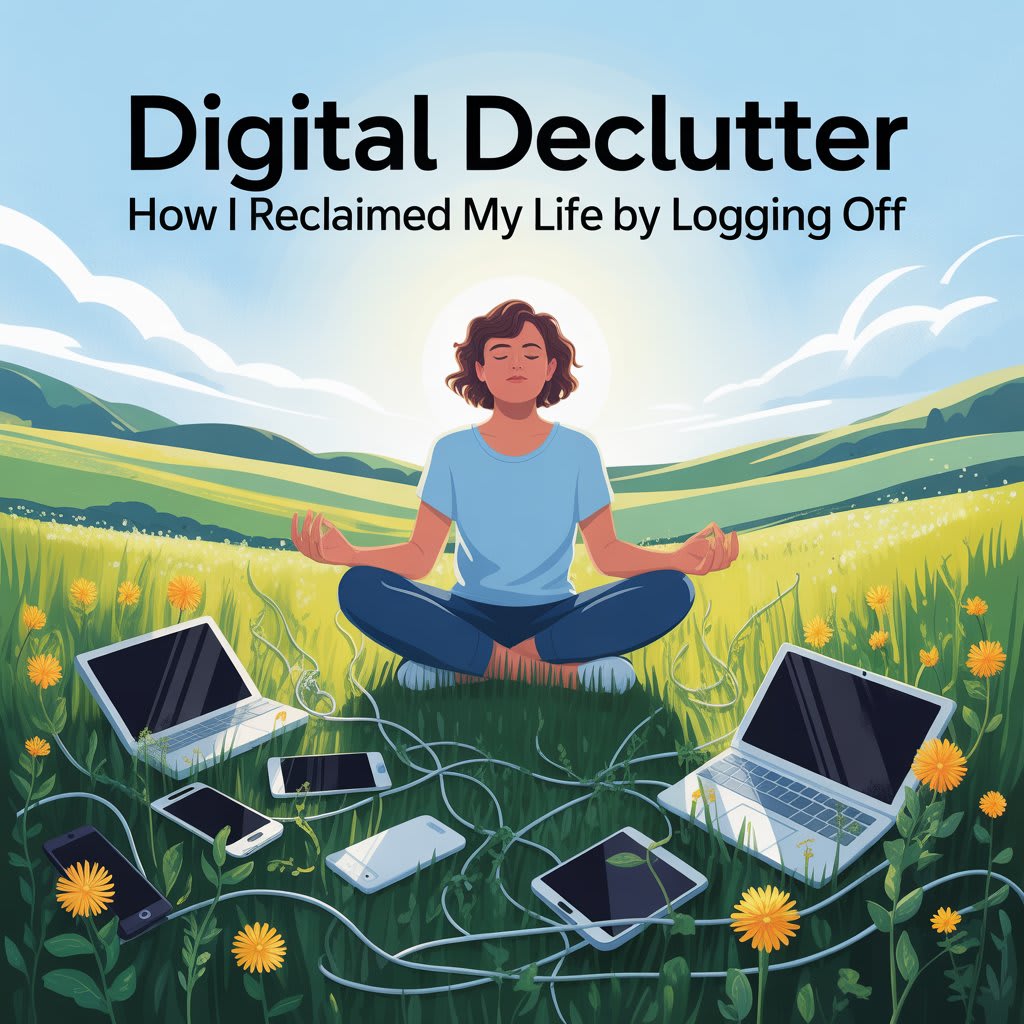
In a world constantly buzzing with notifications, pings, and pop-ups, the idea of logging off seems both radical and refreshing. For years, I lived tethered to my devices — checking emails first thing in the morning, doomscrolling through Twitter at lunch, watching TikToks before bed. My digital life was loud, cluttered, and omnipresent. But I didn't realize how much of myself I had lost in the noise until I made the decision to step away. This is the story of how I reclaimed my life through digital decluttering — not by becoming a hermit, but by intentionally redesigning my relationship with technology.
The Wake-Up Call
It began with burnout. The constant pressure to keep up — with friends, trends, news, and content — wore me down mentally, emotionally, and even physically. I found myself struggling to focus during conversations, feeling anxious when my phone battery was low, and overwhelmed by the sheer volume of unread messages, notifications, and digital clutter.
One evening, I stared blankly at my laptop after hours of switching between tabs, apps, and videos. I realized I hadn't retained anything I'd read or watched. My brain felt fried. I wasn’t engaging with the world anymore — just reacting to it. That moment of emptiness was my wake-up call.
Understanding Digital Clutter
Digital clutter is more than just unused apps and old screenshots. It’s the mental noise that accumulates from too many browser tabs, nonstop social media feeds, constant notifications, and the guilt of unread emails. It’s the psychological weight of being “always on.”
We tend to overlook it because it doesn’t pile up like physical mess. But the effects are just as damaging — decreased focus, increased anxiety, and a shrinking sense of personal space.
I knew I needed to declutter not just my phone, but my entire digital environment. And more importantly, I had to reset my habits.
The Detox Phase: Logging Off
The first step was radical: I took a 7-day break from all non-essential digital tools. That meant no social media, no YouTube, no Netflix, and no unnecessary screen time. Only work-related tools and emergency communication were allowed.
At first, it was agonizing. My fingers twitched toward apps out of muscle memory. I caught myself staring blankly at my phone, unsure what to do without a feed to scroll.
But then something incredible happened.
By day three, my mind began to feel clearer. I started sleeping better. I journaled. I sat in silence. I read physical books — real, paper books. I had longer, more present conversations. I went for walks and actually noticed the world around me. The mental fog began to lift.
Rebuilding Intentionally
After the detox, I didn't want to go back to the old normal. But I also knew I couldn’t live completely disconnected in a digital age. So, I rebuilt my digital life with intention.
Here’s what worked for me:
1. App Audit
I deleted any app that didn’t serve a clear purpose or bring me joy. That included random games, shopping apps, and even some social media platforms that made me feel drained.
2. Notification Management
I turned off all non-essential notifications. No more pings for likes, DMs, or breaking news. My phone became quiet — and my mind followed.
3. Screen Time Limits
I set daily time limits for social media and entertainment apps. Instead of mindless scrolling, I used that time for creative hobbies, meditation, or exercise.
4. No-Phone Zones
I designated certain areas — like the dining table and bedroom — as phone-free zones. This helped me be more present during meals and improved my sleep.
5. Mindful Mornings and Evenings
I stopped checking my phone first thing in the morning and last thing at night. I replaced that time with journaling, reading, or simply sitting in stillness.
Rediscovering Real-Life Joys
As I spent less time online, I found myself rediscovering the joys of real life:
Conversations became deeper and more meaningful.
Books became my escape and source of inspiration.
Hobbies like painting, cooking, and hiking brought back a sense of creativity and peace.
Silence stopped being uncomfortable and started feeling sacred.
I realized how much of my anxiety was tied to artificial urgency — the illusion that I had to respond, react, or keep up. Letting go of that made space for calm confidence.
Lessons I Learned
1. The Internet Is a Tool — Not a Lifestyle
We often forget that digital platforms are tools designed to serve us, not the other way around. When we let them run our lives, we lose agency. Reclaiming that agency is deeply empowering.
2. FOMO Is an Illusion
The Fear of Missing Out (FOMO) keeps many of us glued to our screens. But after logging off, I realized I wasn’t missing much — and I was gaining so much more in return.
3. Digital Minimalism = Mental Clarity
Just like decluttering a room can calm the mind, decluttering our digital lives clears mental space. It helps us think, feel, and live more intentionally.
Tips for Your Own Digital Declutter
If you’re feeling overwhelmed by your digital life, here are some steps you can take:
Start small. Try logging off for a few hours each day or doing a 24-hour digital detox on the weekend.
Audit your apps. Ask yourself: Does this app make my life better or just busier?
Set tech boundaries. Create routines that keep your tech use healthy (e.g., no screens after 9 PM).
Practice mindful scrolling. Ask yourself why you’re reaching for your phone. Boredom? Loneliness? Habit?
Replace, don’t just remove. Have offline alternatives ready: books, puzzles, nature walks, music, or journaling.
Final Thoughts: A Quieter, Fuller Life
Logging off wasn’t about rejecting technology — it was about reclaiming my life from its grip. It reminded me that peace, presence, and purpose are found not in the endless scroll, but in stillness, simplicity, and self-awareness.
Today, I’m back online — but differently. I’m more mindful, more present, and more grounded. I no longer live in reaction to digital noise. Instead, I use technology to enrich my life, not consume it.
If you’re feeling lost in the blur of screens and feeds, consider this your invitation: unplug, breathe, and return to yourself. You might be surprised at what you find.
About the Creator
Keep reading
More stories from Aiman Shahid and writers in Families and other communities.
The Art of Doing Nothing: Why Rest Is Productive
Introduction In today’s world, being busy is worn like a badge of honor. Hustle culture glorifies overworking, productivity apps dominate our phones, and idle moments are quickly filled with scrolling, swiping, or multitasking. In such an environment, the idea of doing nothing may seem lazy, counterproductive—even wasteful. But what if we’ve got it all wrong? What if doing nothing isn’t the enemy of productivity, but its secret weapon?
By Aiman Shahid6 months ago in Families
Christmas Abroad: Celebrating the Holidays Without Family
I moved to South Korea in 2017. I was twenty-two years old and excited to start my career as an English Second Language Teacher. With a Bachelor's degree and six hundred dollars in my bank account, I set off for Busan.
By Kera Hollow29 days ago in Families
Where Love Lives: A Slow Sunday Inside Our Family Home
There’s a quiet magic in ordinary mornings—the kind that doesn’t shout, but lingers in the corners of your heart long after the day has passed. For our family, Sunday mornings are like that: a gentle rhythm of laughter, familiar routines, and soft celebrations of simply being together. If you asked someone passing by our home at 9 a.m., they might mistake us for a movie scene—the scent of fresh coffee, the hum of soft music, and the comforting clatter of plates and cups filling the kitchen. But there’s nothing cinematic about what we do. It’s ordinary. And it’s ours.
By Divexa Exchange4 days ago in Families
FPS: The Last Flame Challenge Winners
Welcome to our first Winners Announcement of the year and to the final challenge in the Fall Poetry Series. The Last Flame invited writers to sit with endings, using fire as a central image to consider what remains when something burns out: ash, warmth, memory, silence, or the faint promise of what comes next. The strongest pieces treated endings as gradual rather than sudden, allowing them to flicker, dim, and linger.
By Vocal Curation Team6 days ago in Resources


Comments
There are no comments for this story
Be the first to respond and start the conversation.